


SKU:SOL-TRC-STE-300G
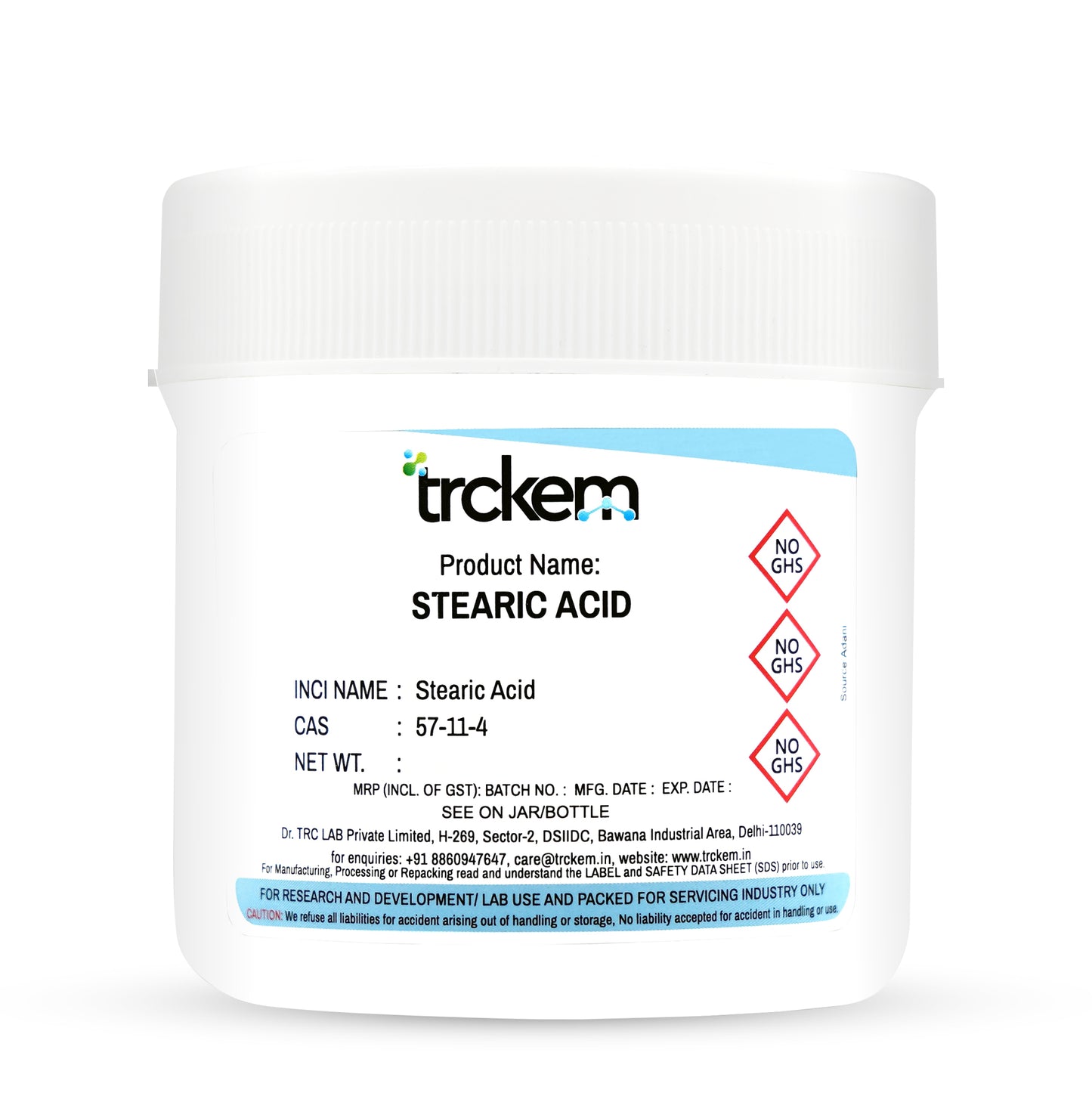
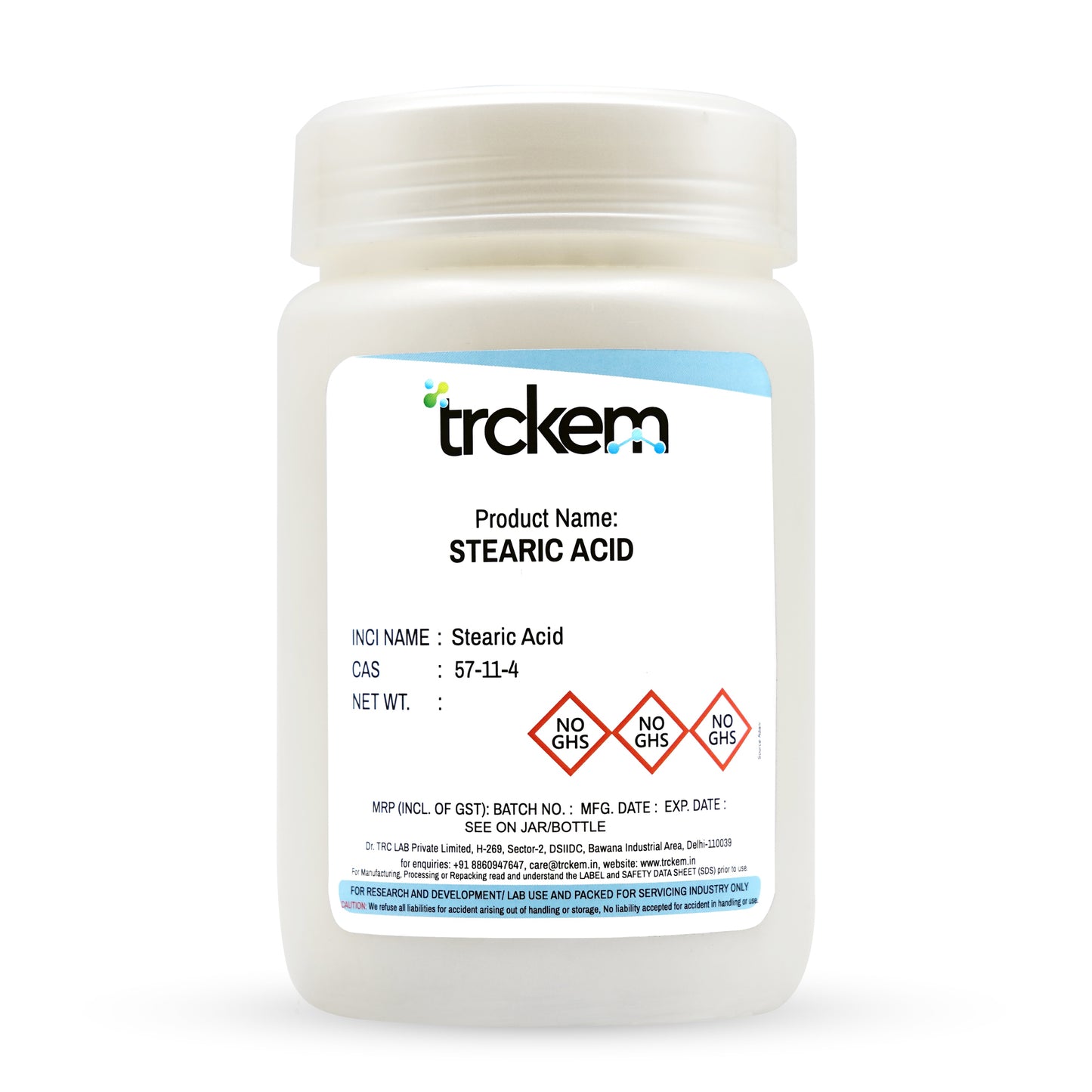
STEARIC ACID
For Bulk Quantity:📞 8822636416
Couldn't load pickup availability
Stearic acid is a saturated fatty acid commonly found in animal and vegetable fats. It is widely used in various industries, including cosmetics, pharmaceuticals, and food. In cosmetics, stearic acid serves as an emulsifier, emollient, and thickening agent, contributing to the texture and stability of skincare and personal care products.
Product Document: Download Now 👇

General Description:
Stearic Acid is a saturated fatty acid with the chemical formula C18H36O2. It is a waxy solid that is often found in various animal and vegetable fats. Stearic acid is insoluble in water but soluble in organic solvents such as ethanol and ether.
Uses in the Cosmetic Industry:
Stearic Acid serves several purposes in cosmetics:
- Emulsifier: It is widely used as an emulsifying agent in cosmetic formulations to stabilize oil-in-water emulsions. This helps to ensure that the oil and water phases of a product do not separate.
- Surfactant: Stearic Acid can act as a surfactant, which means it reduces the surface tension between different substances. This property makes it useful in cleansing products like soaps and body washes.
- Thickener: It functions as a thickening agent in creams, lotions, and other cosmetic products, helping to give these formulations a rich, creamy texture.
- Emollient: Stearic Acid acts as an emollient that softens and smooths the skin, providing a lubricating feel to the product.
- Binder: In solid cosmetic products such as lipsticks and foundations, Stearic Acid acts as a binder that helps ingredients adhere together.
- Opacifier: It can also be used as an opacifying agent in cosmetics, providing a creamy and opaque appearance to formulations.
Hazard Considerations:
While Stearic Acid is generally considered safe for use in cosmetics, there are a few considerations:
- Skin Irritation: In high concentrations or for individuals with sensitive skin, Stearic Acid can potentially cause skin irritation. It is generally well-tolerated but should be used in appropriate concentrations.
- Environmental Impact: Stearic Acid is biodegradable but can be harmful to aquatic life if released in large quantities into water bodies. Proper disposal practices should be followed.
- Purity and Quality: Cosmetic-grade Stearic Acid should comply with regulatory standards to ensure it is free from contaminants and safe for consumer use.
- Regulatory Compliance: Stearic Acid used in cosmetics must comply with regulatory standards set by authorities such as the FDA in the United States and the European Commission. Maximum allowable concentrations and usage conditions are specified to ensure consumer safety.
CAS Number: 57-11-4
INCI: Stearic Acid
Composition: Stearic acid is a long-chain fatty acid with the chemical formula C18H36O2. It consists of a hydrophilic carboxyl group (COOH) at one end and a hydrophobic hydrocarbon chain at the other. It may also contain small amounts of unsaturated fatty acids depending on its source.
Purity Grade: No purity grade applicable
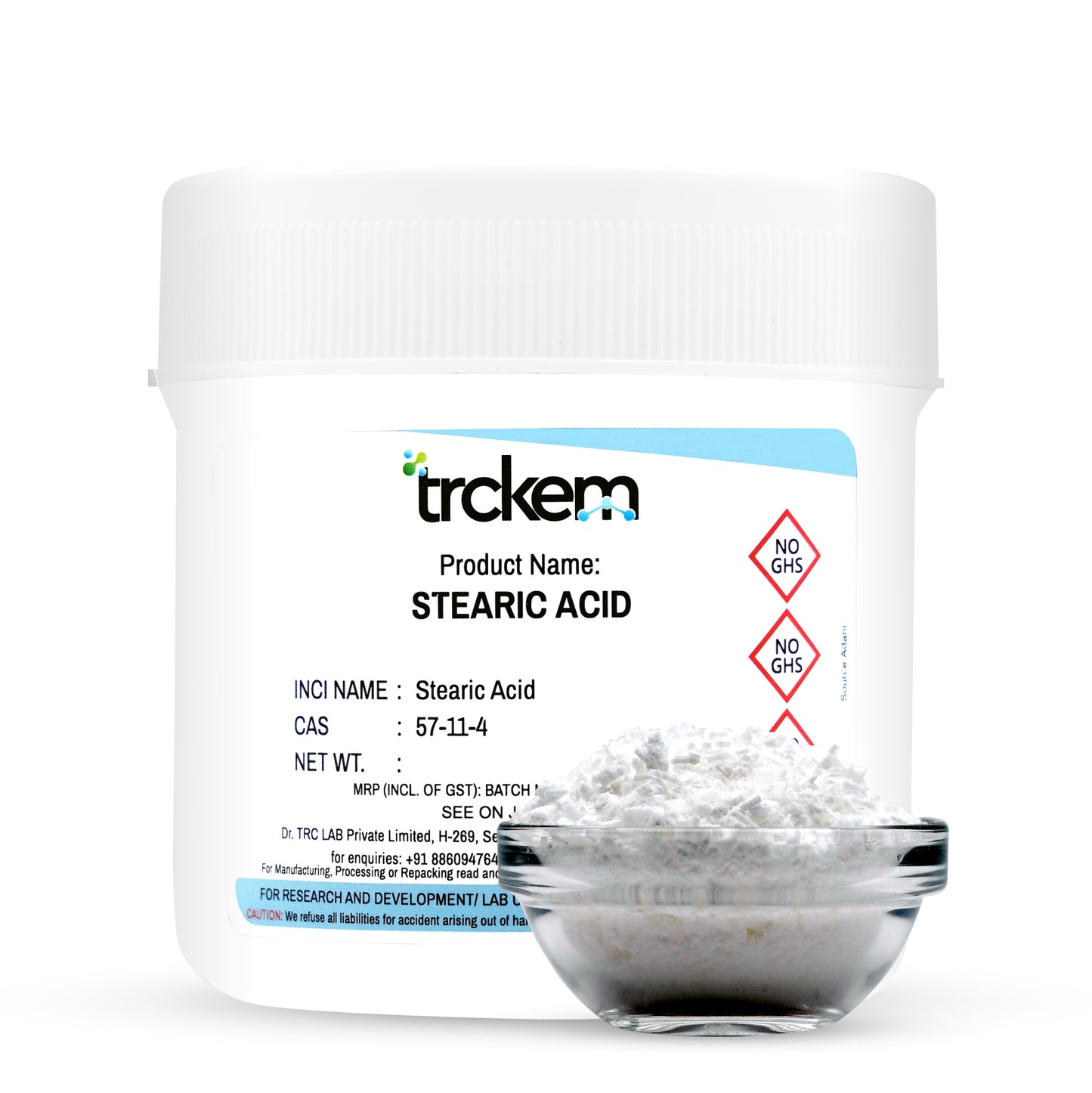
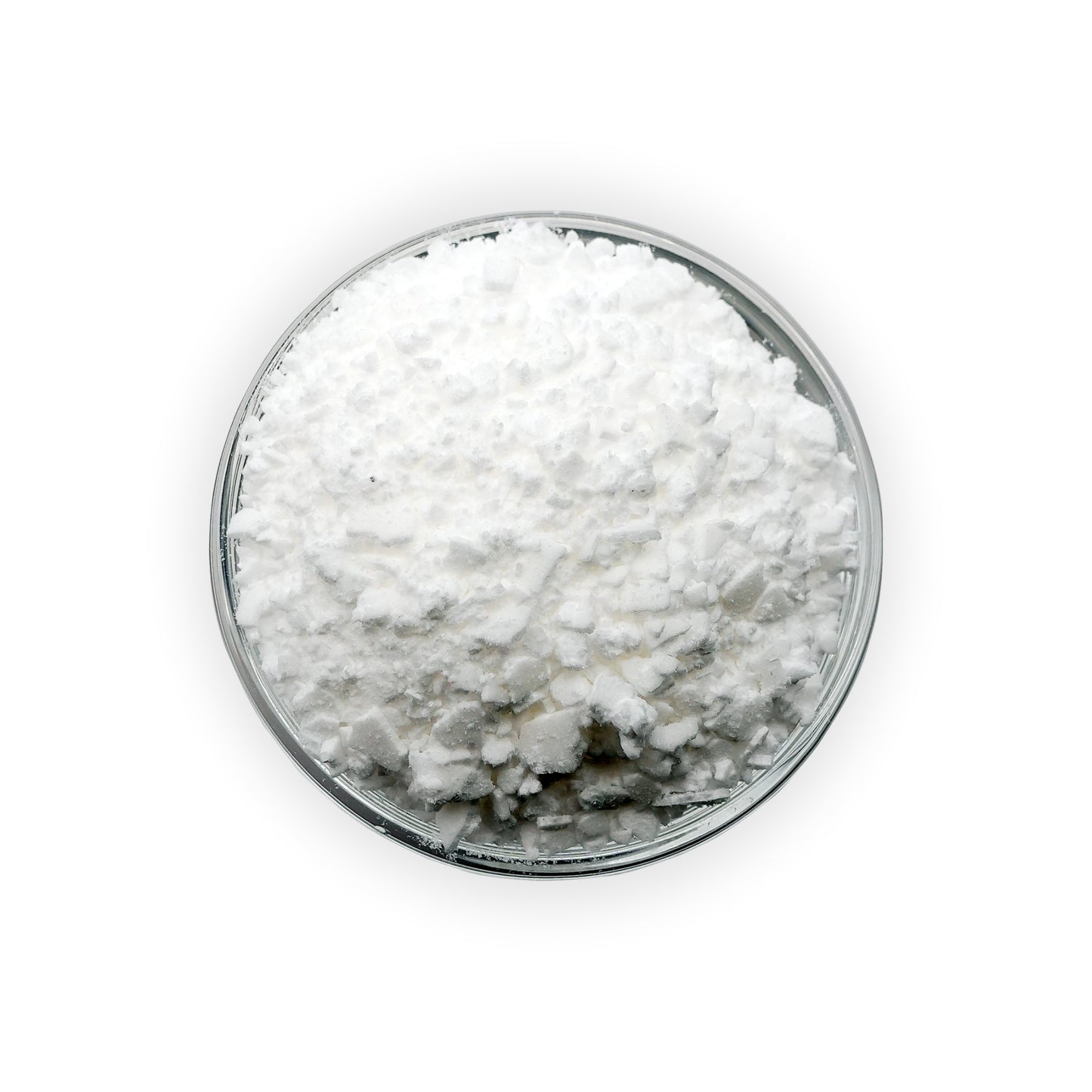
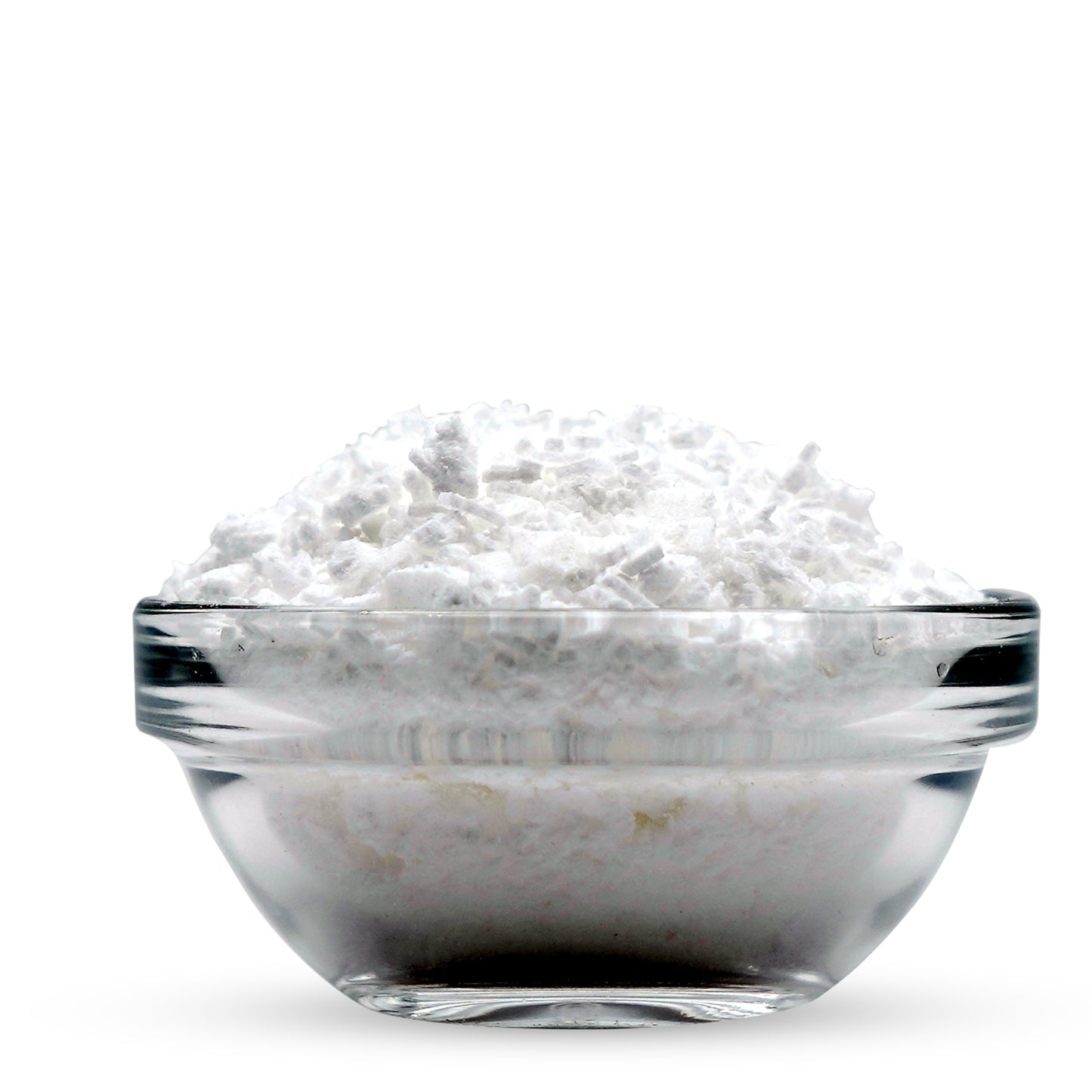
Appearance: Stearic acid occurs as a white, waxy solid at room temperature. It may vary slightly in appearance depending on its purity and source.
Solubility: Stearic acid is insoluble in water but soluble in organic solvents such as ethanol, acetone, and chloroform. It exhibits limited solubility in cold water but can form stable emulsions and suspensions in water-based formulations.
Preservation: Stearic acid is inherently stable under normal storage conditions. It should be stored in a cool, dry place away from moisture and direct sunlight to prevent oxidation and rancidity. Proper storage practices help maintain its quality and efficacy over time.
Storage: Store in a closed container at a dry place at room temperature
Raw Material Source : The raw materials for stearic acid production include animal fats (such as tallow) and vegetable oils (such as palm oil and coconut oil). These fats and oils undergo hydrolysis or saponification processes to release stearic acid, which is then purified through distillation and crystallization.
Manufacture: Stearic acid is primarily produced through the hydrolysis or saponification of fats and oils. In the hydrolysis process, fats and oils are treated with water and a catalyst under controlled conditions to break down triglyceride molecules into glycerol and fatty acids, including stearic acid. The resulting mixture is then separated and purified to obtain stearic acid of the desired purity. In the saponification process, fats and oils are reacted with alkalis (such as sodium hydroxide or potassium hydroxide) to form soap, which is then acidified to release stearic acid.
Animal Testing: Not animal tested
GMO: GMO-free (does not contain plant-derived components)
Vegan: Does not contain animal-derived components
Proposition: STEARIC ACID complies with relevant regulations and guidelines
Warning: Avoid contact with eyes. In case of contact, rinse thoroughly with water. Use appropriate protective equipment when
handling. Keep out of reach of children.
Formulator’s Queries, We Answered
1. What is Stearic Acid? What are its CAS number and INCI name?
CAS number: 57-11-4
INCI name: Stearic Acid
Chemical (IUPAC) name: Octadecanoic Acid.
Molecular formula: C₁₈H₃₆O₂.
Appearance: White (to off-white) waxy flakes or solid
2. What functions does Stearic Acid perform in cosmetic and personal-care formulations?
Stearic Acid is a very versatile ingredient, serving as:
- Emulsifier — helps stabilize oil-in-water emulsions, allowing oil and water phases to blend and stay stable.
- Thickener / Viscosity enhancer — adds body and desirable texture/viscosity to creams, lotions, and similar products.
- Binder / Hardener — used in soaps, bar cleansers, stick products (e.g. deodorant sticks), to improve hardness/structure.
- Emulsion stabilizer / Sensory modifier — contributes to the sensory feel (soft, waxy, pearly) and stability of final products.
- Refatting / Skin-conditioning agent — helps in moisturizing by integrating into skin lipid layers, supporting skin barrier, and leaving skin soft.
Because of this multifunctionality, Stearic Acid is widely used in many personal-care products
3. In which types of personal care / cosmetic products is Stearic Acid commonly used?
Typical applications include (but are not limited to):
- Creams and lotions (facial creams, body lotions)
- Moisturizers and skin-care creams
- Soaps, bar soaps, syndet bars, cleansing bars
- Shaving creams and after-shaving lotions/soaps
- Lotions and balms (e.g., body butters, cleansing balms)
- Deodorants (stick or solid)
- Hair care / conditioners (where used as thickener or binder)
- Other formulations requiring emulsion stabilization, viscosity control, or solid structure
Because of its compatibility with many oils, surfactants, and active ingredients, Stearic Acid fits well into a variety of personal-care formulations.
4. What are the sourcing / origin considerations for Stearic Acid for cosmetics (e.g., plant vs. animal derived)?
Stearic Acid can be derived from vegetable oils (e.g., palm, coconut, rapeseed) or animal fats (tallow etc.) depending on supplier and feedstock.
For vegan / “clean” / cruelty-free cosmetic lines, one should ensure sourcing from vegetable oils. Many suppliers list their origin explicitly.
7. What are some formulation & handling tips when using Stearic Acid in personal care products?
Because Stearic Acid is insoluble in water but soluble in oils / alcohols, it should typically be melted with the oil phase in an emulsion (oil + water) formulation.
For creams, lotions or bar soaps: heat the oil phase, dissolve / melt Stearic Acid properly before mixing with other oils/surfactants for a stable, homogeneous formulation.
Monitor pH and compatibility: in some formulations, over-use or improper neutralization may lead to destabilized emulsions or unwanted texture (“greasiness”, “waxy feel”), particularly if too much is used without balancing other emulsifiers or emollients.
Storage & handling: store in a cool, dry place, away from moisture, strong oxidizers or bases, to maintain quality and prevent degradation.