


SKU:SOL-SOD-072-300G
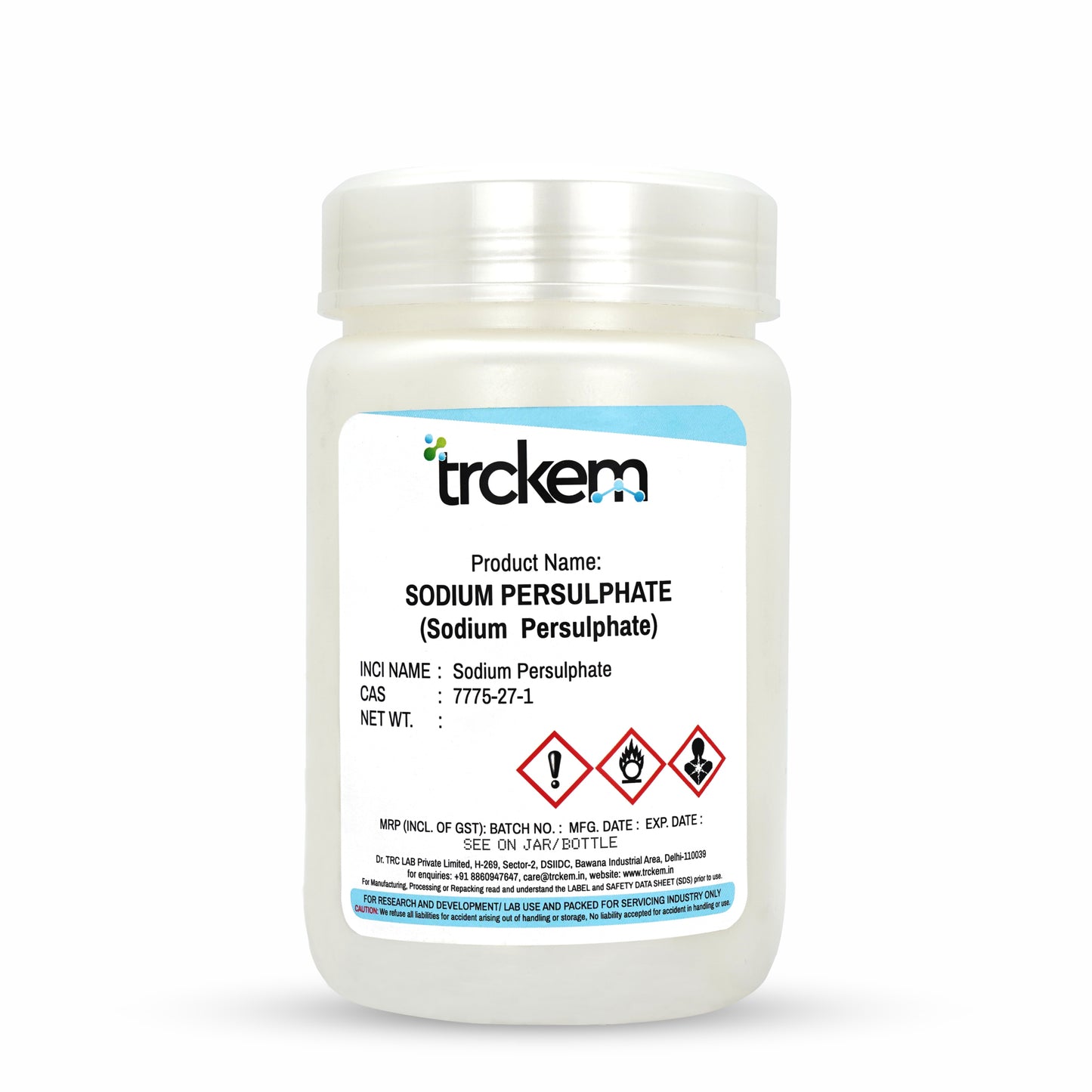
SODIUM PERSULPHATE
For Bulk Quantity:📞 8822636416
Couldn't load pickup availability
Sodium persulfate, also known as sodium peroxydisulfate, is a white, crystalline solid with the chemical formula Na2S2O8. It is a strong oxidizing agent commonly used in various industrial and laboratory applications.
Product Document: Download Now 👇


General Description
Sodium Persulphate is a white, crystalline, inorganic salt that functions primarily as a strong oxidizing agent. In the cosmetic and personal care industry, it is best known for its use in oxidative hair products due to its ability to release active oxygen when mixed with water or other activators. This property makes it highly effective in bleaching, lightening, and oxidative treatment formulations. Sodium Persulphate is often supplied as a fine powder or granule and is favored by manufacturers for its reliability, stability, and efficiency in oxidative reactions.
Uses in the Cosmetics Industry
Sodium Persulphate is widely utilized in:
- Hair Bleaching Powders: Provides the oxidative power needed to lighten natural hair pigments.
- Hair Color Products: Used in oxidative dye systems to help activate and develop permanent hair dyes.
- Hair Lightening Kits: Included in consumer and professional formulations to achieve high-lift shades.
- Specialty Treatments: Occasionally used in oxidative cosmetic systems requiring controlled oxygen release.
Its powerful bleaching capability makes Sodium Persulphate a staple ingredient in professional salon products, particularly for blonde and high-lift color formulations.
Hazards
While effective, Sodium Persulphate must be handled with care due to its strong oxidizing nature:
- Skin Irritation: May cause irritation, redness, or allergic reactions upon prolonged or repeated contact.
- Respiratory Sensitization: Inhalation of dust can cause respiratory irritation and may lead to asthma-like symptoms in sensitive individuals.
- Eye Irritation: Dust or solutions can cause significant irritation if they come into contact with the eyes.
- Oxidizing Hazard: Being a strong oxidizer, it can intensify combustion if in contact with combustible materials.
- Environmental Impact: Should be managed carefully to prevent release into waterways, as it may pose risks to aquatic organisms.
Storage & Stability
- Storage: Store in a cool, dry, and well-ventilated place away from heat, moisture, and flammable materials. Keep containers tightly sealed.
- Stability: Stable under recommended storage conditions, but decomposes if exposed to heat, moisture, or contaminants, releasing oxygen and heat.
Sodium Persulphate is typically supplied in bulk for professional and industrial cosmetic applications, with strict handling guidelines to ensure product safety and stability.
CAS Number: 7775-27-1
INCI: Sodium Persulphate
Composition: Sodium Persulphate is composed of sodium ions (Na+) and Persulphate ions (S2O8^2-). It is manufactured through the oxidation of sodium sulphate.
Purity Grade: No purity grade applicable
Appearance: Sodium Persulphate appears as white, odorless, and crystalline powder or granules.
Solubility: Sodium Persulphate is highly soluble in water, forming a clear, colorless solution. It is sparingly soluble in alcohol.
Preservation: Sodium Persulphate is typically stable under normal storage conditions when kept away from moisture and incompatible substances. It should be stored in a cool, dry place in tightly closed containers to prevent moisture absorption.
Storage: Store in a closed container at a dry place at room temperature
Raw Material Source : The raw materials for sodium Persulphate production include sodium sulphate and oxidizing agents such as sulfuric acid or hydrogen peroxide.
Manufacture: Sodium Persulphate is manufactured through the oxidation of sodium sulphate using an oxidizing agent such as sulfuric acid or hydrogen peroxide. The reaction typically occurs under controlled conditions to produce sodium Persulphate crystals, which are then purified and processed into the desired form.
Animal Testing: Not animal tested
GMO: GMO-free (does not contain plant-derived components)
Vegan: Does not contain animal-derived components
Proposition: SODIUM PERSULPHATE complies with relevant regulations and guidelines
Warning: Avoid contact with eyes. In case of contact, rinse thoroughly with water. Use appropriate protective equipment when
handling. Keep out of reach of children.
Formulator’s Queries, We Answered
1. What is Sodium Persulfate (CAS number / INCI name)?
CAS Number: 7775-27-1
INCI Name: Sodium Persulfate
Also known as disodium peroxodisulfate / sodium peroxydisulfate (IUPAC name)
2. What is the chemical nature and physical appearance of Sodium Persulfate?
Sodium Persulfate is a white, crystalline, inorganic salt with the molecular formula Na₂S₂O₈ and a molecular weight of approximately 238.1 g/mol.It is odorless and typically supplied as a water-soluble powder
3. What are the common uses of Sodium Persulfate in personal care / cosmetics?
It is used as a strong oxidizing / bleaching agent in hair-bleaching and hair-lightening formulations, often in combination with other persulfates or peroxides, to lift natural or artificial hair pigment.
It may also be used in other “oxidative” cosmetic treatments where controlled release of active oxygen is needed.
In broader industry, beyond cosmetics, it is known as a polymerization initiator, bleaching agent (textile), etchant/cleaning agent (metals & electronics), and water-/waste-treatment oxidant
4. Why is Sodium Persulfate used (i.e. what benefits or functional advantages does it provide)?
As a powerful oxidizer, it enables effective and rapid hair-lightening or dye processes — important for products that require strong pigment removal or lightening.
It offers good stability and ease of handling in powdered form, which can be important for formulation control and consistency.
5. What are the hazards and safety considerations when using or handling Sodium Persulfate?
Sodium Persulfate is a strong oxidizing agent and must be handled with care. Key hazard/safety concerns:
- It can cause skin and eye irritation, and repeated or prolonged exposure — especially as dust or in concentrated form — may lead to skin sensitization or allergic reactions.
- Inhalation of dust can irritate the respiratory tract and may provoke asthma-like symptoms in sensitized individuals