


SKU:SOL-TRC-RESEVERATOL-10G
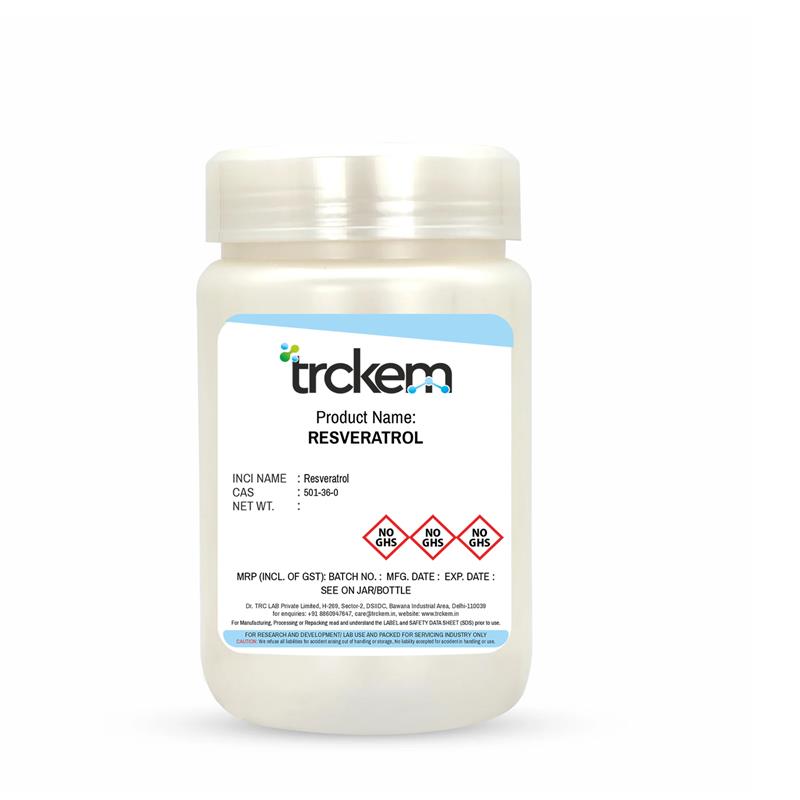
Reseveratol
For Bulk Quantity:📞 8822636416
Couldn't load pickup availability
Resveratrol is a polyphenolic antioxidant found in grapes, berries, and Japanese knotweed. Widely used in skincare, it helps protect against environmental stress, reduces visible signs of aging, and supports skin repair. Its strong anti-inflammatory and brightening properties make it valuable in serums and creams aimed at improving skin tone, firmness, and overall radiance.
Product Document: Download Now 👇


General Description
Resveratrol is a powerful polyphenolic antioxidant naturally found in grapes, berries, peanuts, and the roots of Polygonum cuspidatum. It is renowned for its strong free-radical–scavenging ability and its role in protecting cells from oxidative stress. In cosmetic formulations, resveratrol is used as an advanced anti-aging and skin-protective active due to its ability to support collagen integrity, reduce visible signs of aging, and improve skin vitality. It appears as a fine powder, typically white to off-white, and is often used in encapsulated or stabilized forms to improve solubility and bioavailability.
Uses in the Cosmetic Industry
Resveratrol is incorporated into skincare formulations for its strong antioxidant and soothing properties. Common applications include:
- Anti-Aging Serums & Creams: Helps minimize fine lines, wrinkles, and loss of firmness.
- Brightening & Radiance Products: Supports a clearer and more even skin tone.
- UV-Protection Supporting Formulas: Helps neutralize environmental and UV-induced free radicals (not a sunscreen).
- Anti-Pollution Skincare: Protects skin from oxidative damage caused by pollution and stress.
- Sensitive Skin Products: Provides calming benefits and reduces signs of irritation.
- High-Performance Skin Treatments: Used in premium and luxury skincare due to its potent biological activity.
Because of its sensitivity to light and oxidation, resveratrol is often encapsulated or formulated with stabilizers in cosmetic applications.
Hazards
While Resveratrol is considered safe and effective for cosmetic use, certain precautions apply:
- Skin Sensitivity: May cause mild irritation or redness in some individuals, especially at higher use levels.
- Stability Issues: Degrades with exposure to heat, light, and oxygen, potentially reducing efficacy.
- Inhalation Risk: Fine powder form may irritate the respiratory tract if inhaled during manufacturing.
- Eye Irritation: Not intended for direct eye use; may cause irritation if applied near the eye area.
- Allergic Reactions: Rare but possible, especially in users sensitive to polyphenols.
CAS Number: 501-36-0
INCI: Resveratrol
Composition:Resveratrol is a natural polyphenolic compound (stilbenoid), chemically known as 3,5,4′-trihydroxy-trans-stilbene. It is commonly found in grapes, berries, and Polygonum cuspidatum. Cosmetic-grade Resveratrol typically contains the trans-resveratrol isomer for maximum bioactivity.
Purity Grade:Cosmetic Grade / ≥ 98% Pure (typical for cosmetic and nutraceutical applications)
Appearance:Off-white to light beige crystalline powder
Solubility:
• Insoluble in water
• Soluble in ethanol, propylene glycol, PEGs, and other polar organic solvents
Preservation:Self-preserving in solid form.
For liquid formulations, antioxidant stabilizers may be added to prevent oxidation.
Storage:Store in a tightly sealed container, in a cool, dry place, protected from light.
Avoid exposure to heat, air, and humidity (Resveratrol oxidizes easily).
Raw Material Sources:Primarily derived from:
• Polygonum cuspidatum (Japanese Knotweed) root extract
• Grapes and red wine residues (less common for commercial production)
Manufacture:Commercial Resveratrol is typically produced by:
• Extraction and purification from Polygonum cuspidatum root
• Fermentation-based biotechnology (yeast or bacteria)
• Controlled crystallization for high-purity powder
Animal Testing:Not animal tested
GMO:GMO-free (typical plant-extract sourcing)
Vegan:Yes, does not contain any animal-derived materials
Proposition:Resveratrol complies with relevant cosmetic regulations, including EU Cosmetic Regulation (EC) No. 1223/2009 and is permitted for use as an antioxidant and anti-aging active ingredient.
Warning:For external use only. Avoid contact with eyes. May cause mild irritation in sensitive individuals. Store away from direct sunlight and moisture. Use appropriate protective equipment when handling powder to avoid inhalation.
Formulator’s Queries, We Answered
What is Resveratrol? What are its CAS number and INCI name?
INCI Name: Resveratrol.
CAS Number: 501-36-0.
Where does Resveratrol come from (its natural sources)?
Resveratrol is found in several plants, most notably in the skins of red grapes, berries, peanuts, and in knotweed.
Why is Resveratrol used in skincare / personal care formulations? What are its benefits?
Resveratrol is popular in cosmetics because of its multi-functional bioactivity:
- It is a powerful antioxidant, helping neutralize free radicals and reduce oxidative stress in skin.
What are the dermatological bioactivities of Resveratrol and its derivatives?
Beyond the parent molecule, naturally occurring derivatives (e.g., glycosides, methoxylated or hydroxylated forms) also display beneficial skin effects.
Is there clinical / in vivo evidence that Resveratrol works on skin?
Yes. In a 12-week clinical trial done by L’Oréal (Resveratrol BE serum), improvements were observed in fine lines, wrinkles, skin roughness, elasticity, and overall radiance, with no significant adverse effects.