


SKU:LIQ-TRC-PG -500G
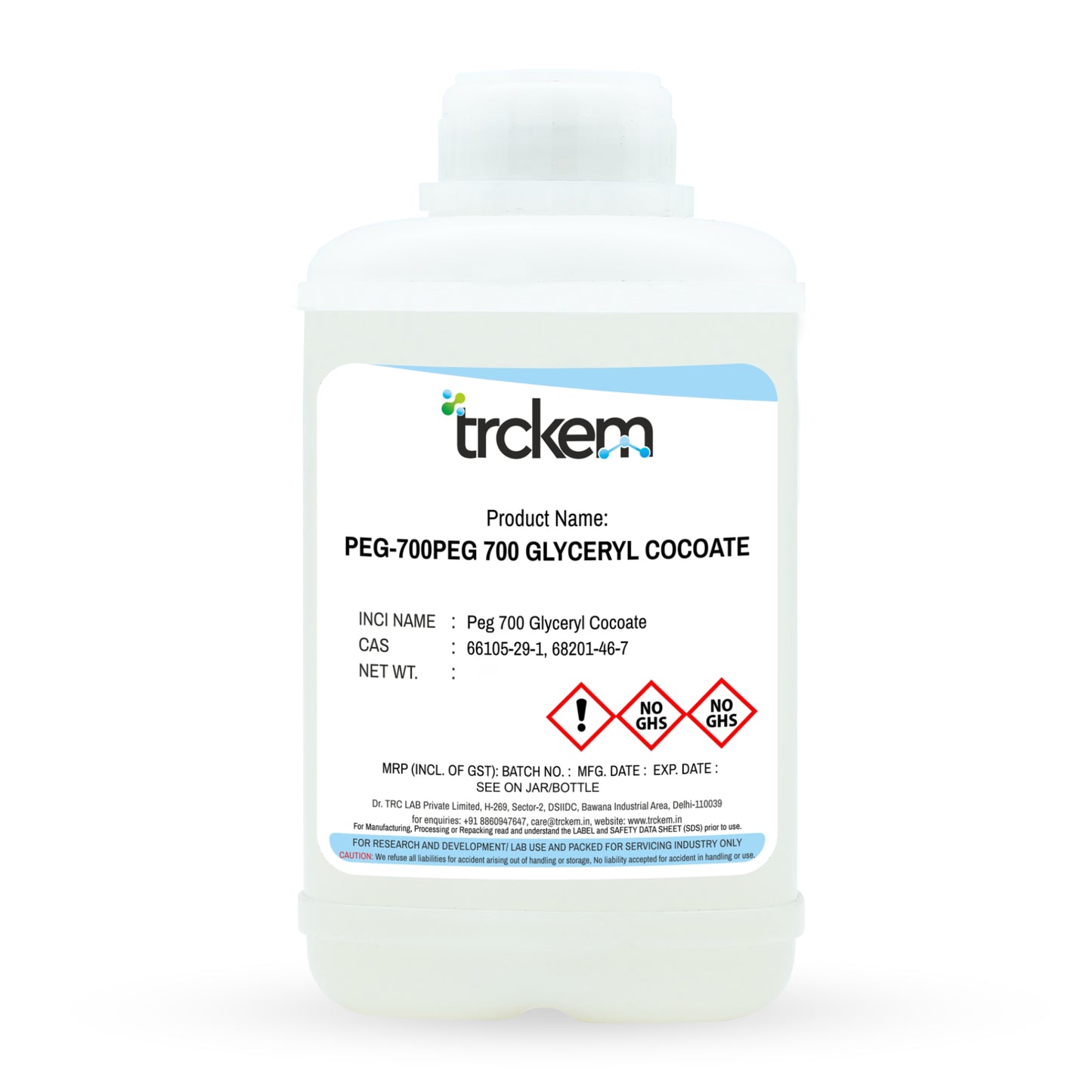
PEG 700 (GLYCERYL COCOATE)
For Bulk Quantity:📞 8822636416
Couldn't load pickup availability
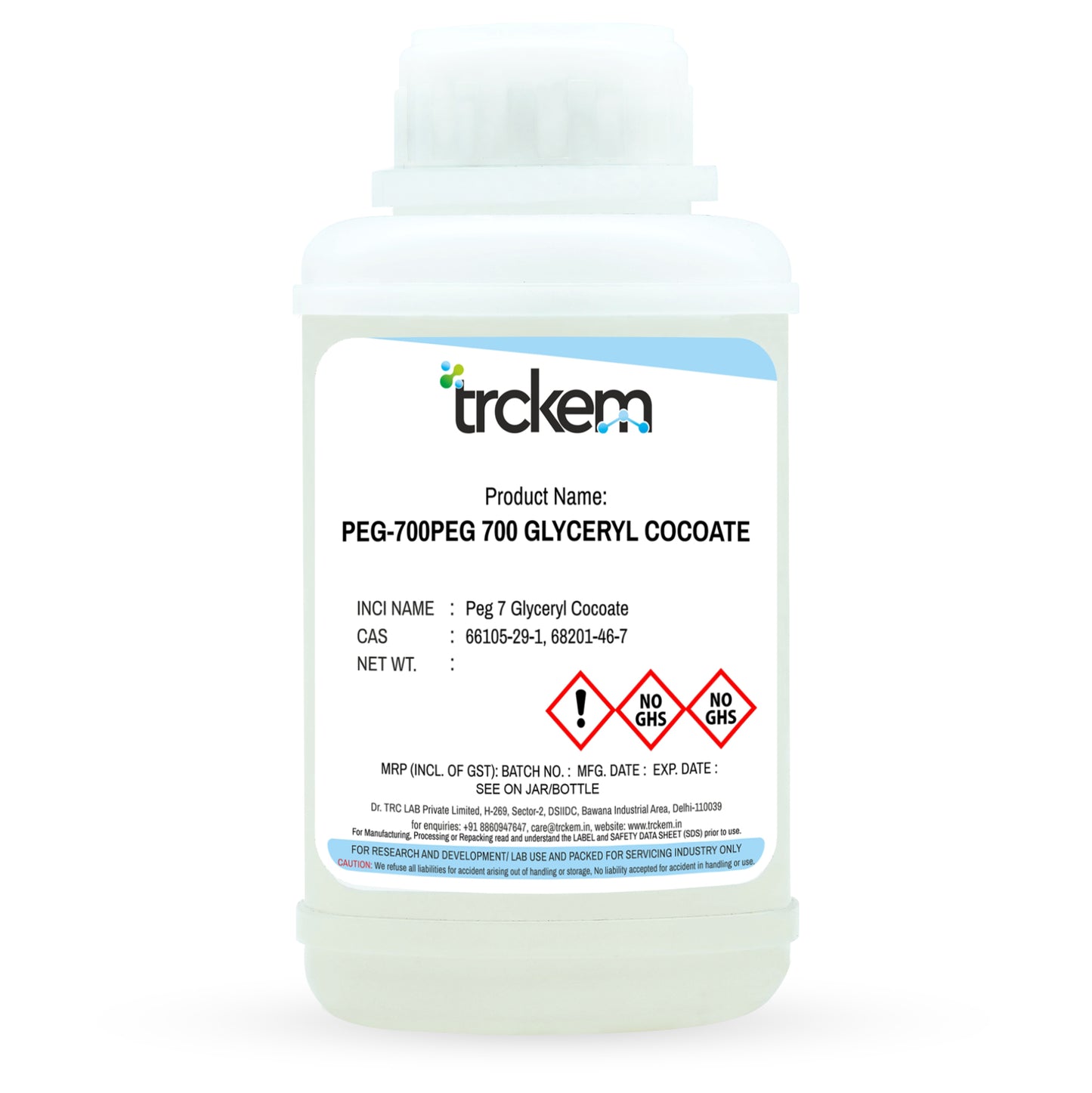
PEG 700 Glyceryl Cocoate is a non-ionic surfactant derived from coconut oil and polyethylene glycol. It is commonly used in cosmetic and personal care products as an emulsifier, surfactant, and conditioning agent.
Product Document: Download Now 👇

General Description
PEG 700 (Polyethylene Glycol 700) is a water-soluble polymer widely used in the cosmetic, pharmaceutical, and personal care industries as a humectant, solvent, and emulsifier. Known for its ability to retain moisture and improve product texture, PEG 700 enhances the stability and performance of formulations. Available for bulk purchase, wholesale supply, and private label manufacturing, it is a key ingredient for cosmetic manufacturers looking to create high-quality skincare and haircare products.
Uses in the Cosmetics Industry
PEG 700 is a versatile ingredient used in various beauty and personal care products, including:
✔ Moisturizers & Creams – Helps retain hydration and enhances spreadability.
✔ Shampoos & Conditioners – Improves solubility and texture for better application.
✔ Lotions & Serums – Acts as an effective emulsifier and penetration enhancer.
✔ Soaps & Cleansers – Enhances foaming properties and provides a smooth feel.
✔ Makeup & Foundations – Works as a stabilizer and prevents ingredient separation.
Side Effects & Hazards
While PEG 700 is generally considered safe, some potential concerns include:
⚠ Mild Skin Sensitivity – In rare cases, may cause irritation for individuals with sensitive skin.
⚠ Absorption Concerns – May enhance the penetration of other ingredients, requiring careful formulation.
⚠ Environmental Impact – PEG compounds are not easily biodegradable and may contribute to water pollution.
CAS Number: 68553-03-07
INCI: Glyceryl Cocoate.
Composition: PEG 700 Glyceryl Cocoate is composed of glyceryl esters derived from coconut oil and polyethylene glycol.
Purity Grade: No purity grade applicable
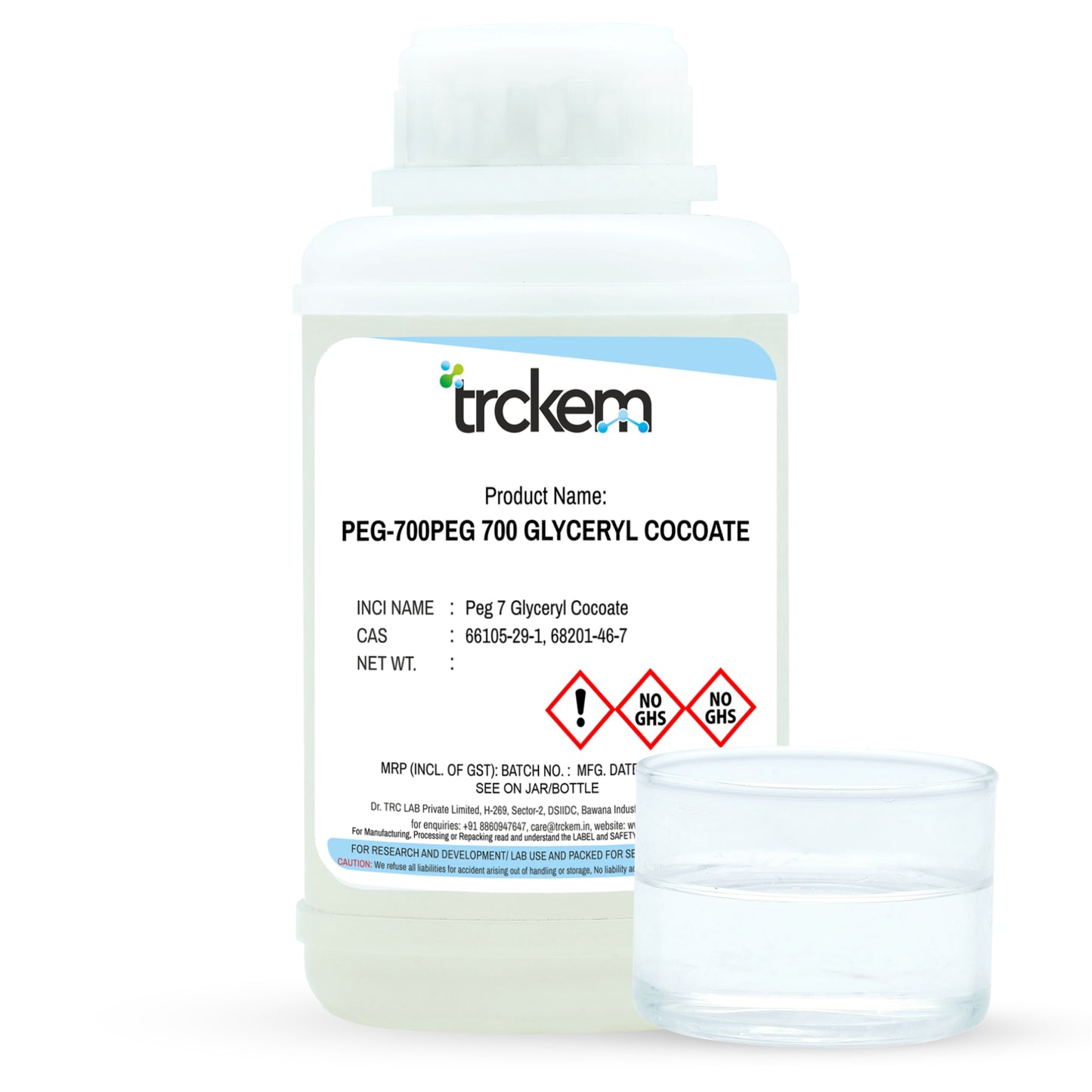
Appearance: PEG 700 Glyceryl Cocoate typically appears as a clear to slightly yellowish liquid at room temperature.
Solubility: PEG 700 Glyceryl Cocoate is soluble in water and various organic solvents, making it versatile for formulation in cosmetic and personal care products.
Preservation: PEG 700 Glyceryl Cocoate is usually stable under normal storage conditions and does not require specific preservation measures. However, it should be stored in a cool, dry place away from direct sunlight to maintain its quality over time.
Storage: Store in a closed container at a dry place at room temperature
Country of Origin: India
Raw Material Source: The raw materials used in the production of PEG 700 Glyceryl Cocoate are primarily coconut oil and polyethylene glycol.
Manufacture: PEG 700 Glyceryl Cocoate is typically manufactured through the esterification of coconut oil with polyethylene glycol, followed by purification processes to obtain the desired product.
Animal Testing: Not animal tested
GMO: GMO-free (does not contain plant-derived components)
Vegan: Does not contain animal-derived components
Proposition: PEG 700 GLYCERYL COCOATE complies with relevant regulations and guidelines
Warning: Avoid contact with eyes and skin. Use appropriate protective equipment when handling.
THE STORY OF PEG 700

PEG 700: The Smooth-Flowing Moisturizing Polymer for Advanced Formulations
PEG 700 (Polyethylene Glycol 700) is a mid-weight liquid polymer known for its balanced viscosity, excellent solubilizing power, and reliable moisturization profile. It provides smooth texture, improved spreadability, and enhanced hydration, making it a valuable ingredient for premium skincare, haircare, and pharmaceutical formulations.

Crafted Through Precision Polymerization for Superior Performance
PEG 700 is produced through controlled polymerization of ethylene oxide, resulting in a stable, consistent molecular weight ideal for cosmetic and personal-care applications. The process ensures purity, uniform viscosity, and high compatibility—qualities trusted by formulators worldwide for reliable performance.

Enhanced Solubilization, Smooth Texture & Lasting Hydration
In cosmetics, PEG 700 functions as a humectant, solubilizer, emollient, and texture enhancer.
Its medium viscosity makes it ideal for improving glide, enhancing moisture retention, and stabilizing complicated actives. It provides a smooth, cushiony sensory feel, making it suitable for creams, gels, serums, cleansers, and hair-conditioning products.

Stable, Gentle, and Highly Versatile Across Product Categories
Used in skincare, haircare, pharmaceutical gels, oral-care formulations, and cleansing systems.
Recommended usage: typically 1–30%, depending on viscosity and humectancy requirements.
Store sealed in cool, dry conditions.
PEG 700 is non-irritating, biodegradable, and globally approved for cosmetic and topical applications, offering reliable performance for formulators seeking a mid-weight, moisture-enhancing polymer.
Formulator’s Queries, We Answered
1. What is Propylene Glycol?
Propylene Glycol is a synthetic organic compound widely used in personal care products as a humectant, solvent, and preservative enhancer. It helps maintain moisture, improves texture, and enhances the stability of formulations.
2. What is the CAS Number and INCI Name of Propylene Glycol?
CAS Number: 57-55-6
INCI Name: Propylene Glycol
3. What are the benefits of Propylene Glycol in personal care products?
Propylene Glycol offers several benefits, including:
- Moisturization: Acts as a humectant, attracting and retaining moisture in the skin.
- Solvent Properties: Dissolves active ingredients, ensuring even distribution in formulations.
- Texture Enhancement: Improves the spreadability and feel of products.
- Preservative Booster: Enhances the efficacy of preservatives, extending product shelf life.
4. In which personal care products is Propylene Glycol commonly used?
Propylene Glycol is commonly found in:
- Skincare Products: Moisturizers, serums, and cleansers.
- Haircare Products: Shampoos, conditioners, and styling products.
- Oral Care Products: Toothpastes and mouthwashes.
- Deodorants: Antiperspirants and body sprays.
- Cosmetics: Foundations, mascaras, and lipsticks.
5. Is Propylene Glycol safe for skin application?
Yes, Propylene Glycol is generally recognized as safe for topical application. However, individuals with sensitive skin may experience mild irritation, so it's advisable to perform a patch test before widespread use.
6. Can Propylene Glycol be used in natural and organic formulations?
While Propylene Glycol is synthetic, some natural and organic formulations may include it due to its efficacy and safety profile. However, it's essential to check certification standards, as some organizations may restrict its use.
7. What is the recommended concentration of Propylene Glycol in personal care formulations?
The concentration varies depending on the product type but typically ranges from 1% to 5%. Always refer to formulation guidelines and regulatory standards for specific applications.
8. Is Propylene Glycol suitable for sensitive skin?
Propylene Glycol is generally suitable for most skin types. However, individuals with sensitive skin or conditions like eczema should conduct a patch test or consult a dermatologist before use.
9. What is the shelf life of Propylene Glycol?
Propylene Glycol itself has a long shelf life when stored properly. In formulations, it can help extend the product's shelf life by enhancing preservative efficacy.
10. How should Propylene Glycol be stored?
Store Propylene Glycol in a cool, dry place away from direct sunlight and moisture to maintain its stability and effectiveness.