


SKU:LIQ-TRC-NAN(COC)-500G
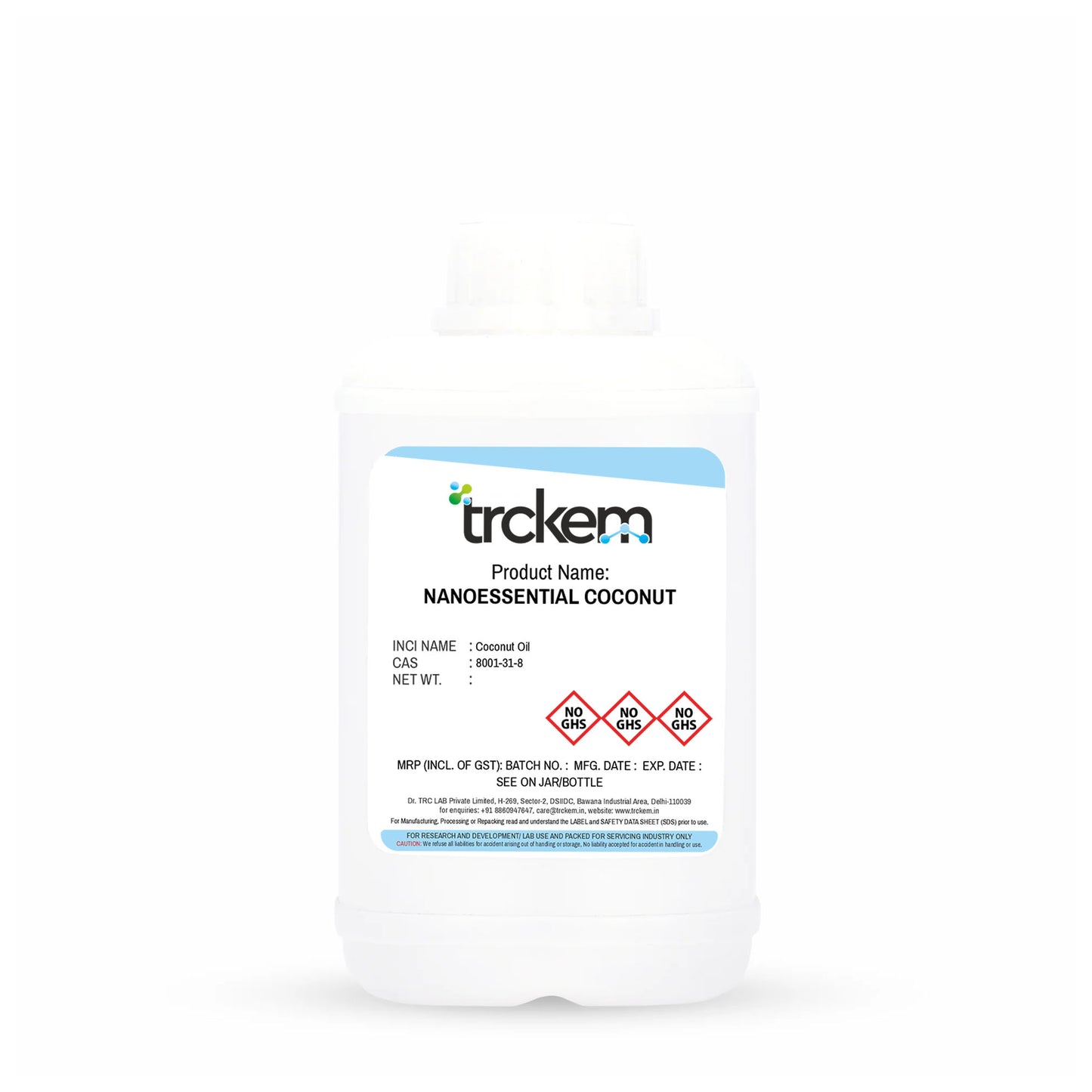
NANOESSENTIAL COCONUT
For Bulk Quantity:📞 8822636416
Couldn't load pickup availability
Nanoessential Coconut is a lightweight, nutrient-rich oil derived from coconuts, optimized with nano-technology for enhanced absorption. It deeply nourishes, hydrates, and softens skin and hair while providing antioxidant protection. Known for its soothing and restorative properties, it supports healthy glow, strength, and natural radiance in beauty formulations.
Product Document: Download Now 👇


General Description
Nanoessential Coconut is a refined, high-quality coconut oil–derived ingredient designed specifically for cosmetic and personal care formulations. It appears as a clear to pale-yellow oil or semi-solid material, depending on temperature, and is prized for its excellent emollient, moisturizing, and conditioning properties. As a premium nanoessential coconut chemical, it is processed to deliver improved absorption, enhanced skin feel, and superior performance in modern cosmetic systems.
In the beauty and personal care industry, Nanoessential Coconut is widely recognized for its ability to nourish, soften, and protect both skin and hair. Its lipid profile closely mimics natural skin oils, allowing it to penetrate effectively and support barrier repair. Cosmetic manufacturers frequently buy nanoessential coconut to enhance sensory appeal and functional benefits in formulations ranging from creams to hair treatments.
Due to its versatility and consumer-friendly profile, wholesale nanoessential coconut sourcing is common among brands seeking cost-effective yet high-performance natural ingredients. The consistent quality of this nanoessential coconut chemical ensures reliable results across batches, making it suitable for large-scale cosmetic production.
Uses in the Cosmetics Industry
- Nanoessential Coconut plays a multifunctional role in a wide range of cosmetic and personal care products, supporting both performance and sensory enhancement. Key applications include:
- Used as a primary emollient in skin care creams, lotions, and body butters, where Nanoessential Coconut improves hydration and softness.
- Incorporated into hair care products such as shampoos, conditioners, masks, and serums to reduce protein loss and enhance shine.
- Added to lip care, balms, and ointments to provide smooth texture and long-lasting moisture retention.
- Utilized in massage oils and cleansing formulations for its excellent spreadability and mild cleansing support.
- Cosmetic brands often buy nanoessential coconut to meet growing consumer demand for naturally derived, effective ingredients.
- Access to wholesale nanoessential coconut allows manufacturers to scale production efficiently while maintaining formulation consistency. The reliability of a high-grade nanoessential coconut chemical supports predictable performance in both rinse-off and leave-on products.
Hazards
- Nanoessential Coconut is generally considered safe for cosmetic use when formulated according to industry guidelines. However, standard handling precautions should still be observed.
- Low irritation potential, but rare sensitivity reactions may occur in individuals with coconut-derived ingredient allergies.
- Should be used within recommended concentration limits to avoid heavy or greasy skin feel.
- Industrial handling may require basic protective measures to maintain hygiene and prevent contamination.
- Manufacturers that buy nanoessential coconut in bulk should follow standard cosmetic raw material safety practices.
- Suppliers offering wholesale nanoessential coconut typically provide documentation to ensure safe handling and regulatory compliance for this nanoessential coconut chemical.
Storage & Stability
Nanoessential Coconut should be stored in tightly sealed containers in a cool, dry environment away from direct sunlight and excessive heat. Elevated temperatures may cause liquefaction, while low temperatures can lead to solidification—both of which are reversible and do not affect quality.
When stored properly, Nanoessential Coconut maintains excellent stability and functional performance over time. Cosmetic manufacturers sourcing wholesale nanoessential coconut are advised to follow recommended storage guidelines to preserve purity and shelf life. Consistent handling ensures that this nanoessential coconut chemical remains effective and suitable for high-quality cosmetic formulations.
CAS Number: 8001-31-8
INCI: Cocos Nucifera (Coconut) Oil
Composition:NANOESSENTIAL COCONUT is primarily composed of triglycerides of fatty acids, with lauric acid as the predominant component, along with myristic, caprylic, capric, palmitic, stearic, oleic, and linoleic acids. It may also contain minor natural compounds such as tocopherols and sterols.
Purity Grade: Cosmetic Grade / Food Grade (depending on specification)
Appearance: Clear to slightly cloudy liquid at warm temperatures; solid white to off-white at lower temperatures.
Solubility: Insoluble in water; soluble in oils and organic solvents.
Preservation: Naturally resistant to microbial growth due to fatty acid composition. Additional preservation is generally not required, but formulation-specific guidelines should be followed.
Storage: Store in a tightly closed container in a cool, dry place at room temperature. Protect from heat, light, and air exposure to prevent oxidation.
Raw Material Sources: Derived from the dried kernel (copra) or fresh meat of coconuts.
Manufacture: Produced through mechanical pressing or solvent extraction, followed by refining, bleaching, and deodorizing (RBD process). Virgin coconut oil is produced via cold pressing or wet milling without chemical refining.
Animal Testing: Not animal tested
GMO: GMO-free (plant-derived, not genetically modified)
Vegan: 100% plant-derived, free from animal-derived ingredients
Proposition:NANOESSENTIAL COCONUT complies with EU Cosmetic Regulation, U.S. FDA guidelines, and other international cosmetic ingredient standards.
Warning:For external use only. Avoid direct contact with eyes. May cause skin sensitivity in rare cases; patch testing is recommended. Use appropriate storage to prevent rancidity.
THE STORY OF NANOESSENTIAL COCONUT

Nanoessential Coconut: The Iconic Natural Emollient for Nourishment & Shine
Nanoessential Coconut is a multi-functional natural oil extracted from the kernel ofCocos nucifera. Celebrated for its deep moisturizing, antimicrobial, and protective properties, it is widely used in skincare, haircare, and body care formulations for nourishment, repair, and shine. A hero ingredient in natural and clean beauty formulations worldwide.

Cold-Pressed or Refined from Coconut Kernel for Pure Oil Quality
Nanoessential Coconut is obtained through cold pressing or expeller extraction of dried coconut meat (copra).
- Virgin Coconut Oil (VCO): Cold-pressed, rich in antioxidants & nutrients
- Refined, Bleached & Deodorized (RBD): Neutral aroma, higher stability
TRCkem provides both food-grade and cosmetic-grade coconut oils with high lauric acid content and low free fatty acid levels for consistent formulation performance.

Moisturize. Protect. Repair.
Core benefits in cosmetics and personal care:
✅ Deeply moisturizes skin and hair, sealing in hydration
✅Repairs dry, damaged, or brittle hair strands
✅ Provides antibacterial & antifungal support (rich in lauric acid)
✅ Adds shine and softness to hair & lips
✅ Promotes smooth emulsions and skin-conditioning effects
Used in: creams, body butters, lip balms, soaps, hair oils, baby products, scrubs, and massage oils.

Natural, Safe & Versatile – A Cosmetic Staple
• Typical use level:1–100%depending on formulation
• Melting point:24–26°C– may solidify at room temperature
• Oil-soluble; compatible with esters, butters, silicones & waxes
• Approved worldwide for leave-on and rinse-off products
• ECOCERT, COSMOS, and USDA Organic grades available
• Store in cool, dry conditions; avoid prolonged heat or light exposure
• Non-toxic, safe for all skin types, and biodegradable
Formulator’s Queries, We Answered
1. What is Disodium Cocoamphodiacetate?
Disodium Cocoamphodiacetate is a synthetic amphoteric surfactant derived from coconut fatty acids, notable for its dual positive and negative ionic character. It appears as a mild, light-colored liquid with low viscosity, widely employed as a cleanser and foam booster in personal care formulations.
2. What are the CAS Number and INCI Name of Disodium Cocoamphodiacetate?
CAS Number: 68650-39-5
INCI Name: Disodium Cocoamphodiacetate
3. What benefits does it offer in personal care applications?
Mild Cleansing & Foam Boosting: Helps water mix with oils and dirt, enhancing cleansability while gently foaming.
Hair Conditioning: Adds body, suppleness, and shine, especially beneficial for damaged or dry hair.
Low Irritation & Gentle Formulas: Ideal for formulations targeting sensitive skin and even baby products due to its mildness.
4. Which personal care products commonly include Disodium Cocoamphodiacetate?
It’s frequently used in:
Skin Cleansing: Shampoos, baby shampoos, body washes, facial cleansers, hand soaps, shaving products.
Haircare: Conditioning shampoos, hair masks, and other formulations aiming to soften and manage hair.
5. Is it safe to use in personal care products?
Yes. Independent safety assessments by the Cosmetic Ingredient Review (CIR) Expert Panel have concluded it is safe when used as per standard concentrations and practices. This conclusion was reaffirmed in re-evaluations.
Additional studies show non-toxicity in oral and eye irritation tests, and non-mutagenicity in bacterial assays.
6. Can it cause skin or eye irritation?
Generally, no. Formulations containing even up to ~28% Disodium Cocoamphodiacetate in shampoos were non-irritating to eyes at tested dilutions (1–10%).
7. Is it environmentally friendly?
Low Human and Environmental Hazard: Classified by Environment Canada as not expected to be toxic, persistent, or bioaccumulative.
However, biodegradability is limited; at high concentrations (>216 mg/L), it may be toxic to bacteria in wastewater systems, forming recalcitrant metabolites.
8. Are there alternatives to Disodium Cocoamphodiacetate?
Yes. Comparable surfactants include Cocamidopropyl Betaine and Sodium Lauroamino Propionate.
9. Typical usage levels?
Usage varies by product type, with ranges like:
Shampoos & body washes: typically 5–30%
Baby products: employed due to its mildness, often at lower doses
10. How should it be stored and handled?
Store in cool, dry conditions, protected from direct sunlight.
Keep tightly sealed to preserve quality and avoid contamination.