


SKU:SOL-TRC-LMC-300G
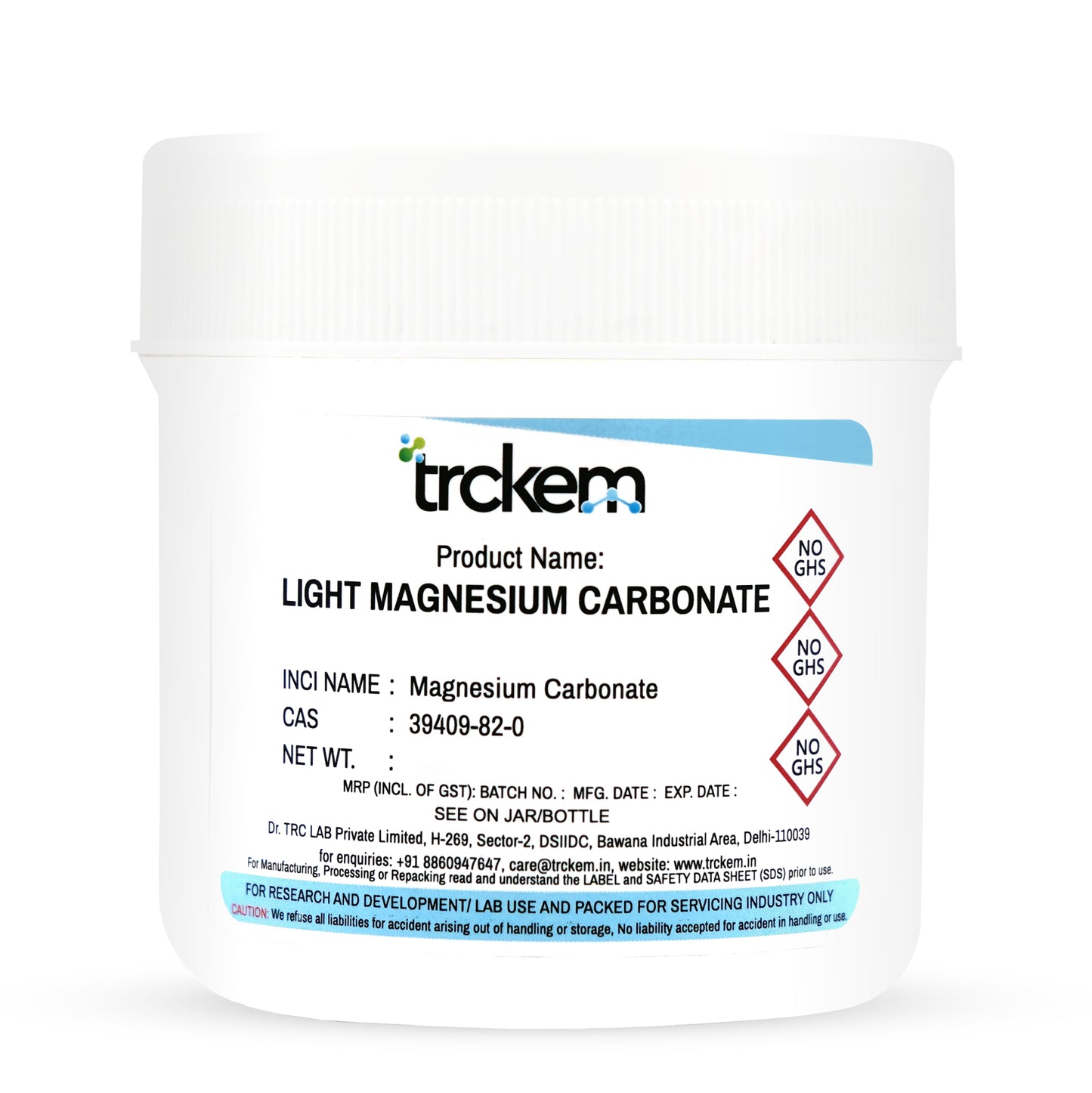
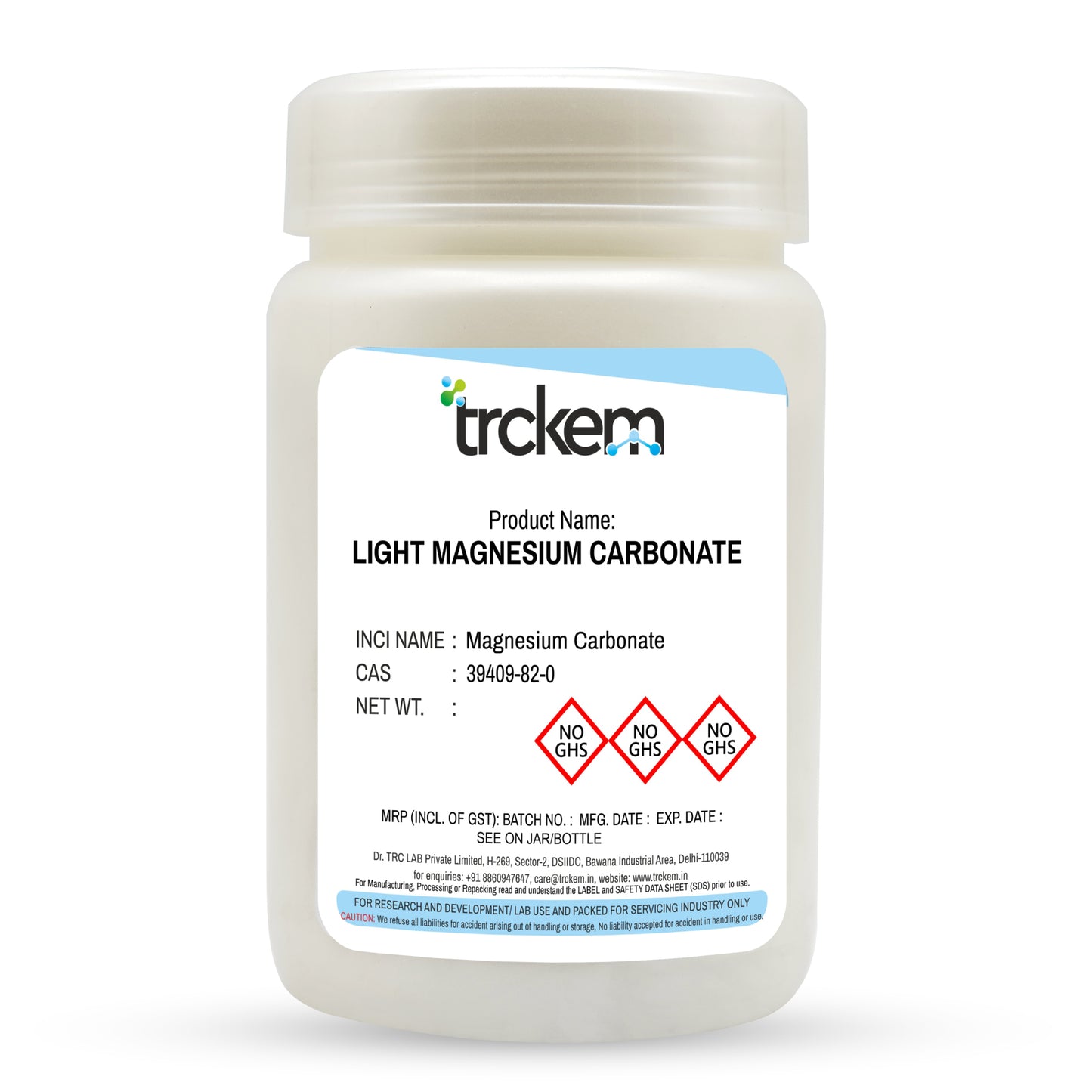
LIGHT MAGNESIUM CARBONATE
For Bulk Quantity:📞 8822636416
Couldn't load pickup availability
Light Magnesium Carbonate, also known as magnesium carbonate hydroxide, is a mineral compound primarily used as an antacid and laxative. It is also used in various industries, including pharmaceuticals, cosmetics, and sports equipment manufacturing.
Product Document: Download Now 👇

General Description:
Magnesium Carbonate is a white solid mineral that occurs naturally as a mineral known as magnesite. It is typically used in various industrial applications and can be synthesized for specific uses, including in cosmetics.
Uses in the Cosmetic Industry:
In the cosmetic industry, Magnesium Carbonate serves several potential purposes in formulations, including:
- Absorbent: Magnesium Carbonate may be used as an absorbent in cosmetics, similar to other absorbent powders like talc or kaolin clay. It helps to absorb excess moisture and oils from the skin, making it suitable for use in powders and dry formulations.
- Texturizer: It can contribute to the texture and consistency of cosmetic products, providing a smooth and silky feel.
- Anticaking Agent: In powdered cosmetics, Magnesium Carbonate may act as an anticaking agent, preventing clumping and ensuring even distribution of the product.
- Opacifying Agent: It may be used as an opacifying agent in cosmetics to provide opacity and enhance the appearance of creams, lotions, and other formulations.
Hazard:
While Magnesium Carbonate is generally considered safe for use in cosmetics, there are some potential hazards and considerations:
- Respiratory Irritation: Inhalation of fine particles of Magnesium Carbonate powder can potentially irritate the respiratory tract. Proper handling and precautions should be taken during manufacturing to minimize airborne exposure.
- Skin Sensitivity: Some individuals may experience skin irritation or allergic reactions to Magnesium Carbonate, especially if they have sensitive skin. Patch testing is recommended, especially for new products or formulations.
- Quality Control: The purity and source of Magnesium Carbonate can vary, affecting its effectiveness and safety. Cosmetic manufacturers should ensure they source high-quality, pharmaceutical-grade Magnesium Carbonate for their formulations.
CAS Number: 39409-82-0
INCI: Magnesium Carbonate
Composition: Light Magnesium Carbonate is composed of magnesium, carbon, and oxygen atoms, with the chemical formula MgCO3. It may also contain hydroxide ions, depending on the method of production and hydration level.
Purity Grade: No purity grade applicable
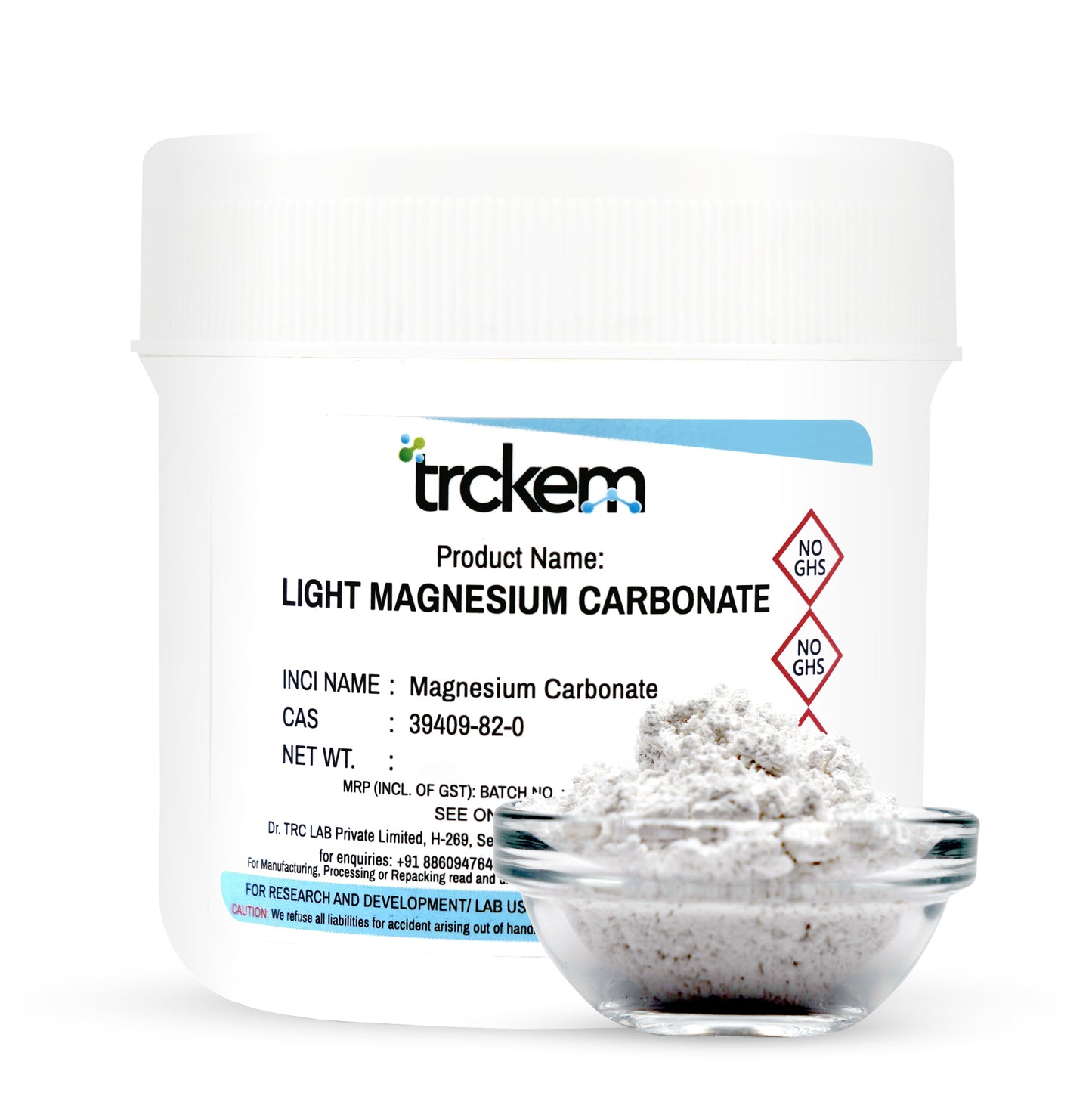
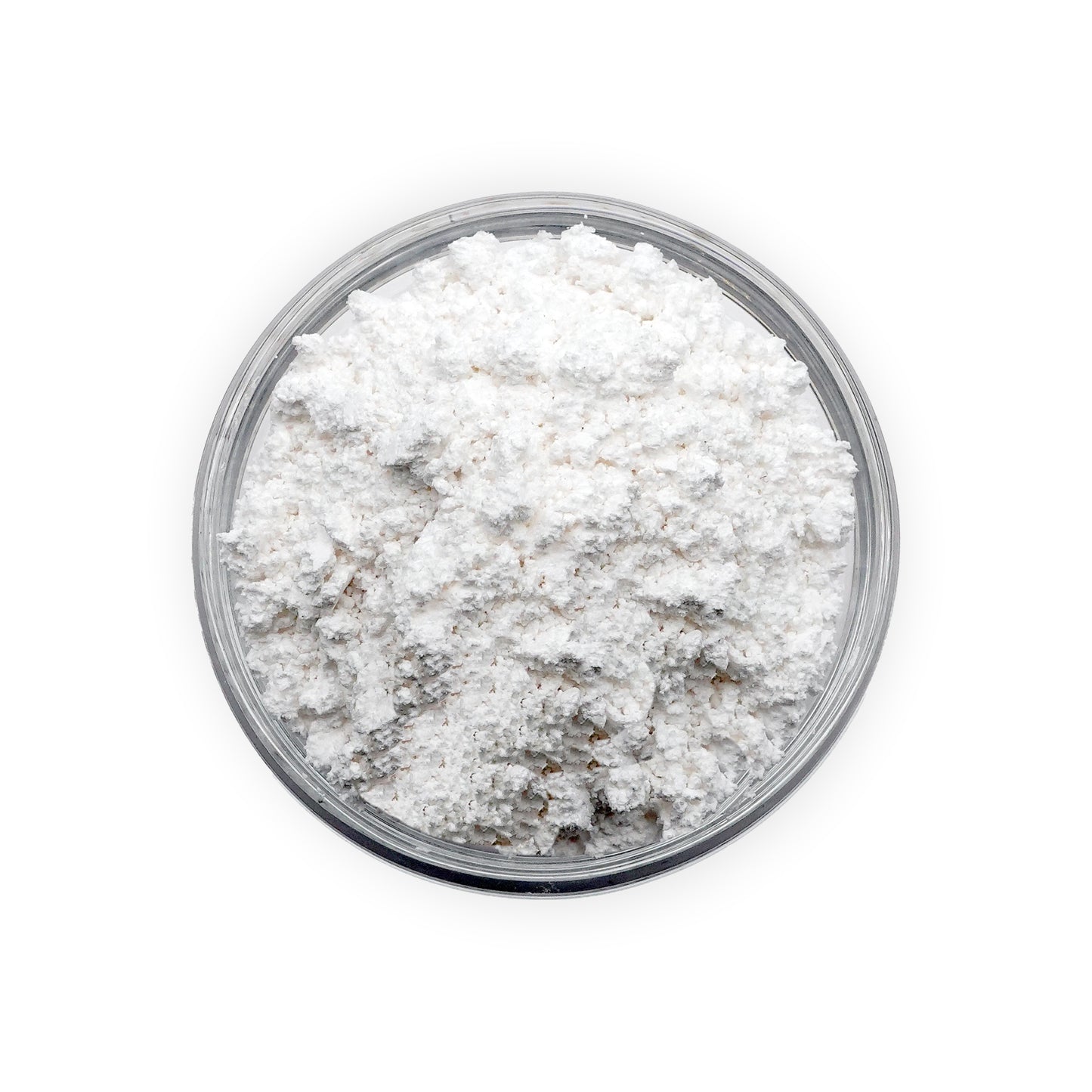
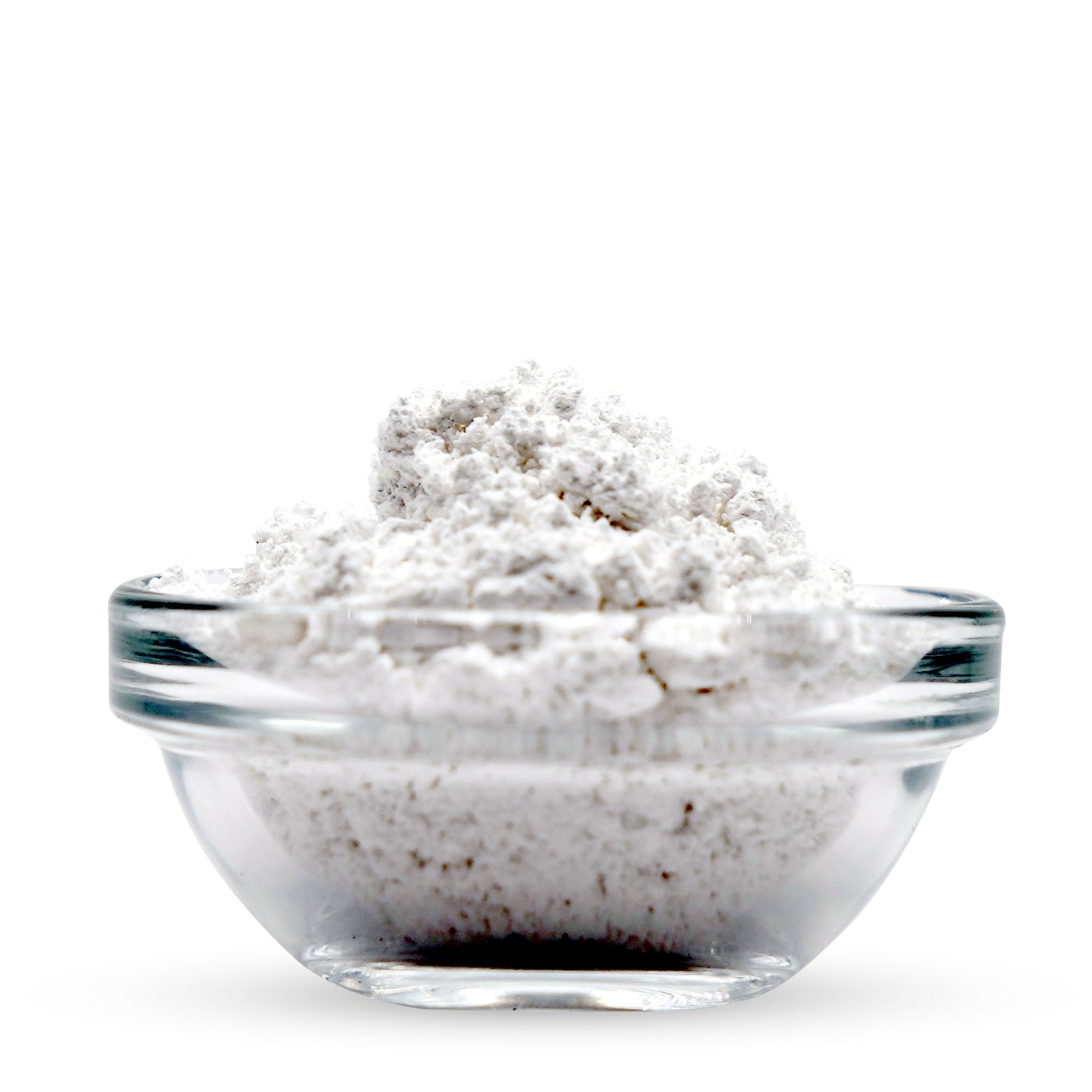
Appearance: Light Magnesium Carbonate typically appears as a fine white powder with a soft texture.
Solubility: Light Magnesium Carbonate is sparingly soluble in water and insoluble in alcohol. However, it can dissolve in acidic solutions due to the formation of soluble magnesium salts.
Preservation: Light Magnesium Carbonate should be stored in a tightly sealed container in a cool, dry place away from moisture and heat sources. It should also be protected from exposure to acids, which can cause decomposition.
Storage: Store in a closed container at a dry place at room temperature
Raw Material Source: Magnesium carbonate is typically sourced from natural mineral deposits, such as magnesite or dolomite. It can also be synthesized through chemical reactions between magnesium salts and carbonate sources.
Manufacture: Light Magnesium Carbonate can be manufactured through various methods, including precipitation reactions between magnesium salts (such as magnesium sulfate or magnesium chloride) and sodium carbonate or sodium bicarbonate. The resulting precipitate is then washed, dried, and milled to produce the final product.
Animal Testing: Not animal tested
GMO: GMO-free (does not contain plant-derived components)
Vegan: Does not contain animal-derived components
Proposition: LIGHT MAGNESIUM CARBONATE complies with relevant regulations and guidelines
Warning: Avoid contact with eyes. In case of contact, rinse thoroughly with water. Use appropriate protective equipment when handling. Keep out of reach of children.
THE STORY OF LIGHT MAGNESIUM CARBONATE

Light Magnesium Carbonate: The Ultra-Fine Absorbent Mineral for Dry, Smooth & Balanced Formulations
Light Magnesium Carbonate is a highly porous, lightweight mineral powder known for its excellent oil absorption, mattifying, and moisture-controlling properties.
It provides a smooth, silky touch and is widely used in face powders, dusting powders, deodorants, dry shampoos, pharma products, and sports/fitness formulations.

Refined Mineral Compound Produced Through Carbonation & Purification Processes
Light Magnesium Carbonate is created by treating magnesium salts (such as magnesium sulfate or chloride) with alkali carbonates, followed by:
• Filtration
• Drying
• Micronization
• Purification
This results in a soft, highly absorbent, ultra-light powder with exceptional surface area and cosmetic elegance.
TRCkem supplies pharma- and cosmetic-grade Light Magnesium Carbonate suitable for powders, deodorants, and skincare systems.

Absorb. Mattify. Smooth
Light Magnesium Carbonate provides numerous formulation benefits:
✅ Excellent oil & moisture absorption
✅ Gives a soft, matte finish to skin
✅ Improves flowability in powder products
✅ Enhances texture, slip & smoothness
✓ Ideal for sweat-prone, oily-skin & body-care products
Used in: face powders, deodorants, dry shampoos, dusting powders, makeup, sports grip powders, pharma antacid blends, and oral-care powders.

Lightweight, Safe & Easy to Formulate Across Powder & Cream Systems
• Typical use level: 2–50% in powders
• As a thickener/absorbent: 1–10% in creams & lotions
• Add during the dry phase or blend into oil phases for certain products
• Non-irritating & safe for cosmetic and pharma use
• Store in a cool, dry area to prevent moisture uptake
• Highly stable, inert & compatible with most cosmetic ingredients
• Ideal for baby-care, makeup, deodorants & dry personal-care formulations
Formulator’s Queries, We Answered
1. What is Light Magnesium Carbonate?
Light Magnesium Carbonate is a white, odorless, lightweight inorganic compound widely used in personal care and cosmetic formulations. It functions as an absorbent, anti-caking agent, opacifier, and bulking agent.
2. What is the CAS Number of Light Magnesium Carbonate?
The CAS Number of Light Magnesium Carbonate is 39409-82-0. This unique identification number is used worldwide to identify Light Magnesium Carbonate in technical, regulatory, and commercial documents.
3. What is the INCI Name of Light Magnesium Carbonate?
The INCI (International Nomenclature of Cosmetic Ingredients) name for Light Magnesium Carbonate is Magnesium Carbonate.
4. What are the benefits of Light Magnesium Carbonate in personal care products?
Light Magnesium Carbonate provides several benefits, including:
Oil Absorption: Helps control excess oil and sebum on the skin and scalp.
Anti-Caking Agent: Prevents clumping in powder-based formulations.
Mattifying Effect: Reduces shine and provides a smooth, matte finish.
Gentle Exfoliation: Aids in mild exfoliation when used in skincare products.
5. How is Light Magnesium Carbonate used in cosmetics and personal care formulations?
Light Magnesium Carbonate is commonly found in:
Face Powders & Foundations: To improve texture and reduce oiliness.
Dry Shampoos: As an oil-absorbing agent for freshening hair.
Toothpaste & Oral Care: As a mild abrasive for effective cleansing.
Body Powders & Deodorants: For sweat absorption and freshness.
6. Is Light Magnesium Carbonate safe for use in cosmetics?
Yes, Light Magnesium Carbonate is considered safe for use in personal care products when used within recommended concentrations. It is non-toxic, non-irritating, and does not pose significant risks when properly formulated.
7. Is Light Magnesium Carbonate natural or synthetic?
Light Magnesium Carbonate can be naturally derived from mineral sources or produced synthetically. Many cosmetic brands prefer natural or purified versions for clean beauty formulations.
8. Are there any regulatory restrictions on Light Magnesium Carbonate in cosmetics?
Light Magnesium Carbonate is generally permitted in cosmetic formulations worldwide. However, formulators should ensure compliance with regulations such as EU Cosmetic Regulation (EC) No 1223/2009, FDA guidelines, and other international standards.
9. Can Light Magnesium Carbonate be used in skincare products?
Yes, it is commonly used in facial powders, masks, and other skincare products to control shine, absorb excess oil, and improve product texture.
10. Is Light Magnesium Carbonate compatible with other cosmetic ingredients?
Yes, Light Magnesium Carbonate is compatible with most cosmetic and skincare ingredients. However, formulators should conduct stability tests to ensure optimal performance in formulations