


SKU:SOL-TRC-HYD-300G
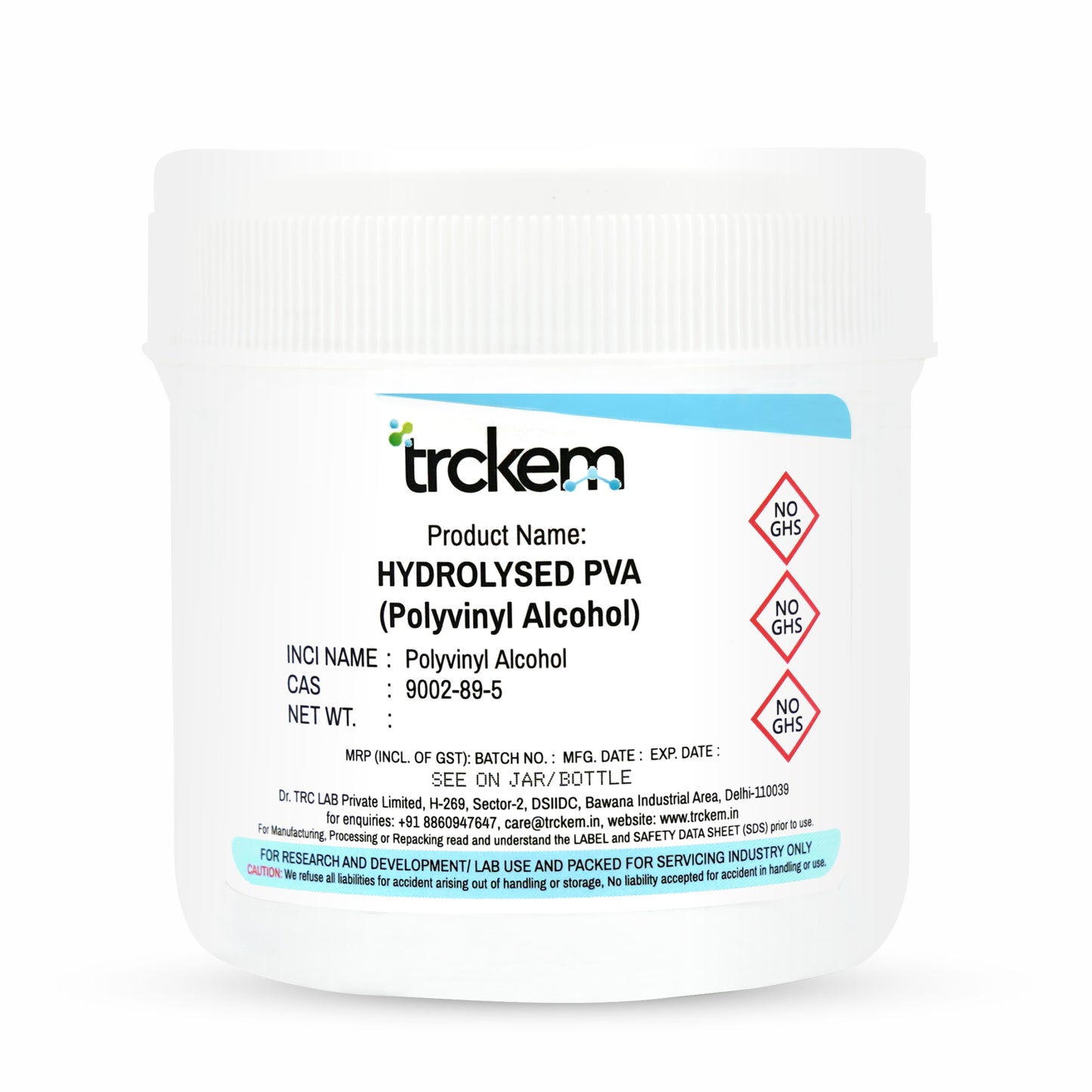
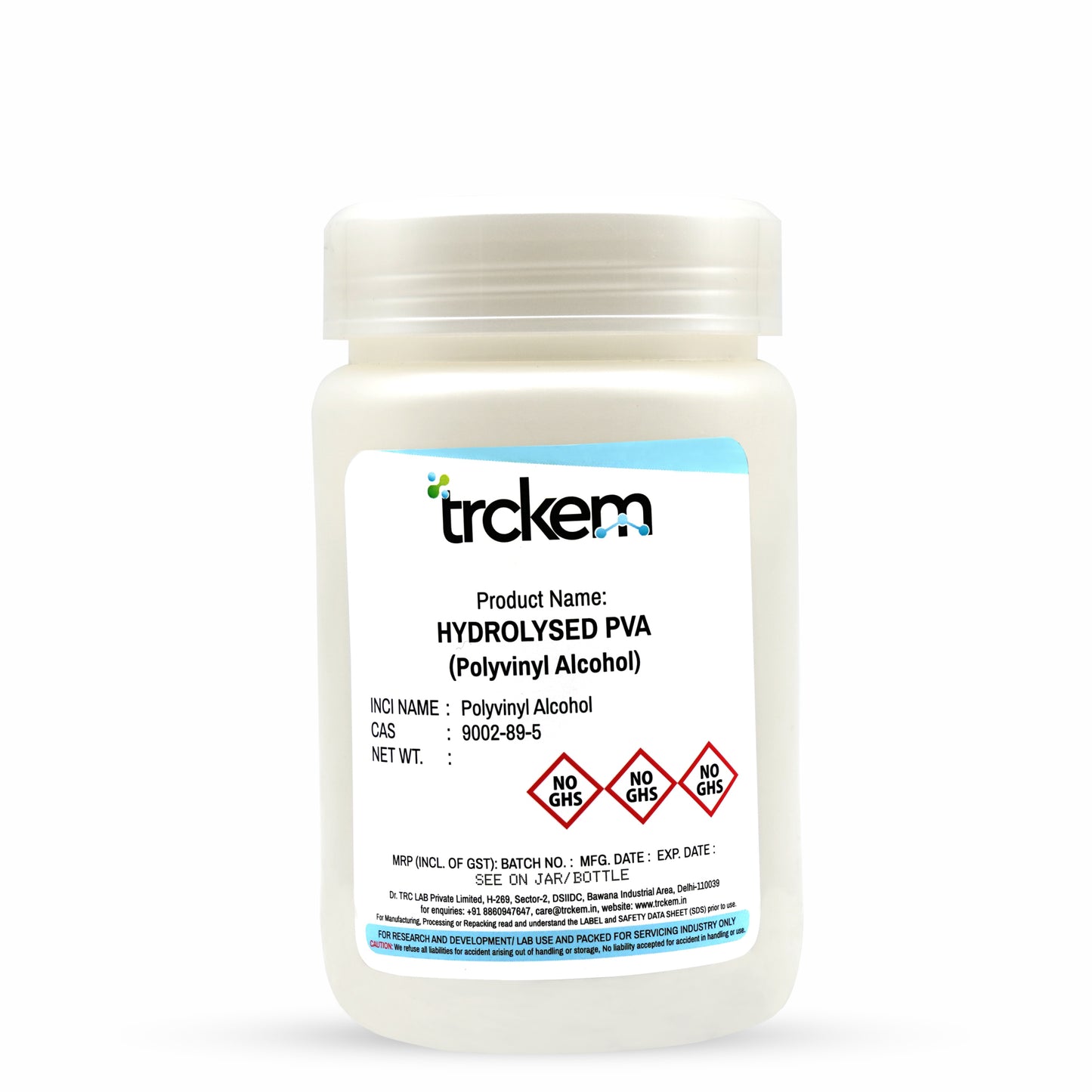
HYDROLYSED PVA
For Bulk Quantity:📞 8822636416
Couldn't load pickup availability
Hydrolyzed PVA, also known as Hydrolyzed Polyvinyl Alcohol, is a water-soluble polymer derived from the hydrolysis of polyvinyl acetate. It is commonly used in various industries, including cosmetics, textiles, adhesives, and paper manufacturing, for its film-forming, thickening, and stabilizing properties.
Product Document: Download Now 👇

General Description:
Hydrolyzed PVA (Polyvinyl Alcohol) is a water-soluble polymer derived from the hydrolysis of polyvinyl acetate. It is typically produced as a powder or film-forming agent and is known for its adhesive and film-forming properties. In cosmetics, hydrolyzed PVA is used for various purposes due to its biocompatibility and versatility.
- Uses in the Cosmetic Industry:
In the cosmetic industry, Hydrolyzed PVA serves several purposes in formulations, including: - Film-forming Agent: Hydrolyzed PVA forms a flexible and transparent film on the skin or hair, providing a smooth and protective barrier. This property is beneficial in products such as facial masks, hair styling gels, and mascaras.
- Binder: It acts as a binder in cosmetic formulations, helping to hold other ingredients together and improve the stability and texture of products.
- Viscosity Modifier: Hydrolyzed PVA can modify the viscosity of cosmetic formulations, making them easier to apply and improving their spreadability. It is used in creams, lotions, and hair care products to enhance texture and consistency.
- Moisturizer: In skincare products, Hydrolyzed PVA can provide moisturizing benefits by retaining water and improving skin hydration.
- Hair Styling: It is used in hair styling products such as gels and mousses to provide hold, control frizz, and enhance shine without leaving a sticky residue.
Hazard:
While Hydrolyzed PVA is generally considered safe for use in cosmetics, there are some potential hazards and considerations:
- Skin Sensitivity: Some individuals may experience skin irritation or allergic reactions to products containing Hydrolyzed PVA, especially if they have sensitive skin or allergies to polyvinyl alcohol derivatives. Patch testing is recommended, particularly for new products or formulations.
- Eye Irritation: Contact with the eyes can cause irritation. Care should be taken to avoid eye exposure, and immediate rinsing is recommended if contact occurs.
- Environmental Impact: Polyvinyl alcohol derivatives like Hydrolyzed PVA are generally biodegradable under certain conditions. However, their environmental impact can vary depending on formulation and use. Proper disposal practices and wastewater treatment are recommended to minimize environmental pollution.
CAS Number: 9002-89-5
INCI: Polyvinyl Alcohol
Composition: Hydrolysed PVA is composed of repeating units of vinyl alcohol. During the hydrolysis process, some of the acetate groups in polyvinyl acetate are replaced with hydroxyl groups, resulting in a water-soluble polymer.
Purity Grade: No purity grade applicable
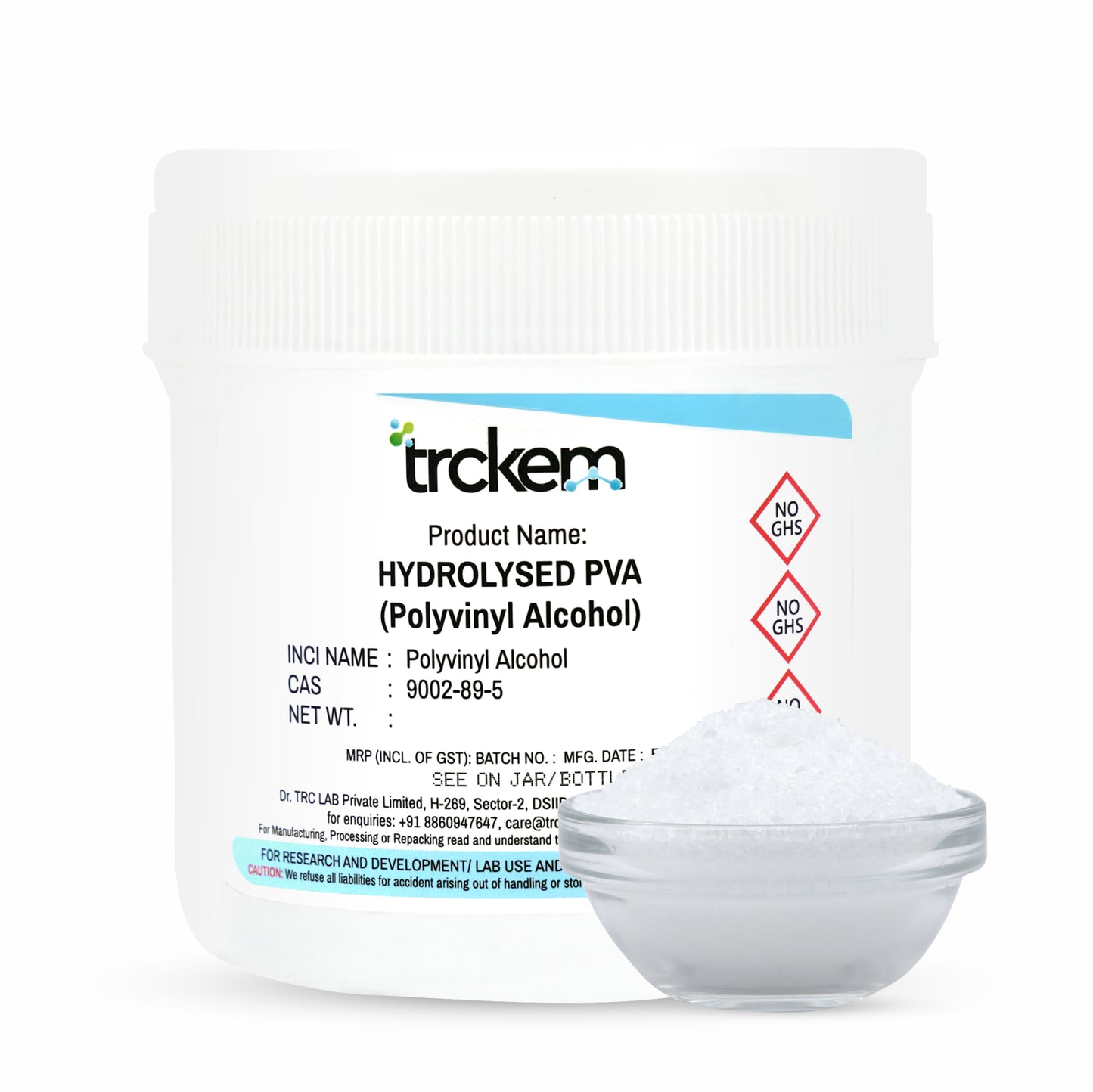
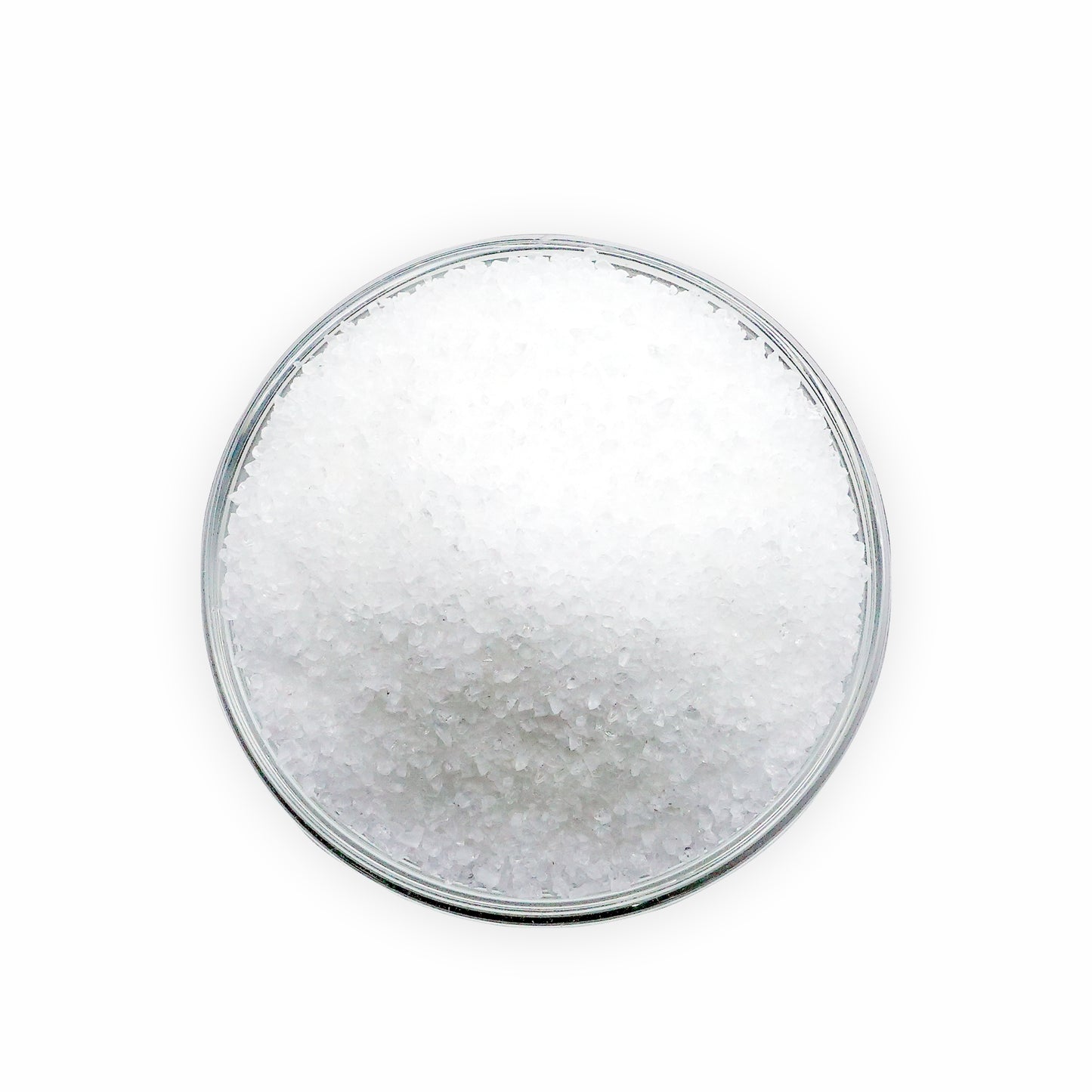
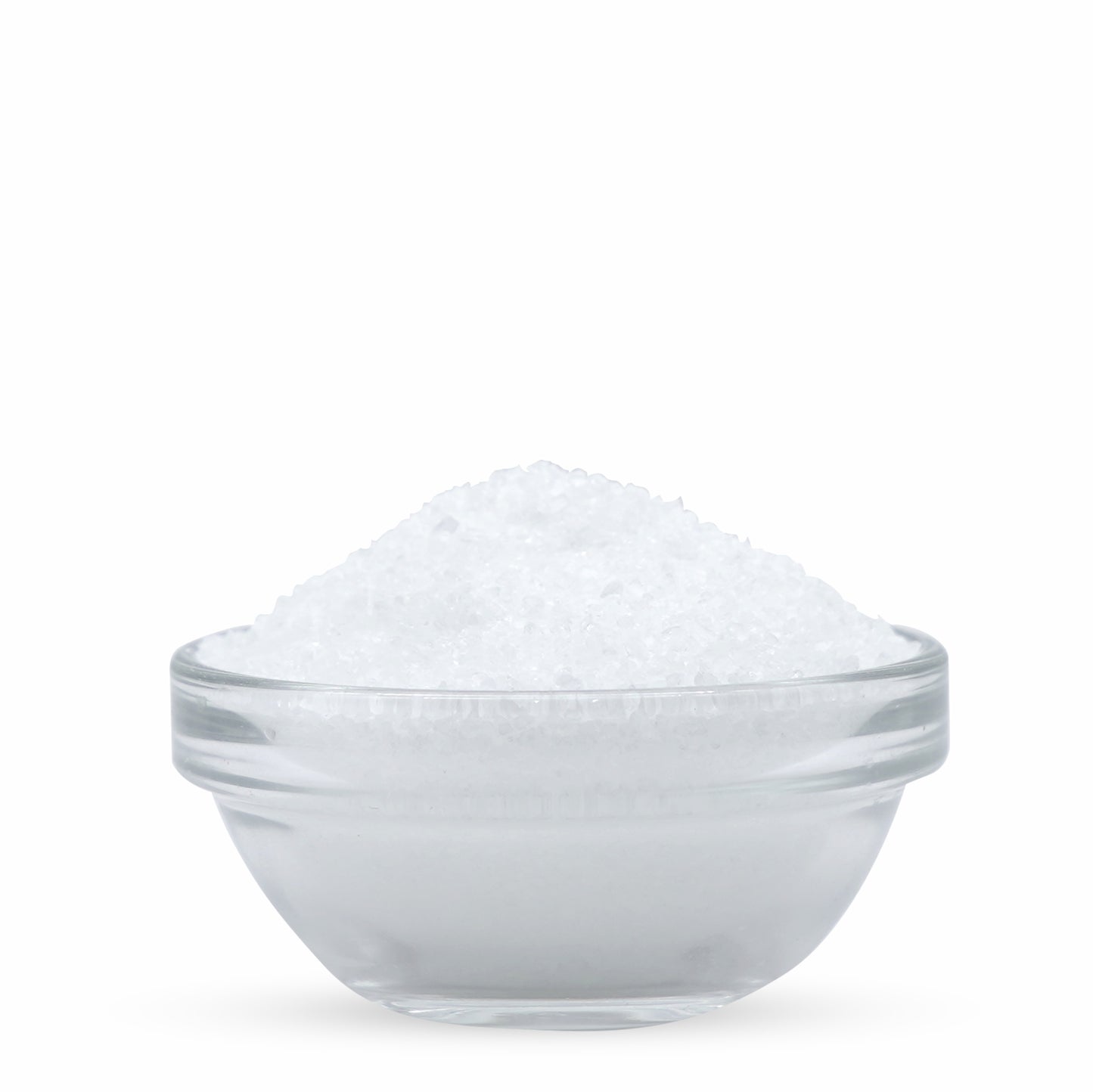
Appearance: Hydrolysed PVA is typically a white to off-white powder or granules.
Solubility: It is highly soluble in water, forming clear to slightly viscous solutions depending on the concentration.
Preservation: Hydrolysed PVA should be stored in a cool, dry place away from direct sunlight and moisture to prevent degradation. It is generally stable but may require protection from microbial contamination in aqueous solutions.
Storage: Store in a closed container at a dry place at room temperature
Raw Material Source :Hydrolysed PVA is derived from polyvinyl acetate, which is synthesized from vinyl acetate monomers derived from petrochemical sources.
Manufacture: Hydrolysed PVA is produced through the hydrolysis of polyvinyl acetate using alkali or acid catalysts. During hydrolysis, the acetate groups are replaced with hydroxyl groups, resulting in the formation of Hydrolysed PVA. The degree of hydrolysis can vary depending on the desired properties of the final product.
Animal Testing: Not animal tested
GMO: GMO-free (does not contain plant-derived components)
Vegan: Does not contain animal-derived components
Proposition: HYDROLYSED PVA complies with relevant regulations and guidelines
Warning: Avoid contact with eyes. In case of contact, rinse thoroughly with water. Use appropriate protective equipment when handling. Keep out of reach of children.
THE STORY OF HYDROLYSED PVA

Hydrolysed PVA: The Film-Forming Polymer for Smooth, Flexible Cosmetic Applications
Hydrolysed PVA (Hydrolysed Polyvinyl Alcohol) is a water-soluble film-forming polymer widely used in skincare, haircare, styling products, and peel-off masks.
It creates smooth, flexible, adhesive-resistant films that enhance texture, performance, and product stability.
Commonly found in peel-off masks, make-up, hair styling gels, serums, and sheet mask essences, it improves product feel and effectiveness.

Derived from Polyvinyl Acetate & Hydrolyzed for Cosmetic Functionality
Hydrolysed PVA is produced by hydrolyzing polyvinyl acetate, converting acetate groups into hydroxyl groups for better solubility and film formation.
Its unique features include:
• Excellent water solubility
• Strong film-forming ability
• Smooth, flexible coatings
• High clarity & purity
TRCkem offers various grades tailored for cosmetics, personal-care & specialized film applications.

Film. Smooth. Support.
Hydrolysed PVA offers multiple high-value benefits:
✅ Creates smooth, even, flexible films
✅ Supports peel-off formulation strength
✅ Improves product viscosity & texture
✅ Enhances wear time in makeup products
✅ Provides binding & adhesion improvement
Used in: peel-off masks, mascara, eyeliners, foundations, primers, hair gels, sheet mask serums, and nail-care formulations.

Stable, Safe & Easy to Formulate Across Water-Based Systems
• Typical use level: 1–15% depending on film thickness
• Add to hot water phase (80–90°C) for proper dispersion
• Fully compatible with most skincare actives
• Stable in pH 5–9
• Non-irritating & safe for topical cosmetic usage
• Store in cool, dry conditions to prevent moisture absorption
• Excellent performance in water-based cosmetic systems
Formulator’s Queries, We Answered
1. What is Hydrolyzed Polyvinyl Alcohol (PVA)?
Hydrolyzed Polyvinyl Alcohol (PVA) is a synthetic polymer derived from the hydrolysis of polyvinyl acetate. It is water-soluble and known for its film-forming, emulsifying, and adhesive properties, making it valuable in personal care and cosmetic formulations.
2. What is the INCI Name of Hydrolyzed Polyvinyl Alcohol?
The INCI (International Nomenclature of Cosmetic Ingredients) name for Hydrolyzed Polyvinyl Alcohol is Polyvinyl Alcohol.
3. What is the CAS Number of Hydrolyzed Polyvinyl Alcohol?
The CAS (Chemical Abstracts Service) number for Polyvinyl Alcohol is 9002-89-5.
4. What are the key benefits of using Hydrolyzed Polyvinyl Alcohol in personal care products?
Film-Forming Agent: Creates a protective barrier on the skin or hair, enhancing product performance.
Thickening Agent: Improves the viscosity and texture of formulations.
Emulsifier: Stabilizes emulsions, ensuring consistent product quality.
Adhesive Properties: Provides binding capabilities, useful in products like peel-off masks.
Moisture Retention: Helps maintain hydration in skin and hair care products.
5. In which personal care products is Hydrolyzed Polyvinyl Alcohol commonly used?
Hydrolyzed PVA is utilized in various formulations, including:
Facial Masks: Especially in peel-off masks for its film-forming properties.
Hair Care Products: Such as shampoos and conditioners to improve texture and manageability.
Skin Care Products: Including lotions and creams for enhanced moisture retention.
Makeup: In products like foundations and mascaras to improve application and wear.
Sunscreens: To stabilize the formulation and enhance water resistance.
6. Is Hydrolyzed Polyvinyl Alcohol safe for cosmetic use?
Yes, Hydrolyzed PVA is considered safe for use in cosmetics and personal care products. It is non-toxic and generally well-tolerated by the skin.
7. Is Hydrolyzed Polyvinyl Alcohol suitable for sensitive skin?
Hydrolyzed PVA is generally non-irritating and suitable for most skin types, including sensitive skin. However, as with any ingredient, it's advisable to conduct patch tests when formulating for sensitive skin applications.
8. Is Hydrolyzed Polyvinyl Alcohol biodegradable?
Yes, Polyvinyl Alcohol is biodegradable under appropriate environmental conditions, making it an eco-friendly choice for personal care formulations.
9. Where can I purchase Hydrolyzed Polyvinyl Alcohol for personal care formulations?
Hydrolyzed PVA is available from specialty chemical suppliers, cosmetic ingredient distributors, and bulk manufacturers catering to the personal care industry.
10. What is the recommended usage level of Hydrolyzed Polyvinyl Alcohol in formulations?
The typical usage level of Hydrolyzed PVA ranges from 1% to 5%, depending on the desired effect and formulation requirements.