


SKU:LIQ-TRC-FOR-500G
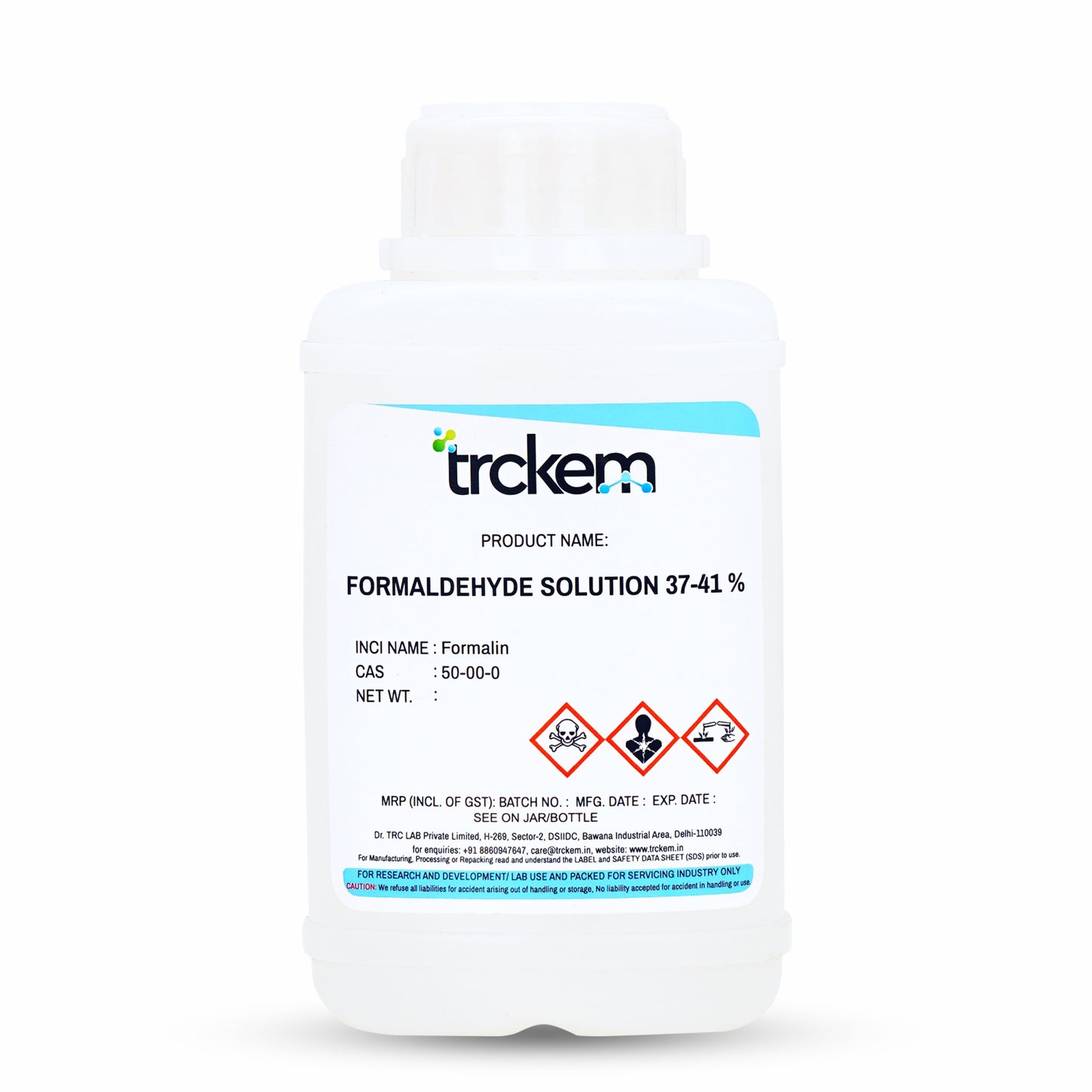
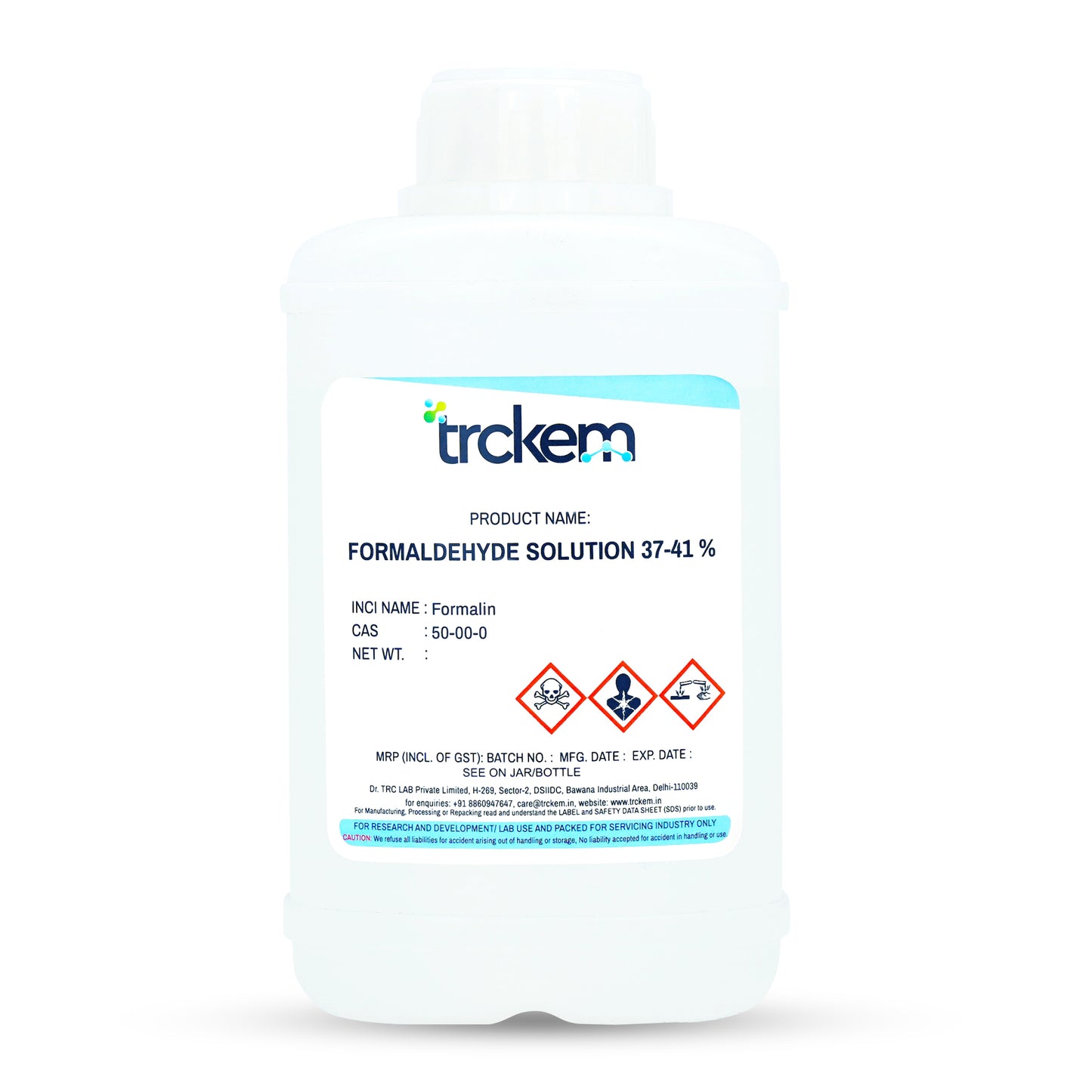
FORMALDEHYDE SOLUTION 37-41%
For Bulk Quantity: Contact Us
Couldn't load pickup availability
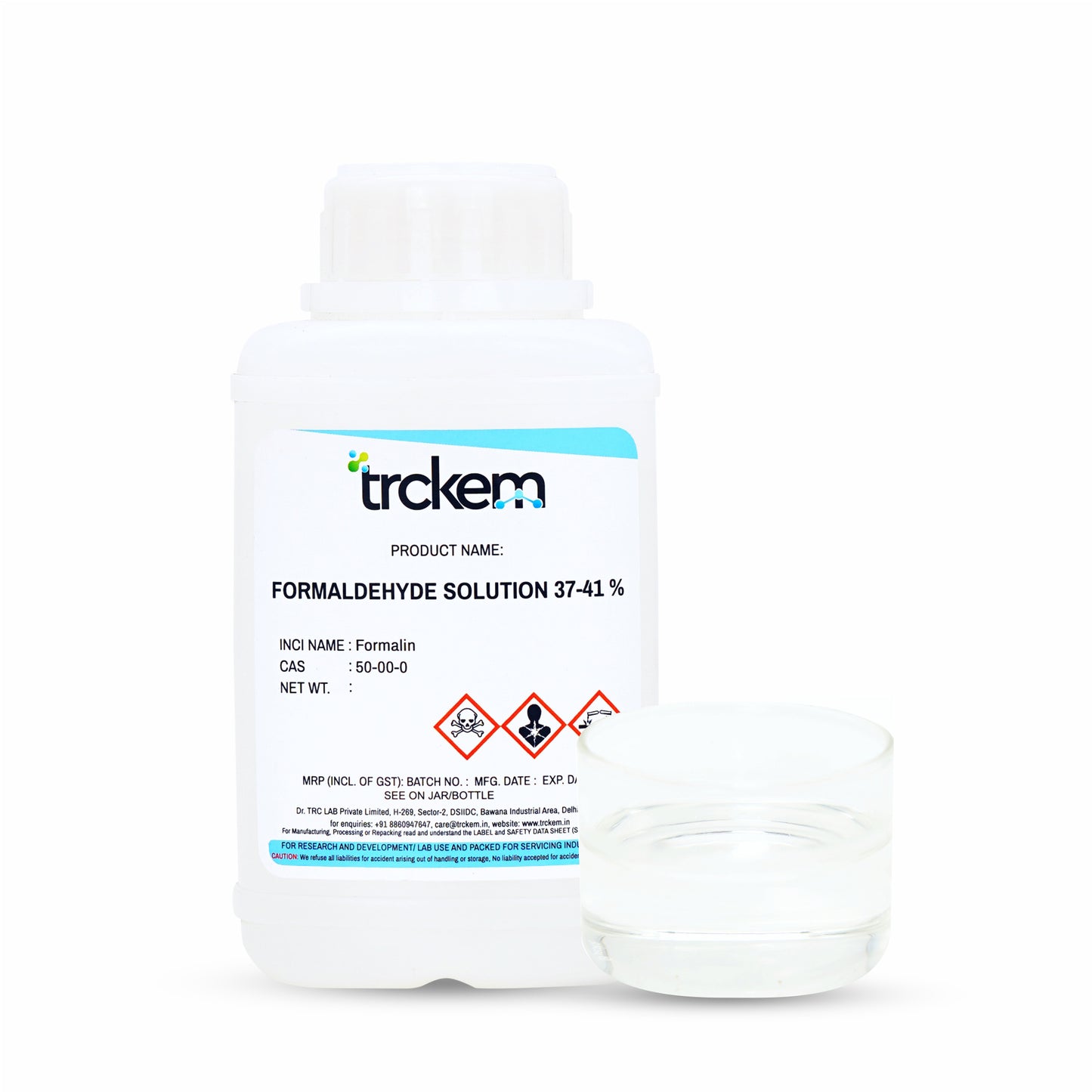
Formaldehyde Solution 37-41% is a chemical solution commonly used in industrial applications, including as a disinfectant, preservative, and in the production of various materials. This clear, colorless liquid contains formaldehyde as its primary active component.
-
 FORMALDEHYDE SOLUTION 37-41%_SDS
-
FORMALDEHYDE SOLUTION 37-41%_COA
-
FORMALDEHYDE SOLUTION 37-41%_FACTSHEET

General Description:
Formaldehyde solution, commonly known as formalin, typically contains 37-41% formaldehyde gas dissolved in water, with methanol often added to prevent polymerization. Formaldehyde is a colorless, pungent-smelling gas that is highly reactive and widely used in various industries. In its solution form, it is used as a disinfectant, preservative, and fixative due to its strong antibacterial and antifungal properties.
Uses in the Cosmetic Industry:
- Preservative: Formaldehyde solution is used as a preservative in cosmetics and personal care products to prevent the growth of bacteria, mold, and yeast. It helps extend the shelf life of products such as shampoos, conditioners, and liquid soaps.
- Nail Hardener: In the nail care industry, formaldehyde solution is used in nail hardeners and treatments. It helps strengthen the nails and prevent breakage.
- Hair Smoothing Treatments: Formaldehyde-releasing agents are sometimes used in hair smoothing treatments (e.g., Brazilian blowouts) to straighten hair and reduce frizz.
Hazards and Safety Concerns:
Formaldehyde solution poses several significant health and safety risks, which have led to strict regulations and guidelines regarding its use:
- Irritation: Formaldehyde is a strong irritant to the eyes, skin, and respiratory system. Exposure can cause symptoms such as burning sensations, coughing, wheezing, and dermatitis. Direct contact with the skin can lead to severe irritation and allergic reactions.
- Respiratory Issues: Inhalation of formaldehyde vapors can cause respiratory problems, including asthma-like symptoms, bronchitis, and other chronic respiratory conditions.
- Sensitization: Formaldehyde is a known sensitizer, meaning it can cause an allergic reaction upon subsequent exposures. This can lead to symptoms such as skin rashes, itching, and respiratory issues even at low levels of exposure.
- Environmental Impact: Formaldehyde can have harmful effects on the environment, particularly aquatic life. It is important to handle and dispose of formaldehyde-containing products properly to minimize environmental contamination.
CAS Number: 50-00-0
INCI: Formaldehyde
Composition: Formaldehyde dissolved in water at specific concentrations
Purity Grade: No purity grade applicable
Appearance: Appears as a clear and colorless liquid.
Solubility: Highly soluble in water and miscible with many organic solvents.
Preservation: Formaldehyde itself acts as a preservative in this solution, providing antimicrobial properties.
Storage: Store in a closed container at a dry place at room temperature
Raw Material Source: Formaldehyde is typically produced from methanol through various manufacturing processes.
Manufacture: Manufactured through controlled processes.
Animal Testing: Not animal tested
GMO: GMO-free (does not contain plant-derived components)
Vegan: Does not contain animal-derived components
HS Code: 29121100
Proposition: FORMALDEHYDE SOLUTION 37-41% complies with relevant regulations and guidelines.
Warning: Avoid contact with eyes and skin. Use appropriate protective equipment when handling.
FAQ (Frequently Asked Questions)
1. What is Formaldehyde Solution 37-41%?
Formaldehyde Solution 37-41% is a water-based solution of formaldehyde, commonly used as a preservative and antimicrobial agent in personal care and cosmetic products. It helps prevent microbial growth, extending the shelf life of formulations.
2. What is the CAS Number and INCI Name of Formaldehyde Solution?
CAS Number: 50-00-0
INCI Name: Formaldehyde
3. What are the benefits of using Formaldehyde in personal care products?
Effective Preservative – Prevents bacterial, fungal, and mold growth in formulations.
Antimicrobial Properties – Helps maintain product safety and stability.
Enhances Shelf Life – Extends the usability of cosmetic and personal care products.
4. What are the common applications of Formaldehyde in personal care?
Shampoos & Conditioners – Used in small amounts to prevent contamination.
Nail Hardeners – Strengthens nails and prevents brittleness.
Lotions & Creams – Acts as a preservative in certain formulations.
Liquid Soaps & Cleansers – Helps maintain product integrity over time.
5. Is Formaldehyde safe for use in personal care products?
Formaldehyde is regulated by cosmetic safety authorities worldwide. Due to potential health concerns, its use is strictly limited, and some countries have banned or restricted its concentration in personal care products. The European Union, for example, prohibits the use of free formaldehyde in cosmetics but allows the use of formaldehyde-releasing preservatives.
6. Can Formaldehyde cause skin irritation?
Yes, Formaldehyde can be irritating to the skin, eyes, and respiratory system, especially in higher concentrations. It is considered a potential allergen and sensitizer.
7. Is Formaldehyde environmentally friendly?
Formaldehyde is biodegradable, but its toxicity can pose environmental concerns, especially when released in large quantities. Proper handling and disposal are necessary to minimize its environmental impact.
8. Are there alternatives to Formaldehyde in personal care products?
Yes, alternatives include:
Phenoxyethanol – A widely used preservative with lower irritation potential.
Sodium Benzoate & Potassium Sorbate – Natural preservatives used in cosmetics.
Benzyl Alcohol – An effective alternative preservative with antimicrobial properties.