


SKU:SOL-TRC-BIOTIN-10G
Biotin
For Bulk Quantity:📞 8822636416
Couldn't load pickup availability
Biotin, also known as vitamin B7, is a water-soluble nutrient essential for healthy hair, skin, and nails. It supports energy metabolism by helping enzymes break down fats, carbohydrates, and proteins. Commonly added to beauty and wellness products, biotin is valued for strengthening keratin structure and promoting overall cellular health and vitality.
Product Document: Download Now 👇


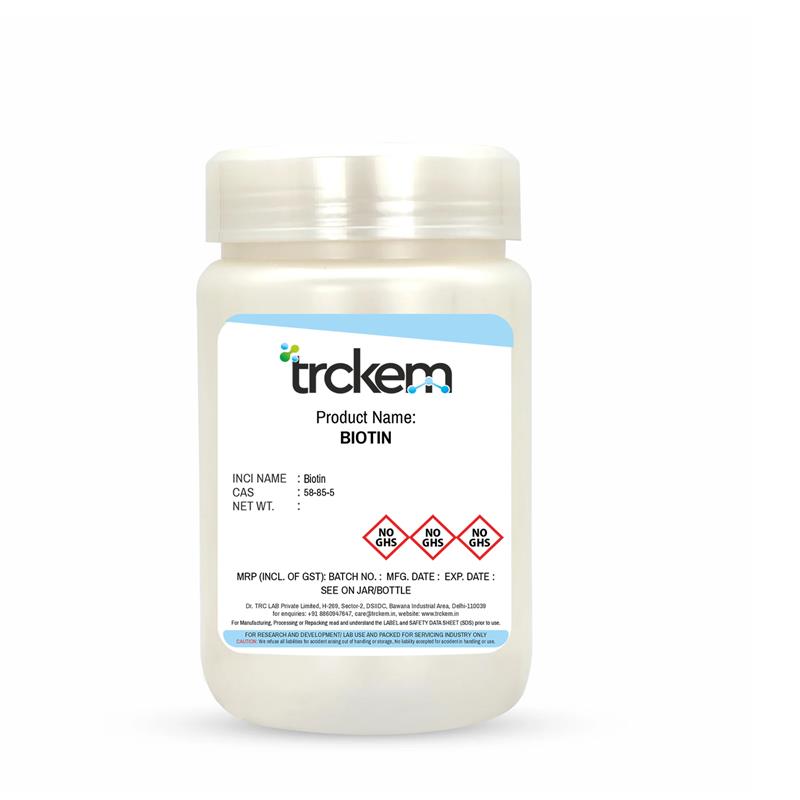
General Description
Biotin, also known as Vitamin B7 or Vitamin H, is a water-soluble B-complex vitamin essential for healthy metabolic and cellular functions. It plays a critical role in supporting keratin production, which is fundamental for strong hair, nails, and skin. In cosmetics, Biotin is used as a functional active ingredient that enhances the strength, resilience, and overall health of keratin-rich tissues. It is typically available as a white crystalline powder or fine granules and is highly stable in both aqueous and anhydrous formulations.
Uses in the Cosmetic Industry
Biotin is incorporated into a wide range of personal care and beauty formulations due to its strengthening and rejuvenating effects:
Hair Care
- Added to shampoos, conditioners, serums, and scalp tonics to support hair growth and reduce breakage.
- Helps enhance hair elasticity and thickness through improved keratin production.
Skin Care
- Used in moisturizers, facial creams, and anti-aging products to improve skin barrier strength.
- Supports hydration and helps maintain smooth, healthy-looking skin.
Nail Care
- Included in nail-strengthening treatments to reduce brittleness and enhance durability.
Nutricosmetics
- Often used in beauty supplements (capsules, gummies, powders) to promote healthier hair, skin, and nails from within.
Biotin is widely favored in both premium and mass-market formulations due to strong consumer perception and its well-supported benefits.
Hazards
Biotin is generally considered very safe for cosmetic use, but the following points should be noted:
- Low Irritation Risk: Biotin is not known to cause skin irritation or sensitization when used in topical products.
- Allergic Reactions (Rare): Very uncommon, but individuals with vitamin sensitivities may experience mild reactions.
- Ihalation Risk in Powder Form: When handled in bulk, fine biotin powder may cause temporary respiratory discomfort if inhaled.
- Stability Considerations: Biotin is sensitive to extreme pH conditions; degradation may occur in highly acidic or highly alkaline formulations.
Overall, Biotin is classified as low-hazard for both consumers and formulators, making it suitable for leave-on and rinse-off systems.
CAS Number: 58-85-5
INCI: Biotin
Composition:Biotin is a water-soluble B-complex vitamin (Vitamin B7 / Vitamin H). Chemically, it is composed of a ureido ring fused with a tetrahydrothiophene ring and a valeric acid substituent.
Purity Grade:Pharmaceutical / Cosmetic Grade (typically ≥98%)
Appearance:White to off-white crystalline powder
Solubility:
• Slightly soluble in water
• Soluble in alkalis and some organic solvents such as dimethyl sulfoxide (DMSO)
• Insoluble in oils
Preservation:Not required for the raw material itself; stable under recommended storage conditions
Storage:Store in a tightly closed container in a cool, dry place away from light and moisture.
Avoid high temperatures and direct sunlight.
Raw Material Sources:Synthesized chemically from petrochemical and carbohydrate-derived intermediates
Manufacture:Biotin is produced through multi-step chemical synthesis involving formation of the ureido and thiophene rings followed by purification to pharmaceutical standards.
No animal-derived material is required for manufacturing.
Animal Testing:Not animal tested
GMO:GMO-free
Vegan:Vegan-friendly (synthetically produced; contains no animal-derived ingredients)
Proposition:BIOTIN complies with global cosmetic regulations including EU Cosmetics Regulation (EC) 1223/2009, FDA cosmetic ingredient guidelines, and REACH standards.
Warning:For external use in cosmetics only.
Avoid inhalation of powders.
Use appropriate personal protective equipment during handling.
Store properly to prevent degradation.
Formulator’s Queries, We Answered
What is Biotin? What is its CAS number and INCI name?
Biotin, also known as Vitamin B7 or Vitamin H, is a water-soluble B-complex vitamin. Its CAS number is 58-85-5, and its INCI name (International Nomenclature of Cosmetic Ingredients) is “Biotin.”
What are the main functions / benefits of biotin in personal care formulations?
Hair conditioning: Biotin is commonly used in shampoos and hair-care products to strengthen hair, improve keratin structure, and reduce brittleness.
How is biotin incorporated into formulations? Is it soluble?
Biotin is available in crystalline powder form. According to suppliers, it is soluble in water
What concentrations of biotin are typically used in cosmetics, and is it safe?
According to a safety assessment, the maximum leave-on concentration for biotin in cosmetic products is 0.1%, for example in face or neck preparations.
Are there any known side effects or risks associated with topical biotin use?
In general, biotin is considered safe in cosmetics at the allowed concentrations