


SKU:SOL-TRC-BZP-300G
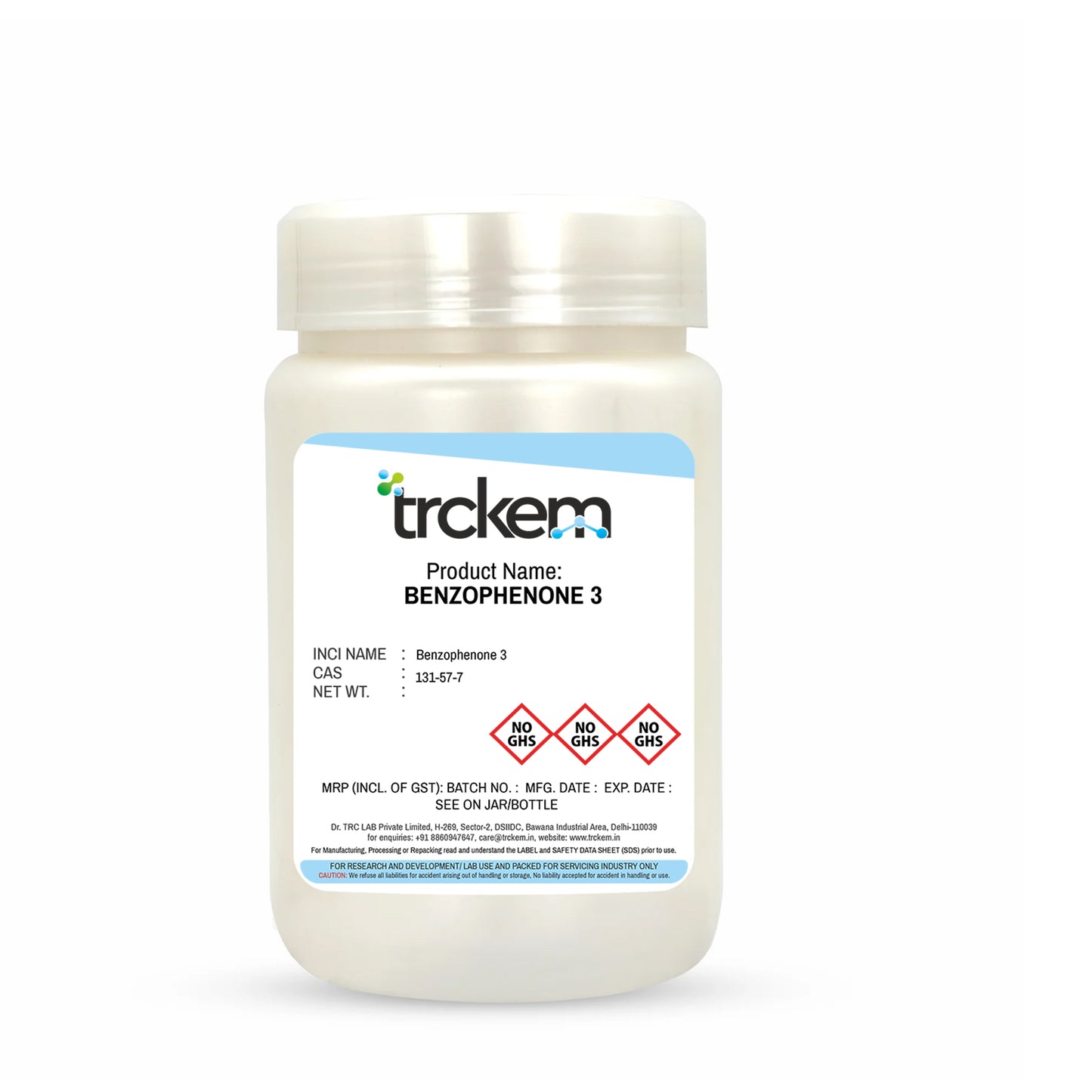
BENZOPHENONE 3
For Bulk Quantity:📞 8822636416
Couldn't load pickup availability
Benzophenone-3, also known as oxybenzone, is a UV filter used in sunscreens and cosmetics. It protects skin by absorbing harmful UV rays, preventing sun damage and premature aging.
Product Document: Download Now 👇


General Description
Benzophenone-3, also known as Oxybenzone, is a widely used UV filter that absorbs UVA and UVB rays, providing effective sun protection in cosmetic and skincare formulations. This organic compound is a key ingredient in many sunscreen and personal care products, helping to prevent sunburn, skin damage, and premature aging caused by UV exposure. Due to its broad-spectrum protection, cosmetic manufacturers incorporate Benzophenone-3 into various sun protection and skincare solutions.
Uses in the Cosmetics Industry
Benzophenone-3 is a crucial component in several UV-protective formulations, including:
- Sunscreens & Sunblocks: Provides UV defense in lotions, sprays, and creams.
- Moisturizers with SPF: Enhances daily skin protection in face and body lotions.
- Lip Balms & Makeup Products: Used in SPF-infused lip care and foundations for added sun defense.
- Hair & Scalp Protection: Found in leave-in treatments and hair sprays to shield hair from UV damage.
If you are looking to buy Benzophenone-3 wholesale, we supply high-purity bulk Benzophenone-3 for cosmetic and sunscreen manufacturing to meet industry safety standards.
Side Effects & Hazards
While Benzophenone-3 is effective in sun protection, it has raised some concerns regarding:
- Skin Sensitivity: Some individuals may experience irritation, allergic reactions, or dermatitis.
- Hormonal Disruption: Studies suggest that Oxybenzone may have endocrine-disrupting effects, leading to regulatory restrictions in some regions.
- Environmental Impact: Research indicates that Benzophenone-3 can contribute to coral reef bleaching, leading to bans in certain locations.
To ensure safety and compliance, cosmetic manufacturers should use Benzophenone-3 within approved limits and consider alternative UV filters for eco-friendly formulations.
Buy Wholesale Benzophenone-3 for Sunscreen & Cosmetic Production
Looking for Benzophenone-3 for sale? We provide premium wholesale Benzophenone-3 for cosmetic and sunscreen manufacturers. Our bulk supply ensures high-quality sun protection formulations that meet global regulatory standards. Contact us today for bulk orders and competitive pricing.
CAS NO. :-131-57-7
INCI:-Benzophenone-3 (also known as Oxybenzone)
COMPOSITION:-Chemical Formula: C14H12O3
Molecular Weight: 228.25 g/mol
Benzophenone-3 is an organic compound and a type of benzophenone. It is commonly used as a UV filter in sunscreen and cosmetic products.
Key Components:
Benzene ring with two hydroxyl groups (OH) attached.
Carbonyl group (C=O) attached to the ring.
PURITY GRADE:-Cosmetic Grade: ≥ 98% purity, suitable for use in sunscreen and skincare formulations.
Pharmaceutical Grade: Available in higher purity grades for medicinal applications.
APPEARANCE:-A pale yellow to colorless crystalline powder or solid.
Odorless or has a faint aromatic odor.
SOLUBILITY:-Soluble in alcohol, acetone, and other organic solvents.
Slightly soluble in water.
PRESEVATION:-Benzophenone-3 is stable in formulations and does not require additional preservatives when used in typical concentrations in sunscreen or cosmetic products.
STORAGE:-Store in a cool, dry place, away from light and moisture.
Recommended storage temperature: 15–25°C (59–77°F).
Keep in tightly sealed containers to prevent degradation by air or light.
RAW MATERIAL SOURCE:-Synthesized from aromatic compounds in industrial settings. Benzophenone-3 is an artificial chemical compound, and the raw materials are derived from petrochemical sources.
MANUFACTURE:- Manufactured through synthetic chemical processes, often from benzophenone and related precursors in a laboratory or industrial setting.
ANIMAL TESTING:- Benzophenone-3 is generally considered non-animal tested, particularly in countries like the European Union, which prohibits animal testing for cosmetics. However, testing policies may vary by manufacturer or region.
GMO:-Non-GMO; Benzophenone-3 is synthetically produced and does not involve genetically modified organisms in its production.
VEGAN:-Vegan; Benzophenone-3 is a synthetic chemical and does not involve animal-derived ingredients or by-products in its manufacture.
WARNING:-Skin Sensitivity: Benzophenone-3 is widely used in sunscreens and cosmetic products, but some individuals may experience skin irritation or allergic reactions, particularly with prolonged exposure.
Endocrine Disruption: There is ongoing research into the potential endocrine-disrupting effects of benzophenone-3, as it has been shown to have estrogenic activity in some studies.
Eyes: Avoid contact with eyes. If contact occurs, rinse thoroughly with water.
Environmental Impact: Benzophenone-3 is known to be harmful to marine life, particularly to coral reefs, and its use has been restricted in some regions due to environmental concerns.
THE STORY OF BENZOPHENONE 3

Benzophenone-3: Broad-Spectrum UV Protection in a Single Molecule
Benzophenone-3 (2-Hydroxy-4-methoxybenzophenone) is a highly efficient organic UV filter and photostabiliser. It absorbs both UVB and portions of UVA rays, helping prevent sunburn, photodamage and premature aging in skin.

Synthesised for Precision: High Purity UV-Filter
Benzophenone-3 is produced via a controlled synthesis route (e.g., Friedel-Crafts reaction) and then purified into crystalline form for use in cosmetics and sunscreens. It is supplied as a pale yellow solid with excellent solubility in oil phases

Shielding Skin from the Sun: Performance & Versatility
Benzophenone-3 delivers key benefits in sun care formulations:
• Strong UVB + partial UVA absorption, contributing to broad-spectrum protection.
• Acts as a photostabiliser for other filters and active ingredients, enhancing product longevity.
• Oil-soluble, easy to incorporate in emulsions, creams, sprays and lip balms.
Used widely in daily sunscreens, anti-age serums, lip protection and sun-exposed body care.

Effective, but Requires Care: Regulatory & Formulation Guidelines
• Usage limits vary by market — for example up to ~6% in EU sunscreens.
• Store in a cool, dry, light-protected environment to preserve stability.
• Although effective, studies highlight concerns: systemic absorption, endocrine disruption potential, coral reef impact.
• Formulators should ensure compatibility with other filters, stabilisers, and ensure batch COA and safety data are compliant.
Formulator’s Queries, We Answered
1. What is Benzophenone-3 (Oxybenzone)?
Benzophenone-3, also known as Oxybenzone, is an organic UV filter commonly used in sunscreens and personal care products. It absorbs UVB and short-wave UVA rays, helping to protect the skin from sun damage and photoaging.
2. What is the CAS number and INCI name of Benzophenone-3?
CAS Number: 131-57-7
INCI Name: Benzophenone-3 (Oxybenzone)
3. What are the benefits of Benzophenone-3 in personal care?
Benzophenone-3 is widely used because of its:
UV protection: Shields the skin from harmful UVB and UVA II rays.
Photo-stabilizing effect: Enhances the stability of other UV filters.
Prevention of premature aging: Reduces sun-induced skin damage.
Protection of product formulations: Prevents degradation of cosmetic products exposed to sunlight.
4. How does Benzophenone-3 work in sunscreens?
Benzophenone-3 works by absorbing UV radiation and converting it into less harmful heat energy, preventing DNA damage and photoaging. It is often combined with other sunscreen agents for broad-spectrum protection.
5. Is Benzophenone-3 suitable for all skin types?
While effective, some individuals with sensitive or reactive skin may experience irritation or allergic reactions. Patch testing is recommended before use.
6. What types of personal care products contain Benzophenone-3?
Benzophenone-3 is found in:
Sunscreens (creams, sprays, lotions)
Moisturizers with SPF
Lip balms with UV protection
Hair care products (UV-protective shampoos and sprays)
Nail polishes (to prevent discoloration)
7. Can Benzophenone-3 be combined with other UV filters?
Yes, Benzophenone-3 is often formulated with:
Avobenzone (for extended UVA protection)
Homosalate & Octisalate (to boost SPF effectiveness)
Octinoxate & Octocrylene (to improve photostability)
8. Does Benzophenone-3 cause any side effects?
Benzophenone-3 is generally safe but may cause:
Skin irritation in sensitive individuals.
Hormonal concerns: Some studies suggest it may have mild endocrine-disrupting effects.
Allergic reactions: Rare but possible for some skin types.
9. What is the recommended concentration of Benzophenone-3 in sunscreens?
Up to 6% in the United States (FDA limit).
Up to 10% in the European Union and other regions.
10. Is Benzophenone-3 reef-safe?
Benzophenone-3 has been linked to coral reef damage and is banned in some locations (e.g., Hawaii, Palau). Reef-safe alternatives include Zinc Oxide and Titanium Dioxide.
11. Where can I purchase high-quality Benzophenone-3 for formulation purposes?
Benzophenone-3 is available from cosmetic raw material suppliers. Always select high-purity and UV-stabilized grades for optimal performance in formulations.