


SKU:LIQ-TRC-ALMOND-100ML
Almond Oil
For Bulk Quantity:📞 8822636416
Couldn't load pickup availability
Almond Oil is a nourishing, lightweight oil rich in vitamins A, E, and fatty acids, known for its moisturizing, soothing, and anti-inflammatory properties, ideal for skin and hair care.

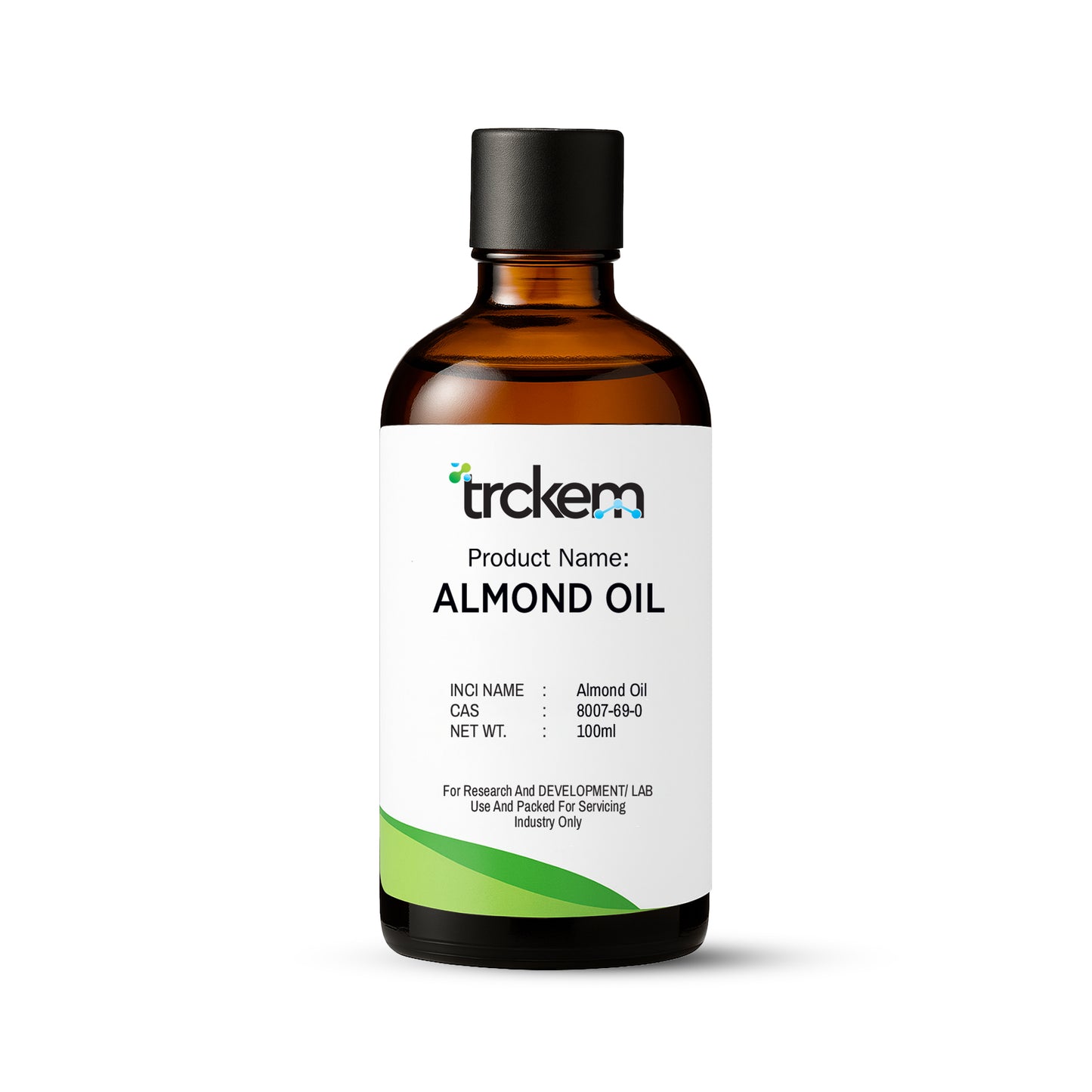
General Description:
Almond Oil, commonly derived from the kernels of sweet almonds (Prunus amygdalus dulcis), is a light, golden-yellow oil rich in vitamins E and A, essential fatty acids, and antioxidants. Known for its nourishing, softening, and emollient properties, it has been used for centuries in traditional skincare and cosmetic applications. With a mild scent and excellent skin absorption, Almond Oil is a staple ingredient in both conventional and natural beauty formulations. It is available for wholesale and bulk supply, ideal for brands producing gentle, moisturizing products for face, body, and hair.
Uses in the Cosmetics Industry:
- Almond Oil is widely used in:
Moisturizers, facial oils, and body lotions to hydrate and soften dry or sensitive skin.
Baby care products due to its gentle nature and non-irritating profile.
Massage oils and aromatherapy blends for its smooth glide and skin-conditioning benefits.
Hair oils, conditioners, and scalp treatments to enhance shine and reduce dryness or flakiness.
Lip balms, cuticle creams, and under-eye serums for targeted nourishment and skin barrier support.
Its versatility and natural origin make Almond Oil a popular choice across both luxury and clean beauty markets.
Side Effects & Hazards:
Almond Oil is generally safe and well-tolerated for cosmetic use, with a low risk of irritation. However, individuals with nut allergies should avoid topical application unless the product has been specifically refined to remove allergenic proteins. In rare cases, prolonged use on acne-prone skin may contribute to comedogenicity, depending on the skin type. Proper storage is essential to prevent oxidation—Almond Oil should be kept in a cool, dark place in airtight containers. During handling in manufacturing, basic hygiene practices and protective gear such as gloves are recommended to maintain product integrity and prevent contamination.
CAS Number: 8007-69-0
INCI Name: Prunus Amygdalus Dulcis (Sweet Almond) Oil
Composition: Primarily composed of triglycerides of oleic acid (~60–80%) and linoleic acid (~20–30%), along with palmitic acid, vitamins (especially vitamin E), and minor unsaponifiables
Purity Grade:Cosmetic/Food/Pharmaceutical Grade (depending on processing and certification)
Appearance: Pale yellow to golden yellow oil with a mild, nutty odor
Solubility: Insoluble in water; soluble in oils and organic solvents
Preservation: Typically does not require preservatives if cold-pressed and stored properly; antioxidants like tocopherol (Vitamin E) may be added to extend shelf life
Storage: Store in a cool, dry place away from heat and direct sunlight; refrigerate if possible to prolong freshness
Raw Material Sources: Derived from the kernels of the Prunus amygdalus dulcis (sweet almond) tree, typically cultivated in Mediterranean regions, California, and parts of Asia
Manufacture: Obtained by cold pressing or expeller pressing almond kernels; may be refined, bleached, or deodorized depending on the final use
Animal Testing: Commonly available from cruelty-free certified suppliers; check specific sourcing
GMO: Not genetically modified; almonds are not GMO crops
Vegan: Yes; plant-based and free from animal-derived ingredients
Proposition: Generally compliant with California Proposition 65; however, ensure there are no contamination risks (e.g., pesticides or aflatoxins) from agricultural practices
Warning: May cause allergic reactions in individuals with nut allergies; patch testing is recommended in sensitive users
THE STORY OF ALMOND OIL

Almond Oil: The Timeless Elixir of Radiance
Almond Oil, a rich emollient derived from the kernels of sweet almonds, is treasured for centuries as a natural moisturizer and rejuvenator. Packed with vitamins A, E, and essential fatty acids, it deeply nourishes the skin, restores softness, and enhances natural radiance — making it a cornerstone of holistic skincare and haircare formulations.

Cold-Pressed from Nature’s Purest Nuts
Our Almond Oil is extracted through a cold-pressing method that preserves all natural nutrients, antioxidants, and aroma. TRCkem sources premium-grade sweet almonds from sustainable farms, ensuring that every drop of oil retains its purity, clarity, and bioactive potency. This minimal-processing technique guarantees maximum skin compatibility and long shelf life.

Nourishment that Touches Every Layer
Almond Oil acts as an effective emollient and skin-conditioning agent. It restores lipid balance, improves elasticity, and provides a natural sheen. Rich in vitamin E, it protects skin from oxidative stress and premature aging. In haircare, it softens strands, strengthens roots, and enhances shine. Gentle, non-comedogenic, and lightweight, it suits all skin types — including sensitive skin.

Versatile. Safe. Naturally Effective.
TRCkem’s Almond Oil is available in both cosmetic and pharmaceutical grades. It is used in facial oils, serums, hair conditioners, lip balms, and massage blends. Recommended usage: 1–20%. Store in a cool, dark place to preserve freshness. 100% natural, non-irritating, and compliant with global cosmetic standards — ensuring premium quality for every formulation.
Formulator’s Queries, We Answered
1. What is Almond Oil?
Almond Oil is a natural, nutrient-rich oil extracted from the seeds of the sweet almond tree (Prunus amygdalus dulcis). It is widely used in personal care products for its moisturizing, nourishing, and skin-soothing properties.
2. What is the INCI name and CAS number of Almond Oil?
CAS Number: 8007-69-0
INCI Name: Prunus Amygdalus Dulcis (Sweet Almond) Oil
3. What are the key benefits of Almond Oil in cosmetic formulations?
Deeply moisturizes and softens skin
Rich in vitamin E, fatty acids, and antioxidants
Soothes dry, irritated, or sensitive skin
Supports skin elasticity and smooth texture
Adds shine and nourishment to hair
4. In which types of personal care products is Almond Oil used?
Almond Oil is versatile and commonly found in:
Facial and body oils
Lotions and creams
Lip balms and butters
Hair oils, conditioners, and masks
Baby care products and massage oils
5. Is Almond Oil suitable for all skin types?
Yes, Almond Oil is generally well-tolerated by most skin types, including sensitive and dry skin. However, individuals with nut allergies should perform a patch test or consult a dermatologist before use.
6. Is Almond Oil natural and safe for clean beauty formulations?
Absolutely. Almond Oil is a 100% natural, cold-pressed (in many grades), plant-based oil that aligns perfectly with clean, green, and organic beauty standards. It is free from synthetic additives and commonly used in ECOCERT/COSMOS-compliant formulations.
7. What is the recommended usage level of Almond Oil in cosmetic products?
Usage levels can vary by formulation type, typically ranging from 1% to 100%. It can be used as a base oil, emollient, or active component in blends.
8. Is Almond Oil comedogenic? Will it clog pores?
Almond Oil has a low comedogenic rating (2), meaning it is unlikely to clog pores for most users. It is often used in formulations for acne-prone or sensitive skin, but as with all oils, patch testing is recommended.