


SKU:LIQ-TRC-WITCH-100ML
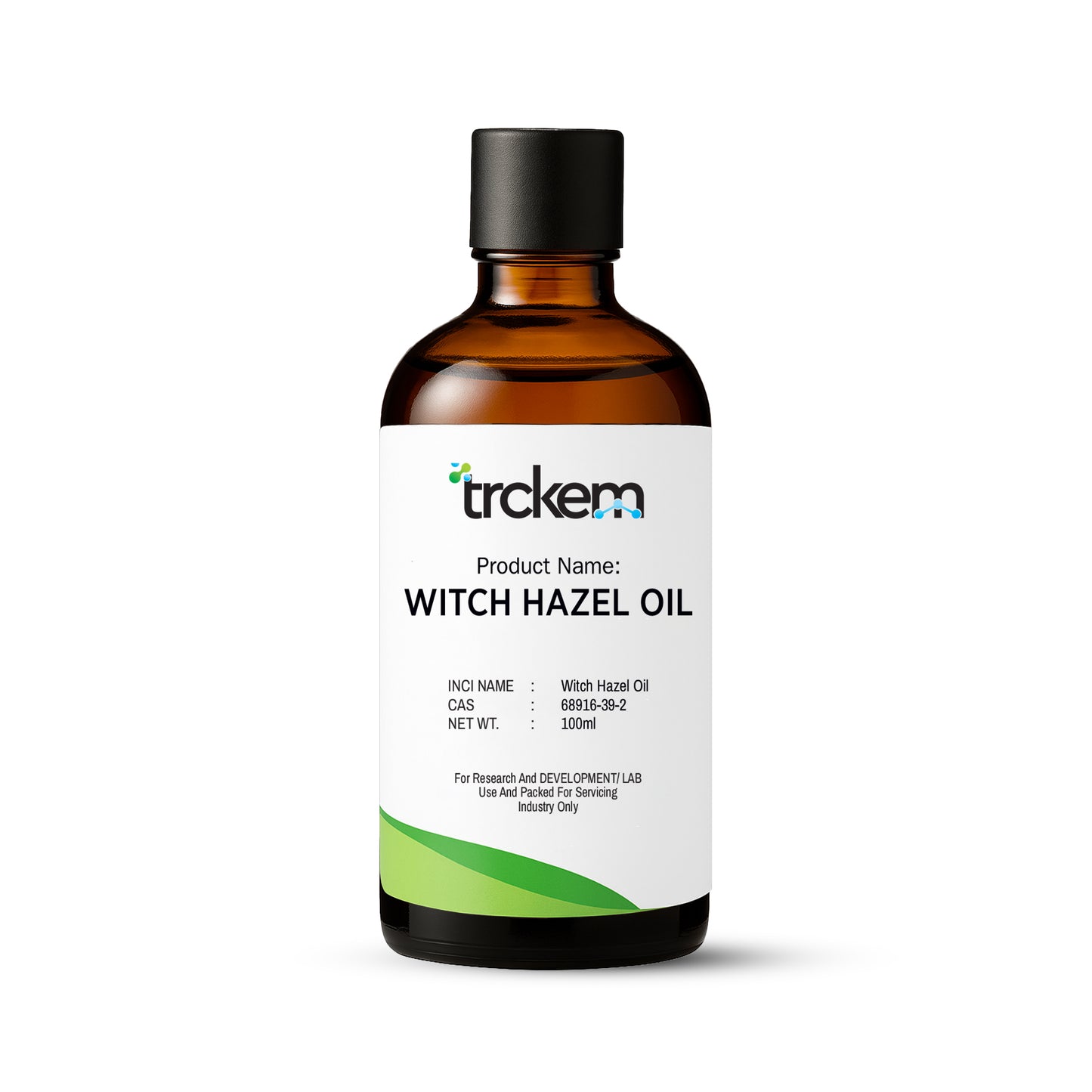
Witch hazel oil
For Bulk Quantity:📞 8822636416
Couldn't load pickup availability
Witch Hazel Oil is a natural extract valued for its soothing, toning, and antioxidant properties. Widely used in skincare, it helps calm irritation, reduce excess oil, and refine the appearance of pores. Its gentle, refreshing nature makes it a popular choice in creams, toners, cleansers, and personal care formulations.
Product Document: Download Now 👇


General Description
Witch Hazel Oil is a natural extract obtained from the leaves, bark, and twigs of the Hamamelis virginiana plant, often combined with a carrier oil for cosmetic use. Known for its soothing, astringent, and antioxidant properties, it has been used traditionally for skin toning and calming. In cosmetic formulations, Witch Hazel Oil provides a refreshing, clarifying effect while helping to reduce excess sebum and refine the appearance of pores. Its pleasant, mild fragrance also enhances the sensory appeal of products.
Uses in the Cosmetics Industry
Witch Hazel Oil is incorporated across a range of personal care and cosmetic formulations, such as:
- Facial Toners & Mists: Acts as a natural astringent to tighten pores and refresh the skin.
- Acne & Blemish Treatments: Helps reduce oiliness and calm redness or irritation.
- Aftershaves & Post-Waxing Products: Provides soothing and anti-inflammatory effects for sensitive or freshly treated skin.
- Cleansers & Makeup Removers: Enhances cleansing while leaving skin balanced.
- Deodorants & Body Care: Used for its mild antibacterial and refreshing properties.
- Hair & Scalp Care: Applied in formulations to soothe itchy scalp and reduce oil build-up.
Manufacturers often include Witch Hazel Oil in natural, botanical-based formulations to meet consumer demand for gentle and plant-derived skincare solutions.
Hazards
While Witch Hazel Oil is generally considered safe for cosmetic use, there are a few precautions:
- Skin Sensitivity: May cause mild irritation or dryness in individuals with very sensitive or compromised skin, particularly if used in high concentrations.
- Allergic Reactions: Rare, but patch testing is recommended to rule out potential sensitivities.
- Eye Contact: Can cause irritation if it comes into direct contact with the eyes.
- Ingestion: Not intended for internal use; ingestion may cause stomach upset or toxicity depending on concentration.
Storage & Stability
- Storage: Store in a tightly sealed container, in a cool, dry place, away from direct sunlight to maintain potency and prevent oxidation.
- Stability: Stable in most cosmetic formulations, though antioxidant stabilizers may be added to extend shelf life.
Witch Hazel Oil is available for bulk and wholesale supply, making it a popular choice for formulators of natural and botanical cosmetic lines.
CAS Number: 84696-19-5
INCI: Hamamelis Virginiana (Witch Hazel) Oil
Composition:Witch Hazel Oil is composed of volatile aromatic compounds, flavonoids, and tannins naturally occurring in the Witch Hazel plant. It is obtained as an essential oil fraction and may contain traces of sesquiterpenes and phenolic derivatives.
Purity Grade: Cosmetic Grade / Pharmaceutical Grade (depending on intended use)
Appearance: Clear to pale yellow liquid with a characteristic herbal aroma
Solubility:
- Insoluble in water
- Soluble in alcohol, oils, and most cosmetic emollients
Preservation:Naturally resistant to microbial growth due to volatile oil constituents; however, formulations containing Witch Hazel Oil should follow standard preservation guidelines.
Storage:Store in a tightly closed container in a cool, dry place, away from direct sunlight and sources of heat. Keep in amber or dark glass bottles to prevent oxidation.
Raw Material Sources:Extracted from the leaves and bark of the Witch Hazel plant (Hamamelis virginiana), native to North America.
Manufacture:Produced via steam distillation of Witch Hazel leaves, twigs, and bark to obtain the volatile oil fraction.
Animal Testing: Not animal tested
GMO: GMO-free (botanical extraction, not genetically modified)
Vegan: Contains no animal-derived ingredients
Proposition:Witch Hazel Oil complies with global cosmetic regulations (EU, US, and Asian markets) for use in skincare, aromatherapy, and personal care formulations.
Warning:For external use only. Avoid direct contact with eyes. May cause irritation in sensitive skin or when used undiluted. Conduct patch testing before use. Keep out of reach of children.
Formulator’s Queries, We Answered
1. What is Witch Hazel Oil?
Witch Hazel Oil is a natural extract derived from the Hamamelis virginiana plant. It is well-known for its astringent, soothing, and anti-inflammatory properties, making it a widely used ingredient in personal care and cosmetic formulations such as toners, cleansers, and soothing creams.
2. What is the CAS Number and INCI Name of Witch Hazel Oil?
CAS Number: 84696-19-5
INCI Name: Hamamelis Virginiana (Witch Hazel) Oil
3. What are the benefits of using Witch Hazel Oil in personal care products?
Astringent Effect: Helps tighten pores and refine skin texture.
Soothing Action: Calms irritation, redness, and inflammation.
Oil Control: Balances sebum production, beneficial for oily and acne-prone skin.
Antioxidant Properties: Protects skin from oxidative stress and premature aging.
Versatile Use: Can be incorporated into both skincare and haircare formulations.
4. What are the common applications of Witch Hazel Oil in personal care?
Facial Toners & Mists: For pore refinement and skin freshness.
Cleansers & Makeup Removers: Provides mild cleansing and soothing benefits.
Aftershaves & Post-Waxing Products: Reduces irritation and redness.
Acne Care Products: Controls excess oil and calms breakouts.
Hair Care: Used in scalp tonics to reduce irritation and refresh the scalp.
5. Is Witch Hazel Oil safe for use in personal care products?
Yes, Witch Hazel Oil is generally regarded as safe when used within recommended concentrations. It is gentle on the skin and suitable for everyday skincare formulations.