


SKU:SOL-TRC-WALNUT(60/80)-300G
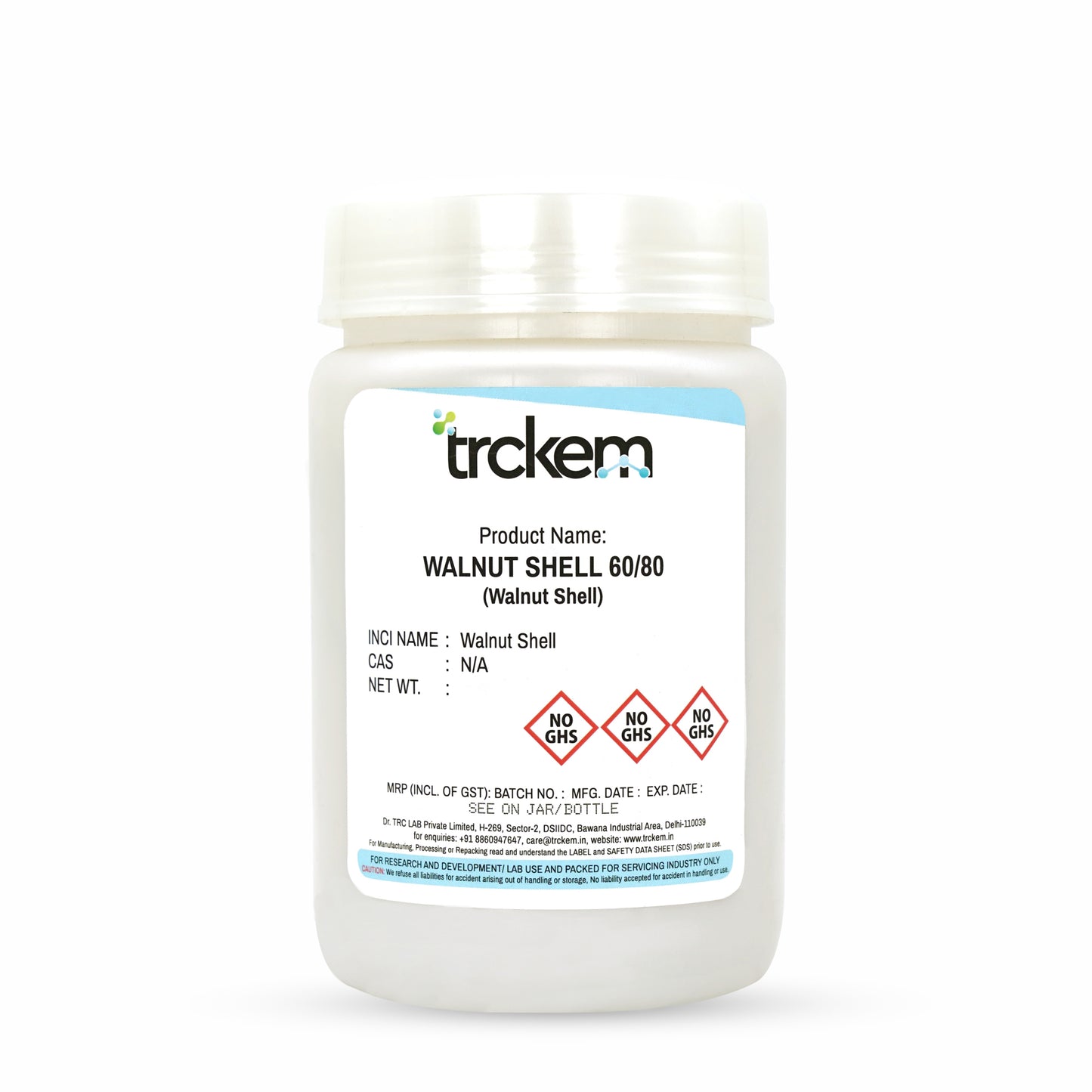
WALNUT SHELL 60/80
For Bulk Quantity:📞 8822636416
Couldn't load pickup availability
Walnut Shell 60/80 is a natural exfoliant commonly used in cosmetic and personal care products. It is derived from crushed walnut shells and is known for its gentle yet effective exfoliating properties, making it suitable for various skincare formulations.
Product Document: Download Now 👇


General Description:
Walnut shell is derived from the crushed shells of walnuts (Juglans regia). It is a natural, biodegradable material that is often processed into a fine powder or granules for use in various industries, including cosmetics.
Uses in the Cosmetic Industry:
Walnut shell serves several purposes in cosmetics:
- Exfoliation: It is used as a physical exfoliant in skincare products such as scrubs and cleansers. The granules help to remove dead skin cells, smooth the skin's surface, and promote skin renewal.
- Texture Enhancement: Walnut shell adds texture and a natural appearance to products like exfoliating scrubs and masks.
Potential Hazard Considerations:
While walnut shell is generally considered safe for topical use in cosmetics, there are some considerations:
- Skin Irritation: The abrasive nature of walnut shell particles may cause irritation, especially in individuals with sensitive skin. Careful formulation and particle size selection are essential to minimize the risk of skin damage.
- Environmental Impact: Cosmetic products containing walnut shell should be designed to minimize environmental impact. Biodegradability and sustainability considerations are important factors in product development.
- Regulatory Compliance: Cosmetic-grade walnut shell must comply with regulatory standards set by authorities such as the FDA in the United States and the European Commission. These regulations ensure that walnut shell used in cosmetics meets safety and quality standards.
CAS Number: 84012-43-1
INCI: Wallnut Shell
Composition: Walnut Shell 60/80 is composed of finely ground walnut shell particles with a particle size ranging from 60 to 80 mesh. It may contain other naturally occurring compounds present in walnut shells, such as proteins, fats, and fibers.
Purity Grade: No purity grade applicable
Appearance: Walnut Shell 60/80 typically appears as a coarse brown powder with varying particle sizes due to the grinding process.
Solubility: Walnut Shell 60/80 is insoluble in water and most organic solvents. It is primarily used as a physical exfoliant in cosmetic formulations, where it helps to remove dead skin cells and impurities from the skin's surface.
Preservation: Walnut Shell 60/80 does not require preservation as it is a natural material. However, it is recommended to store it in a cool, dry place away from moisture to prevent mold growth or degradation.
Storage: Store in a closed container at a dry place at room temperature
Raw Material Source : The raw material for Walnut Shell 60/80 is walnut shells, which are sourced from the fruit of the walnut tree (Juglans regia). The shells are collected, cleaned, and processed to remove any impurities before being crushed into fine particles.
Manufacture: Walnut Shell 60/80 is manufactured by crushing and grinding walnut shells into the desired particle size range of 60 to 80 mesh. The shells undergo a series of grinding and sieving processes to achieve the desired particle size distribution. The resulting powder is then packaged for distribution and use in cosmetic formulations.
Animal Testing: Not animal tested
GMO: GMO-free (does not contain plant-derived components)
Vegan: Does not contain animal-derived components
Proposition: WALNUT SHELL 60/80 complies with relevant regulations and guidelines
Warning: Avoid contact with eyes. In case of contact, rinse thoroughly with water. Use appropriate protective equipment when handling. Keep out of reach of children.
Formulator’s Queries, We Answered
1) What is the CAS number and INCI name for Walnut Shell (60/80)?
INCI name: Juglans Regia (Walnut) Shell Powder (often shown as Juglans Regia Shell Powder).
CAS number (commonly used for the commercial powder): 84012-43-1.
2) What does “60/80” mean (particle size / feel on skin)?
60/80” refers to the mesh grading of the ground shells. It means particles are sized to pass an 60-mesh screen and be retained by an 80-mesh screen (approximate particle diameter ~180–250 µm / 0.18–0.25 mm). In practice 60/80 is considered an extra-fine to fine grit — perceptible as a gentle abrasive in scrubs but coarser than ultra-fine powders. Use this grade when you want noticeable physical exfoliation but still a relatively fine mouthfeel/skin feel compared with coarser grits.
3) What is Walnut Shell 60/80 and how is it made?
It’s a cosmetic-grade powder produced by cleaning, drying and milling the shells of Juglans regia (walnut) and screening to the 60/80 mesh fraction. The material is mostly natural lignocellulosic matter (cellulose/hemicellulose/lignin) and is insoluble in water. It is sold as a brown granular/powder material in cosmetic grade
4) Typical personal-care uses
Common uses in the personal-care industry include:
- Facial/body scrubs & polishers (rinse-off scrubs),
- Exfoliating soaps and shower gels,
- Peeling creams and masks (mechanical exfoliant),
- Bar soap inclusion to add texture, and occasionally as a natural abrasive in specialty dental/polishing applications (careful testing required)
5) Recommended use levels / formulation tips
Typical use levels: for rinse-off scrubs: 0.1–3% is commonly suggested for gentle exfoliation (some suppliers and formulators use higher amounts in scrub bars or concentrated scrubs; guidelines vary). For soaps, typical ranges often cited are 0.25–0.5% or adjusted by product form to avoid settling. Always evaluate in-formula during stability and performance testing