


SKU:LIQ-TEA-034-500G
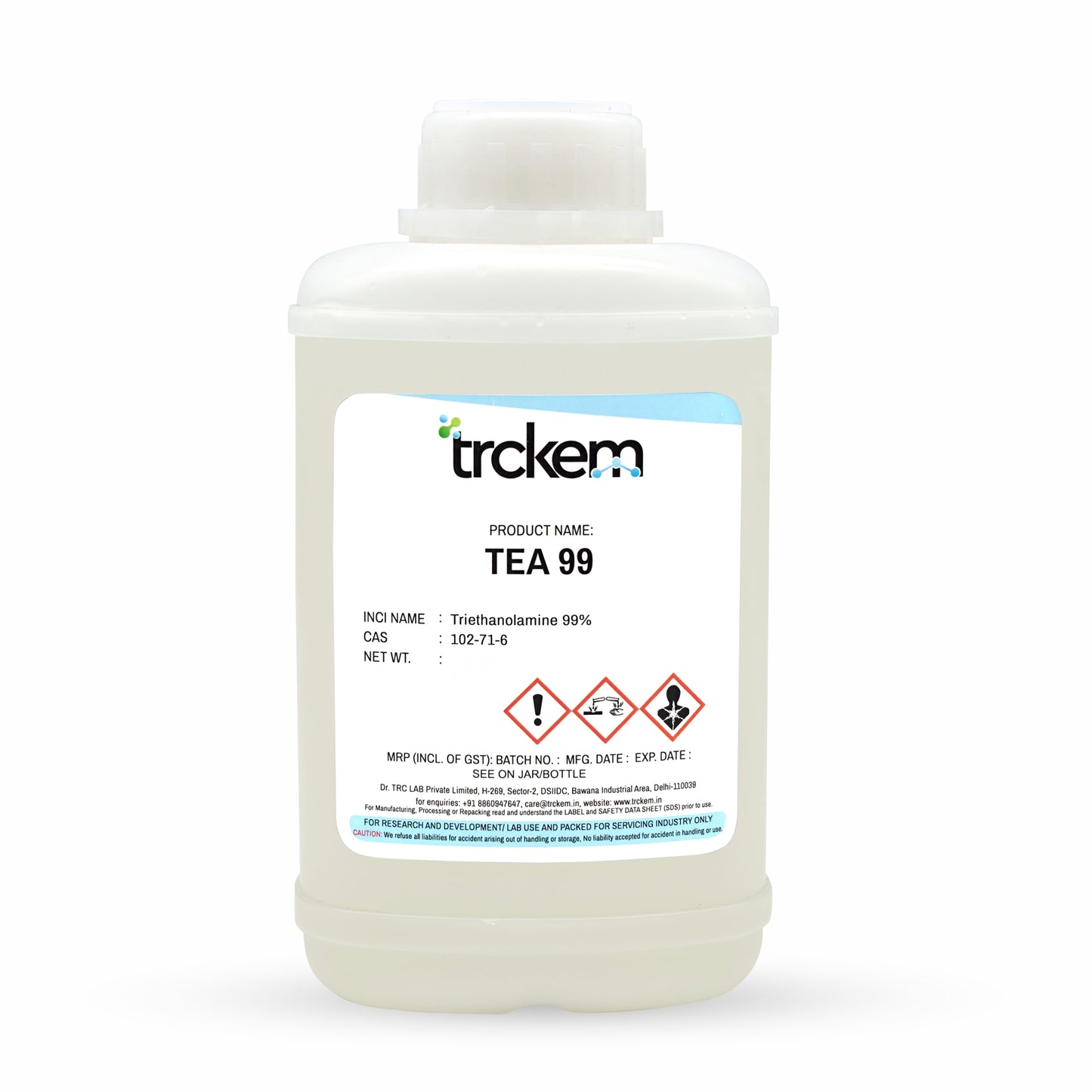
TEA 99%
For Bulk Quantity:📞 8822636416
Couldn't load pickup availability
TEA 99%, also known as Triethanolamine 99, is a clear, colorless liquid with a slight ammonia odor. It is commonly abbreviated as TEA and is used in various industries for its properties as a surfactant, pH adjuster, and emulsifier.
Product Document: Download Now 👇


General Description:
Triethanolamine (TEA) is a viscous liquid organic compound that appears as a colorless to pale yellow liquid with a slight ammonia odor. It is produced through the reaction of ethylene oxide with ammonia and ethanol. TEA is used primarily as a pH adjuster and emulsifying agent in various cosmetic and personal care products.
Uses in the Cosmetic Industry:
- pH Adjuster: TEA is commonly used to adjust the pH of cosmetic formulations to achieve the desired acidity or alkalinity. It helps stabilize the pH level of products, ensuring they remain within the optimal range for effectiveness and skin compatibility.
- Emulsifying Agent: It acts as an emulsifier, facilitating the blending of oil and water-based ingredients in formulations such as creams, lotions, and makeup products. TEA helps create stable emulsions that enhance product texture and application.
- Surfactant: In some formulations, TEA can act as a surfactant, aiding in the dispersion of oils and dirt, and enhancing the cleansing properties of products like cleansers and shampoos.
- Viscosity Controlling Agent: TEA can help control the viscosity of cosmetic formulations, ensuring products have the desired thickness and texture for effective application and consumer experience.
Hazards and Safety Concerns:
While Triethanolamine is considered safe for use in cosmetics at low concentrations, there are potential hazards and safety concerns to consider:
- Skin Irritation: TEA can cause skin irritation, particularly in higher concentrations or with prolonged use. Individuals with sensitive skin may experience redness, dryness, or itching.
- Eye Irritation: Direct contact with the eyes can cause irritation and discomfort. Care should be taken to avoid eye contact when using products containing TEA.
- Allergic Reactions: Although rare, allergic reactions to TEA can occur. Symptoms may include rash, hives, or swelling. Individuals with known allergies to similar compounds should use products containing TEA with caution.
- Environmental Impact: TEA is not readily biodegradable and can accumulate in aquatic environments if not properly managed. Efforts should be made to minimize its release into the environment.
CAS Number: 102-71-6
INCI: Triethanolamine
Composition: Triethanolamine is composed of three ethanolamine molecules joined by covalent bonds.
Purity Grade: No purity grade applicable
Appearance: TEA appears as a viscous liquid that is clear and colorless.
Solubility: Triethanolamine is soluble in water and miscible with most organic solvents.
Preservation: TEA is typically stable under normal storage conditions but should be protected from moisture and excessive heat to prevent degradation.
Storage: Store in a closed container at a dry place at room temperature
Raw Material Source: Triethanolamine is commonly synthesized from the reaction of ethylene oxide with aqueous ammonia and subsequent reaction with ethylene oxide.
Manufacture: TEA is manufactured through the reaction of ethylene oxide with ammonia followed by purification processes to obtain the desired product.
Animal Testing: Not animal tested
GMO: GMO-free (does not contain plant-derived components)
Vegan: Does not contain animal-derived components
Proposition: TEA complies with relevant regulations and guidelines
Warning: Avoid contact with eyes and skin. Use appropriate protective equipment when handling.
Formulator’s Queries, We Answered
1. What is TEA 99%, and what are its CAS number and INCI name?
TEA 99% refers to high-purity Triethanolamine used in cosmetic and personal care formulations.
- CAS Number: 102-71-6
- INCI Name: Triethanolamine
2. What is TEA 99% used for in the personal care industry?
TEA 99% is widely used as a pH adjuster, emulsifier, neutralizing agent, and viscosity builder in products such as creams, lotions, gels, shampoos, conditioners, and liquid soaps.
3. Why is TEA 99% preferred in cosmetic formulations?
Its high purity ensures consistent performance, excellent solubility, stable emulsions, and compatibility with fatty acids and surfactants, making it ideal for premium formulations.
4. Is TEA 99% safe for use in cosmetics and skincare?
Yes—when used within recommended regulatory limits. Formulators must avoid combining TEA with nitrosating agents to prevent nitrosamine formation. Safety assessments and stability testing are advised.
5. What concentration of TEA 99% is typically used in personal care products?
Usage levels generally range from 0.5% to 4%, depending on formulation needs and regional regulations.