


SKU:LIQ-SOR-033-500G
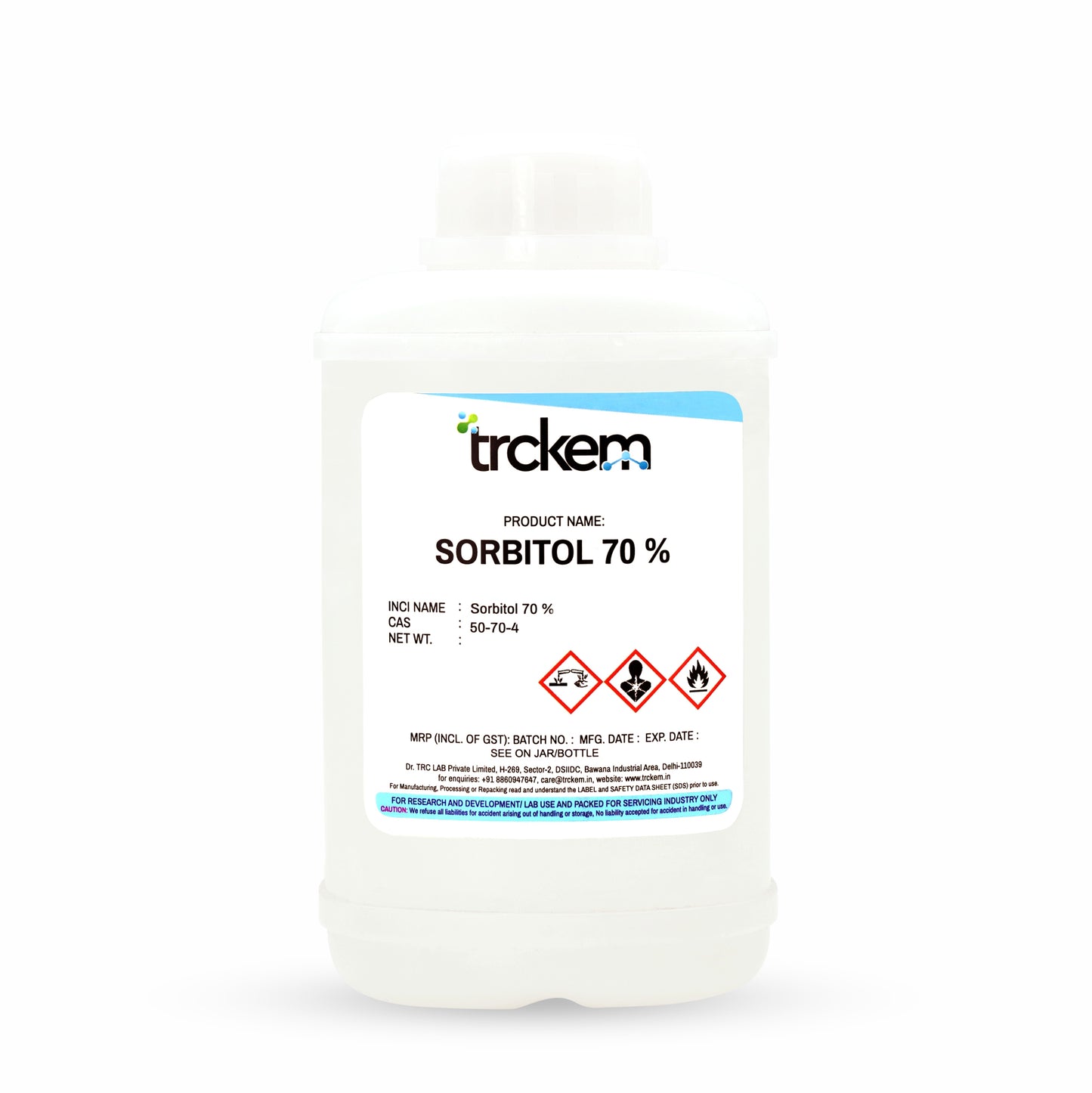
SORBITOL 70%
For Bulk Quantity:📞 8822636416
Couldn't load pickup availability
Sorbitol 70% is a sugar alcohol (polyol) derived from glucose and is commonly used as a humectant, sweetener, and thickening agent in various industries such as food, pharmaceuticals, and personal care products. It is a clear, colorless, odorless liquid with a sweet taste.
Product Document: Download Now 👇


General Description:
Sorbitol, specifically in its 70% concentration form, is a sugar alcohol derived from glucose. It is a clear, colorless, odorless, and sweet-tasting liquid. Sorbitol occurs naturally in fruits and vegetables but is typically produced commercially from corn syrup or glucose. In cosmetics, sorbitol serves various purposes due to its humectant and moisturizing properties.
Uses in the Cosmetic Industry:
- Humectant: Sorbitol is primarily used in cosmetics as a humectant, meaning it attracts moisture to the skin. It helps maintain hydration by drawing water into the outermost layer of the skin, making it valuable in moisturizers, lotions, and creams.
- Thickening Agent: In addition to its humectant properties, sorbitol can act as a thickening agent in cosmetic formulations, enhancing the texture and viscosity of products such as gels and creams.
- Solvent: Sorbitol serves as a solvent to dissolve other ingredients, aiding in the formulation process and ensuring even distribution of active components in products.
- Skin Conditioning Agent: It helps improve the texture and feel of skin care products, leaving the skin soft, smooth, and moisturized.
- Stabilizer: Sorbitol can stabilize emulsions, preventing separation of oil and water phases in formulations like lotions and serums.
Hazards and Safety Concerns:
Sorbitol 70% is generally considered safe for use in cosmetics, but there are some potential hazards and safety concerns to consider:
- Skin Irritation: While sorbitol is well-tolerated by most individuals, high concentrations or sensitivity in some individuals can lead to skin irritation, such as redness or itching.
- Allergic Reactions: Allergic reactions to sorbitol are rare but possible. Individuals with known allergies to sugar alcohols or specific sensitivities should perform a patch test before using products containing sorbitol.
- Digestive Effects: Ingestion of large amounts of sorbitol can have laxative effects and may cause gastrointestinal discomfort, although this is more relevant for oral products rather than topical cosmetics.
CAS Number: 50-70-4
INCI: Sorbitol
Composition: Sorbitol 70% is composed of approximately 70% Sorbitol and 30% water.
Purity Grade: No purity grade applicable
Appearance: Sorbitol 70% appears as a clear, viscous liquid with a syrupy consistency.
Preservation: Sorbitol 70% may not require preservation when stored under proper conditions. However, if preservation is necessary, it can be preserved using suitable antimicrobial agents.
Storage: Store in a closed container at a dry place at room temperature
Raw Material Source: Sorbitol is typically derived from corn syrup through a hydrogenation process.
Manufacture: Sorbitol is manufactured by catalytic hydrogenation of glucose in the presence of a metal catalyst under controlled conditions.
Animal Testing: Not animal tested
GMO: GMO-free (does not contain plant-derived components)
Vegan: Does not contain animal-derived components
Proposition: SORBITOL 70% complies with relevant regulations and guidelines
Warning: Avoid contact with eyes and skin. Use appropriate protective equipment when handling.
Formulator’s Queries, We Answered
1. What is Sorbitol?
Sorbitol is a naturally occurring sugar alcohol derived from glucose, commonly sourced from corn syrup or fruits. It is used in cosmetic and personal care products as a humectant and moisturizer.
2. What is the CAS number and INCI name of Sorbitol?
CAS Number: 50-70-4
INCI Name: Sorbitol
3. What are the primary functions of Sorbitol in cosmetic formulations?
Sorbitol serves as a humectant, attracting moisture to the skin and helping to retain it, making it ideal for hydrating and moisturizing products. It also functions as a thickener and helps stabilize emulsions.
4. In which types of personal care products is Sorbitol used?
Sorbitol is found in a wide variety of products, including:
Skin care products: Creams, lotions, moisturizers, and masks
Hair care products: Shampoos, conditioners, and styling gels
Oral care products: Toothpastes, mouthwashes, and dental gels
Cleansers: Facial cleansers and body washes
Makeup: Foundations, lipsticks, and glosses
5. Is Sorbitol safe to use in cosmetics?
Yes, Sorbitol is non-toxic, non-irritating, and safe for topical application. It is a mild ingredient that is generally well-tolerated by most skin types, including sensitive skin.
6. Is Sorbitol vegan and cruelty-free?
Yes, Sorbitol is typically plant-derived (from corn or fruits) and is vegan and cruelty-free, as it contains no animal-derived ingredients and is not tested on animals.
7. Can Sorbitol cause any adverse reactions?
Sorbitol is generally safe for topical use. However, in very high concentrations or if consumed in large amounts (as in oral care products), it may cause mild gastrointestinal discomfort or laxative effects. Skin irritation is rare but may occur in sensitive individuals.
8. Is Sorbitol biodegradable?
Yes, Sorbitol is biodegradable and considered environmentally friendly, making it suitable for sustainable and eco-conscious formulations.
9. How should Sorbitol be stored?
Sorbitol should be stored in a cool, dry place, away from direct heat and moisture. Ensure containers are tightly sealed to prevent contamination and product degradation.
10. Is Sorbitol suitable for all skin types?
Yes, Sorbitol is suitable for all skin types, including sensitive skin, as it does not cause irritation in most individuals. It is frequently used in moisturizers and hydrating products for its mild, non-irritating nature.