


SKU:LIQ-TRC-SOD-500G
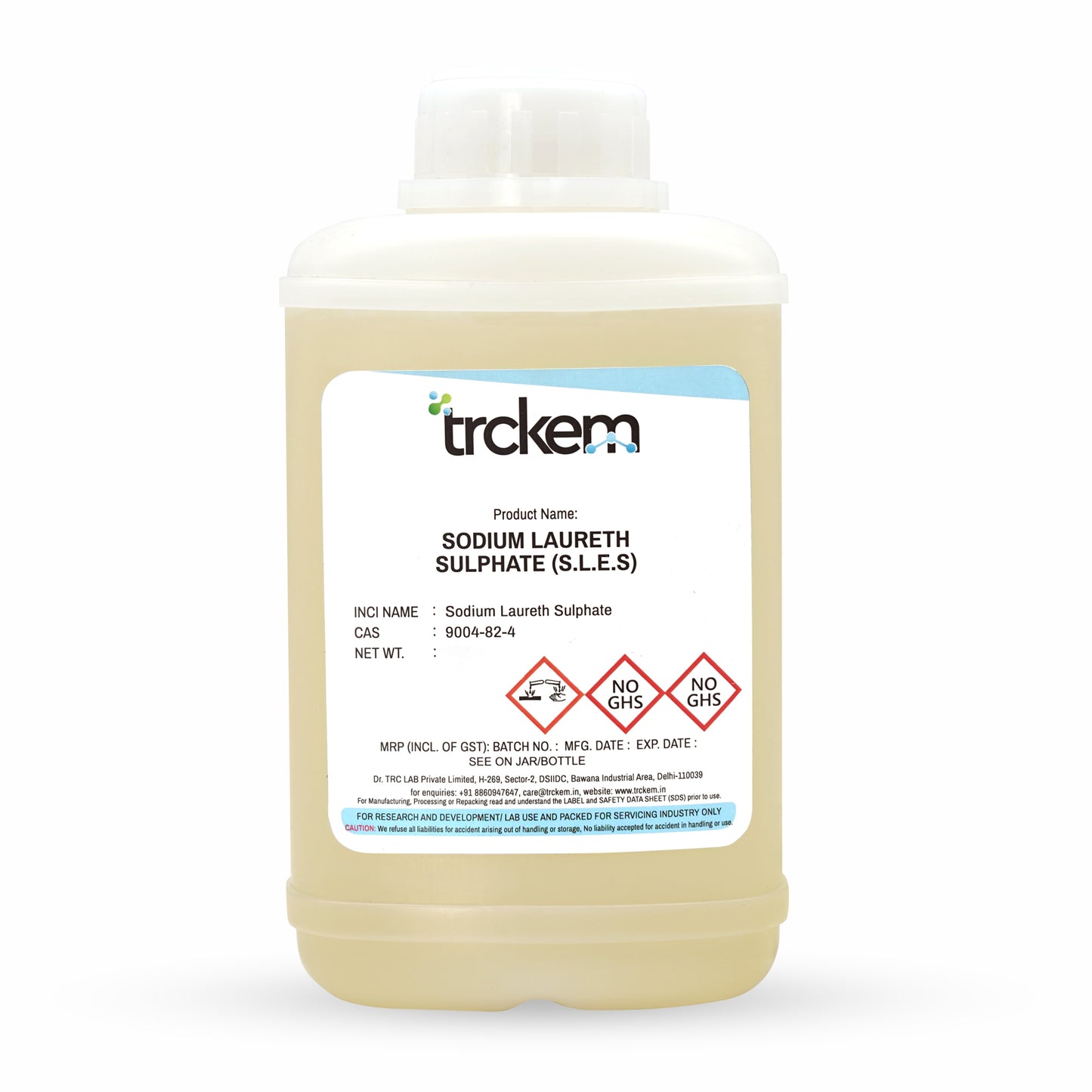
SODIUM LAURETH SULPHATE (SLES)
For Bulk Quantity:📞 8822636416
Couldn't load pickup availability
Sodium Laureth Sulfate (SLES) is a surfactant and detergent commonly used in personal care products and cleaning agents. It is an ethoxylated compound derived from lauryl alcohol.
Product Document: Download Now 👇
-
 SODIUM LAURETH SULPHATE (SLES)_SDS
-
SODIUM LAURETH SULPHATE (SLES)_COA
-
SODIUM LAURETH SULPHATE (SLES)_FACTSHEET

General Description
Sodium Laureth Sulfate (SLES) is a widely used surfactant and emulsifier in the cosmetic and personal care industry. It is a milder alternative to Sodium Lauryl Sulfate (SLS) and is known for its excellent foaming and cleansing properties. SLES is derived from ethoxylated lauryl alcohol, making it an effective ingredient in shampoos, body washes, facial cleansers, and liquid soaps. Due to its ability to remove dirt and oil while producing a rich lather, it is a preferred choice for manufacturers formulating personal care products.
Uses in the Cosmetics Industry
SLES is extensively used in skincare and haircare products as a primary cleansing and foaming agent. It enhances the spreadability of formulations, improves product texture, and ensures deep cleansing without excessive dryness. Many manufacturers buy Sodium Laureth Sulfate in bulk to produce high-quality shampoos, bath gels, facial cleansers, and handwashes. Its ability to stabilize emulsions makes it a crucial ingredient for various cosmetic formulations. Wholesale suppliers provide different grades of SLES for large-scale and small-scale manufacturing needs.
Side Effects & Hazards
While SLES is considered milder than SLS, it may still cause skin irritation or dryness, especially for individuals with sensitive skin. Prolonged exposure to undiluted SLES may lead to mild eye irritation. To ensure safe cosmetic formulations, manufacturers should use SLES within recommended concentrations and combine it with conditioning agents to minimize potential irritation. When handling SLES in bulk manufacturing, proper protective measures should be taken to avoid inhalation of dry powder or accidental contact with eyes.
Buy & Wholesale Sales of Sodium Laureth Sulfate (SLES)
If you are looking to buy SLES for manufacturing high-quality personal care products, sourcing from reputable wholesale suppliers ensures consistent quality and performance. We offer bulk sales of Sodium Laureth Sulfate for businesses looking to produce shampoos, cleansers, and liquid soaps. Contact us today for competitive pricing and wholesale supply options tailored to your manufacturing needs.
CAS Number: 9004-82-4
INCI: Sodium Laureth Sulphate
Composition: Sodium Laureth Sulphate is composed of sodium salts of sulfated ethoxylated lauryl alcohol.
Purity Grade: No purity grade applicable
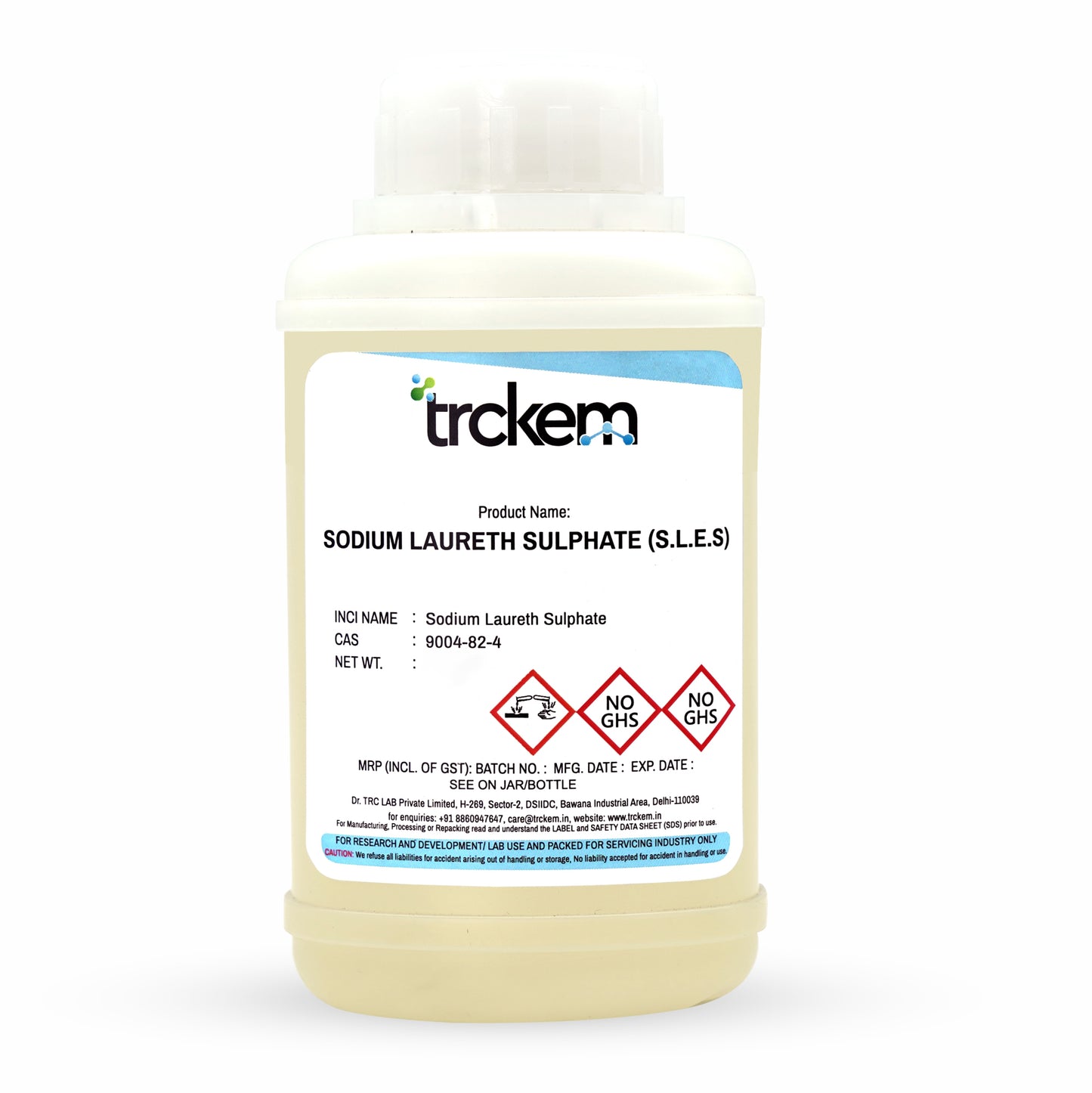
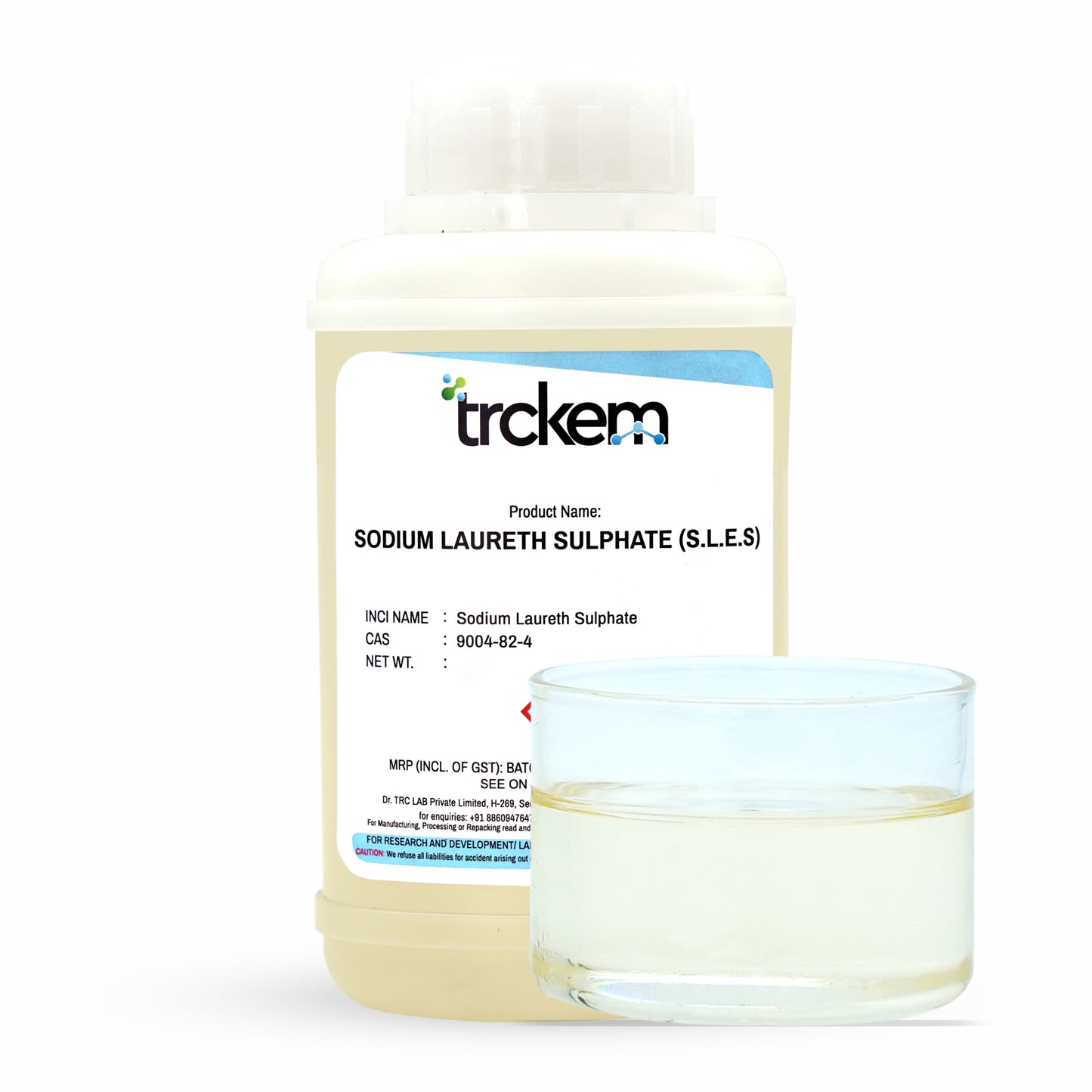
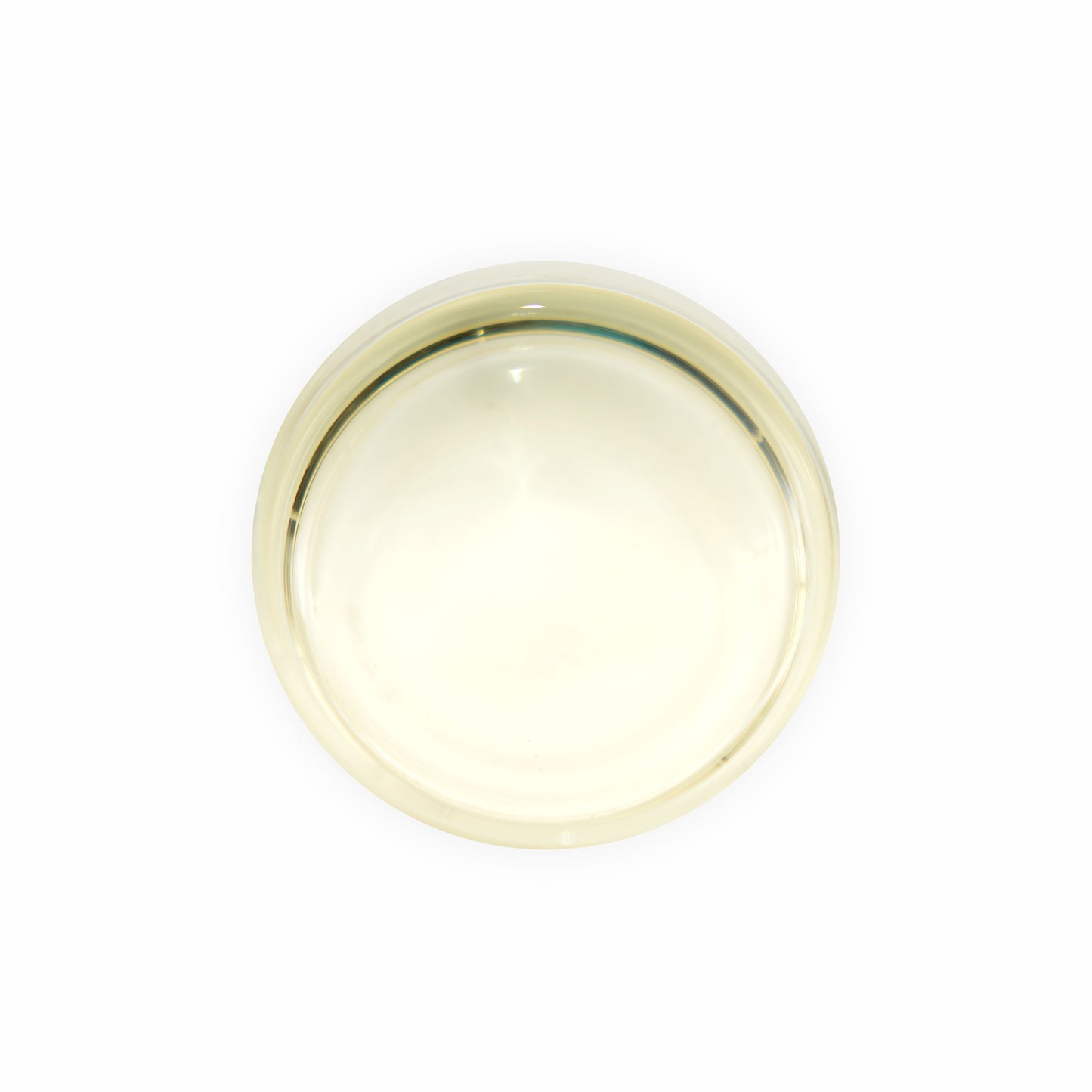
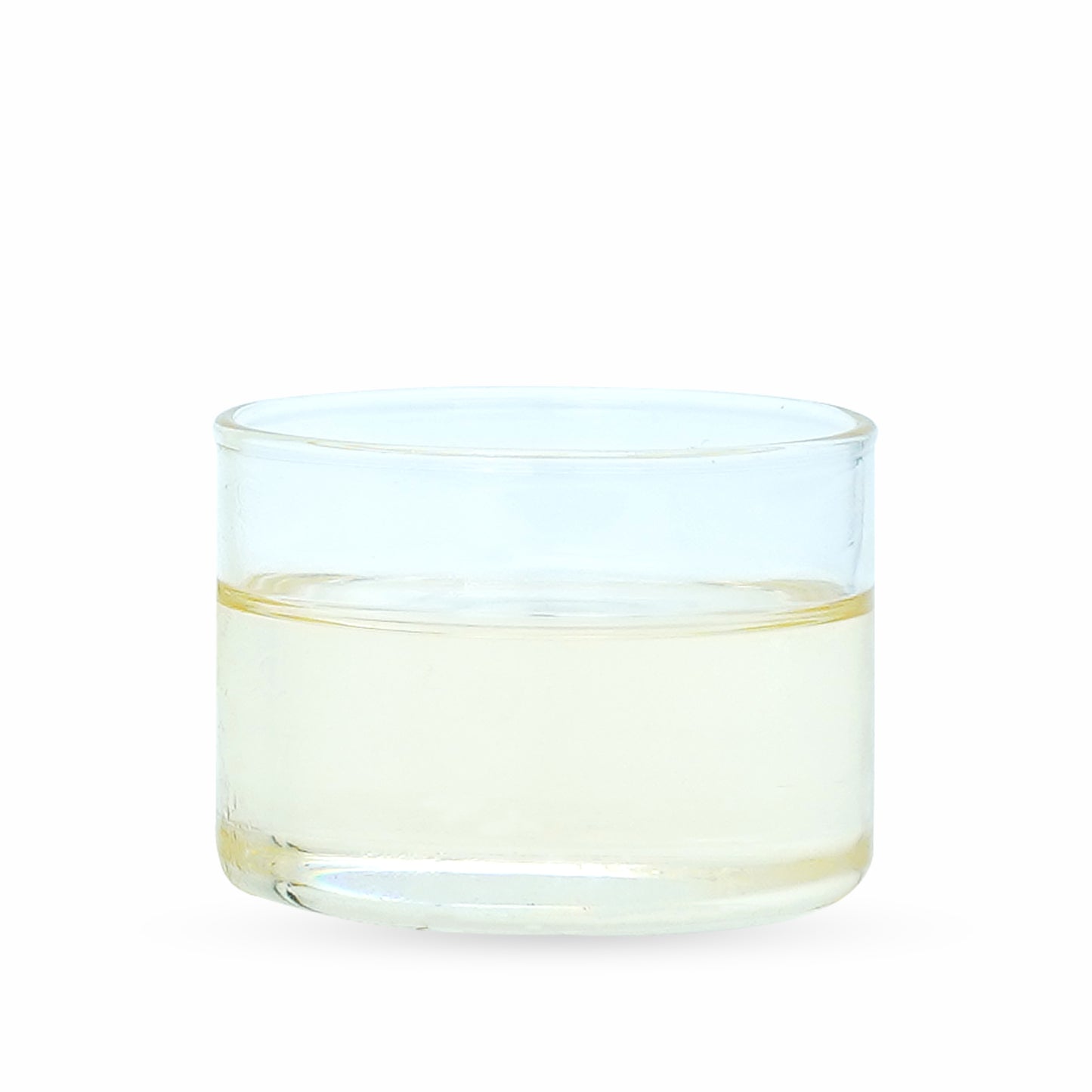
Appearance: SLES typically appears as a clear or slightly hazy viscous liquid.
Solubility: SLES is soluble in water.
Preservation: SLES itself does not require preservation; however, it is often formulated with other ingredients that may require preservation to maintain product stability.
Storage: Store in a closed container at a dry place at room temperature
Raw Material Source: The primary raw materials for SLES production are lauryl alcohol (usually derived from coconut oil or palm kernel oil) and ethylene oxide.
Manufacture: SLES is manufactured through the ethoxylation of lauryl alcohol followed by sulfation of the resulting ethoxylate. This process involves reacting lauryl alcohol with ethylene oxide to form ethoxylated lauryl alcohol, which is then sulfated to produce SLES.
Animal Testing: Not animal tested
GMO: GMO-free (does not contain plant-derived components)
Vegan: Does not contain animal-derived components
Proposition: SODIUM LAURETH SULPHATE complies with relevant regulations and guidelines.
Warning: Avoid contact with eyes and skin. Use appropriate protective equipment when handling.
Formulator’s Queries, We Answered
1. What is Sodium Laureth Sulfate (SLES)?
Sodium Laureth Sulfate (SLES) is a surfactant commonly used in personal care and cosmetic products. It acts as a cleansing and foaming agent, helping to remove dirt, oil, and impurities from the skin and hair.
2. What is the CAS Number and INCI Name of Sodium Laureth Sulfate (SLES)?
- CAS Number: 9004-82-4
- INCI Name: Sodium Laureth Sulfate
3. What are the benefits of Sodium Laureth Sulfate (SLES) in personal care products?
SLES offers multiple benefits, including:
- Effective Cleansing: Removes dirt, oil, and product buildup from skin and hair.
- High Foaming Ability: Creates a rich, luxurious lather for a better cleansing experience.
- Solubilizing Agent: Helps other ingredients dissolve and mix evenly in formulations.
- Cost-Effective: Provides excellent performance at a low cost, making it widely used in commercial products.
4. In which personal care products is SLES commonly used?
SLES is found in:
- Haircare products: Shampoos, conditioners
- Skincare products: Body washes, facial cleansers
- Oral care products: Toothpaste, mouthwash
- Hand soaps and body washes
- Bath products: Bubble baths, shower gels
5. Is Sodium Laureth Sulfate (SLES) safe for skin and hair?
Yes, SLES is considered safe for use in personal care products. However, in high concentrations or with prolonged exposure, it may cause mild irritation in individuals with sensitive skin.
6. Does Sodium Laureth Sulfate (SLES) cause dryness?
SLES has strong cleansing properties, which can sometimes strip natural oils from the skin and hair. Many formulations include conditioning agents to balance this effect.
7. Is Sodium Laureth Sulfate (SLES) the same as Sodium Lauryl Sulfate (SLS)?
No, while both are surfactants, SLES is milder than Sodium Lauryl Sulfate (SLS). SLES undergoes an additional ethoxylation process, making it less likely to cause irritation.
8. Can SLES be used in sulfate-free formulations?
No, SLES is a sulfate-based surfactant. Sulfate-free formulations use alternative cleansing agents like Sodium Cocoyl Isethionate or Decyl Glucoside.
9. What is the shelf life of Sodium Laureth Sulfate (SLES)?
SLES typically has a shelf life of 2 to 3 years when stored under proper conditions.
10. How should Sodium Laureth Sulfate (SLES) be stored?
Store SLES in a cool, dry place, away from direct sunlight and moisture to maintain its stability and effectiveness.