


SKU:SOL-TRC-NaA-300G
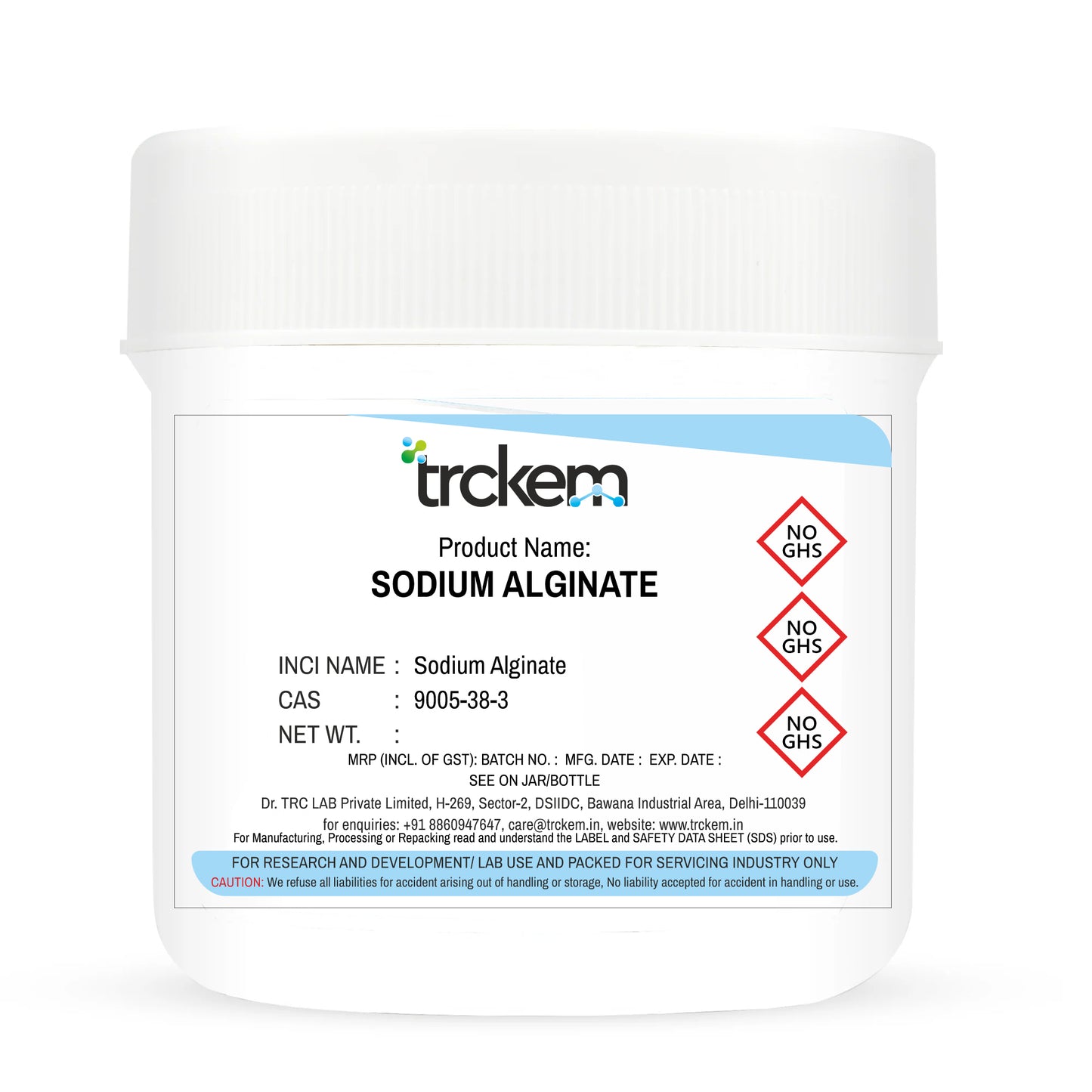
Sodium Alginate
For Bulk Quantity:📞 8822636416
Couldn't load pickup availability
Sodium Alginate is a natural thickening and gelling agent derived from brown seaweed. It stabilizes formulations, enhances texture, and is commonly used in skincare, haircare, and dental products.
Product Document: Download Now 👇

General Description:
Sodium Alginate is a natural, water-soluble polysaccharide derived from the cell walls of brown seaweed (Phaeophyceae). It is the sodium salt of alginic acid, known for its gel-forming, thickening, and stabilizing properties. It is widely used across industries due to its biocompatibility, non-toxicity, and natural origin, making it an ideal choice for clean beauty and eco-conscious formulations.
Uses in the Cosmetic Industry:
Sodium Alginate is a natural, water-soluble polysaccharide derived from the cell walls of brown seaweed (Phaeophyceae). It is the sodium salt of alginic acid, known for its gel-forming, thickening, and stabilizing properties. It is widely used across industries due to its biocompatibility, non-toxicity, and natural origin, making it an ideal choice for clean beauty and eco-conscious formulations.
- Film-forming Agent: Provides a lightweight film that helps lock in moisture.
- Emulsion Stabilizer: Prevents separation in oil-in-water emulsions.
- Moisturizing Agent: Enhances hydration by forming a breathable, protective barrier on the skin.
- Exfoliating Gels & Peel-off Masks: Its gelling property is key in forming smooth, peelable masks.
Common Applications:
- Face masks (especially peel-off)
- Lotions and creams
- Toothpastes
- Hair styling gels
- Soothing gels
- Cleansing systems (shower gels, scrubs)
Hazard / Safety Considerations:
Safety Profile: Sodium Alginate is non-toxic, non-irritating, and biodegradable. It is considered safe for use in both leave-on and rinse-off products.
- Allergenicity: Rarely associated with allergic reactions or skin sensitivity.
- Inhalation Risk: In powdered form, may cause mild mechanical irritation if inhaled during handling. Recommended to handle in a well-ventilated area with PPE (for manufacturers).
- Environmental Impact: Eco-friendly, renewable, and biodegradable. Common in natural and organic-certified formulations.
- Regulatory Status: Approved for use in cosmetics by major global regulations including EU, FDA, and EWG.
CAS Number: 9005-38-3
INCI Name: Sodium Alginate
Composition: Sodium salt of alginic acid, composed of mannuronic acid (M) and guluronic acid (G) units
Naturally derived polysaccharide extracted from brown seaweed (e.g., Laminaria, Ascophyllum species)
Purity Grade: Cosmetic / Pharmaceutical / Food Grade
Minimum purity: typically ≥90% sodium alginate content depending on supplier specifications
Appearance: Off-white to light yellow powder
Odorless or with a slight marine-like odor
Solubility: Soluble in cold and warm water, forming a viscous colloidal solution
Insoluble in alcohol, oils, and organic solvents
Preservation: Self-preserving in dry form
Finished formulations may require a preservative depending on water activity
Does not support microbial growth when kept dry
Storage Conditions: Store in a cool, dry, and well-ventilated environment
Protect from moisture, direct sunlight, and high temperatures
Recommended temperature: <25°C (77°F)
Shelf life: 2–3 years under proper storage conditions
Raw Material Sources: Extracted from brown marine algae (e.g., Macrocystis pyrifera, Laminaria digitata, Ascophyllum nodosum)
Sustainable and renewable marine source
Manufacture: Obtained by aqueous alkaline extraction from brown seaweed
Followed by filtration, precipitation, neutralization with sodium carbonate, drying, and milling into powder form
Process avoids the use of harmful solvents or chemicals
Animal Testing: Not tested on animals (when sourced from cruelty-free, compliant suppliers)
Suitable for cruelty-free brands in accordance with EU, UK, and global animal testing bans
GMO Status: Non-GMO. Not derived from genetically modified organisms
Vegan Status: 100% vegan. Free from animal-derived ingredients or processing agents
Warnings: For external use only in cosmetic applications
Avoid inhalation of fine powder during manufacturing
Use appropriate PPE (dust mask, gloves) when handling large quantities
Ensure proper dispersion to prevent clumping in aqueous systems
Formulator’s Queries, We Answered
1. What is Sodium Alginate?
Sodium Alginate is a natural, water-soluble polymer extracted from brown seaweed. It is widely used in personal care products as a thickening agent, stabilizer, and film former, especially in masks, gels, and lotions.
2. What is the CAS Number and INCI Name of Sodium Alginate?
CAS Number: 9005-38-3
INCI Name: Sodium Alginate
3. Is Sodium Alginate safe for cosmetic use?
Yes, Sodium Alginate is considered safe and non-toxic. It is non-irritating, biodegradable, and approved for use in cosmetic and personal care products by global regulatory agencies including the EU, FDA, and EWG.
4. What are the main benefits of using Sodium Alginate in cosmetics?
Sodium Alginate offers multiple benefits:
Improves viscosity and texture
Helps in film-forming (especially for peel-off masks)
Stabilizes emulsions and suspensions
Provides a light, breathable layer on skin for hydration and protection
5. Is Sodium Alginate a natural ingredient?
Yes, Sodium Alginate is naturally derived from the cell walls of brown algae and is a popular choice in natural and organic formulations.
6. Is Sodium Alginate suitable for vegan and cruelty-free products?
Absolutely. Sodium Alginate is:
100% vegan – no animal-derived components
Cruelty-free – not tested on animals when sourced from compliant suppliers
7. In which types of personal care products is Sodium Alginate commonly used?
You can find Sodium Alginate in:
Peel-off face masks
Soothing gels
Hair styling gels
Lotions and creams
Toothpastes
Shower gels and cleansers
8. Can Sodium Alginate be used in organic-certified cosmetics?
Yes, when sourced naturally and without synthetic additives, Sodium Alginate is accepted in many organic and eco-certified formulations (such as COSMOS and Ecocert).
9. Does Sodium Alginate cause any side effects or skin irritation?
No, it is well-tolerated by most skin types, including sensitive skin. However, in powder form, it may cause mild dust inhalation irritation during bulk manufacturing.
10. Is Sodium Alginate biodegradable and environmentally safe?
Yes, Sodium Alginate is biodegradable, eco-friendly, and does not accumulate in the environment, making it suitable for sustainable and green beauty products.