


SKU:LIQ-TRC-ROSEWOOD-100ML
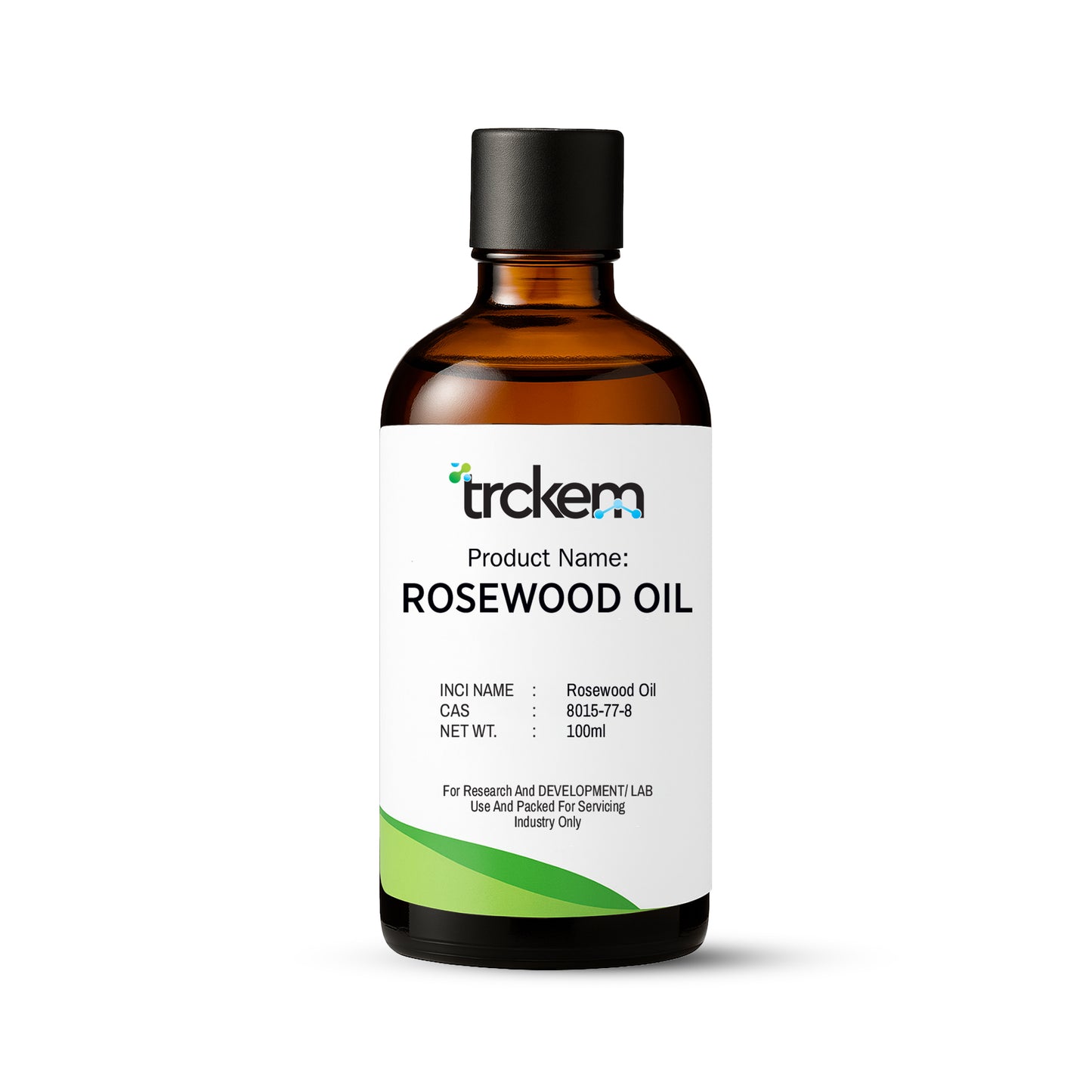
Rosewood oil
For Bulk Quantity:📞 8822636416
Couldn't load pickup availability
Rosewood oil is a precious essential oil distilled from the wood of Aniba rosaeodora. Rich in naturally occurring linalool, it offers a soft, woody-floral aroma. In cosmetics, it is valued for fragrance, skin-conditioning properties, and its ability to enhance sensorial appeal in luxury formulations, with gentle versatility across fine fragrances and personal care products.
Product Document: Download Now 👇

General Description
Rosewood Oil is a natural essential oil obtained from the wood of Aniba rosaeodora, a tree native to the Amazon rainforest. It is highly valued in the cosmetic and personal care industry for its soft, warm, woody–floral aroma and excellent skin-conditioning properties. Rich in linalool, Rosewood oil Essential Oil is known for its soothing, rejuvenating, and balancing effects on the skin. It is commonly used in high-end skincare and fragrance formulations due to its gentle nature and ability to support healthy-looking skin while enhancing sensory appeal.
Uses in the Cosmetics Industry
Rosewood Oil is widely used in skincare, haircare, and fragrance products, including creams, serums, lotions, soaps, and perfumes. It is particularly popular in anti-aging and sensitive-skin formulations because of its ability to support skin regeneration and improve skin texture. In aromatherapy-based cosmetics, it is used to promote relaxation, emotional balance, and stress relief. Many cosmetic brands Buy Rosewood oil for use in luxury, natural, and clean-beauty formulations where both performance and fragrance quality are essential.
Side Effects & Hazards
Rosewood Oil is generally well tolerated when used within recommended cosmetic concentrations. However, individuals with highly sensitive skin may experience mild irritation or allergic reactions, making patch testing advisable before widespread use. Overuse or application of undiluted oil may increase the risk of skin sensitivity. Due to sustainability and regulatory considerations, cosmetic manufacturers should source Wholesale Rosewood oil from responsible suppliers that follow ethical harvesting practices and provide cosmetic-grade, quality-tested material.
CAS Number: 8015-77-8 / 83863-32-5
INCI: Aniba Rosaeodora Wood Oil
Composition:Rosewood Oil is composed primarily of linalool (typically 80–90%), along with minor constituents such as α-terpineol, geraniol, and limonene. These naturally occurring aromatic compounds contribute to its characteristic floral-woody fragrance and skin-soothing properties.
Purity Grade: Cosmetic / Aromatherapy Grade
Appearance: Clear to pale yellow liquid with a characteristic sweet, floral, woody aroma
Solubility:Insoluble in water; soluble in alcohol, oils, and organic solvents
Preservation:Self-preserving due to natural antimicrobial properties; no added preservatives required
Storage:Store in a tightly closed, amber or light-resistant container in a cool, dry place away from direct sunlight and heat to prevent oxidation
Raw Material Sources:Derived from the wood of the Aniba rosaeodora tree (traditionally from South America); increasingly sourced from sustainably managed plantations or leaf-based alternatives to protect endangered species
Manufacture:Obtained through steam distillation of rosewood chips or sustainably harvested leaves, followed by filtration and quality control to meet cosmetic standards
Animal Testing: Not animal tested
GMO: GMO-free (100% natural botanical origin)
Vegan: Does not contain animal-derived components
Proposition:Rosewood Oil complies with relevant cosmetic and fragrance regulations, including IFRA guidelines and EU Cosmetics Regulation, when used within recommended concentration limits
Warning:For external use only. Concentrated essential oil—may cause skin sensitization. Perform a patch test before use. Avoid contact with eyes and mucous membranes. Use in accordance with IFRA usage guidelines.
Formulator’s Queries, We Answered
1. What is Rosewood oil Essential Oil and what are its CAS number and INCI name?
Rosewood oil is a natural aromatic oil extracted from the heartwood of the Aniba rosaeodora tree, prized for its sweet, floral-woody scent and versatility in cosmetic and wellness formulations. The CAS number commonly associated with commercially used rosewood oil is 8015-77-8, and the INCI name used on cosmetic ingredient declarations is Aniba rosaeodora wood (Rosewood) oil.
2. What are the key benefits of Rosewood oil in personal care products?
Rosewood oil is valued in personal care for its aromatic profile and functional properties:
- Supports a calming and balancing sensory experience in skincare and aromatherapy blends.
- Offers soothing qualities suitable for a variety of skin types when formulated appropriately.
- Used in hair care, body care, soaps, perfumes, and other cosmetic products for both fragrance and formulation appeal.
3. How is Rosewood oil extracted?
Rosewood oil is typically obtained by steam distillation of the wood chips from Aniba rosaeodora heartwood. This process yields a clear to pale yellow essential oil rich in linalool and other aromatic compounds
4. What are common applications of Rosewood oil in personal care?
In the personal care industry, Rosewood oil can be used in:
- Moisturizing creams and lotions
- Serums and facial mists
- Hair care formulations
- Aromatherapy diffusers and massage blends
- Fine fragrances and body sprays
Its versatility makes it suitable for both functional and sensory-driven products
5. Is Rosewood oil safe to use in cosmetics?
When used at recommended levels and properly diluted, rosewood oil is generally considered safe for topical use in cosmetics. However, like all essential oils, it can be an irritant to sensitive individuals and should be evaluated within formulation safety assessment