


SKU:LIQ-TRC-ROSEHIP OIL-100ML
ROSEHIP OIL
For Bulk Quantity:📞 8822636416
Couldn't load pickup availability
Rosehip oil is a lightweight, nutrient-rich botanical oil extracted from rose fruit seeds. It is valued for its high content of essential fatty acids, vitamins A and E, and antioxidants, helping support skin regeneration, improve elasticity, reduce the appearance of scars, and enhance overall radiance in facial and body care formulations.
Product Document: Download Now 👇

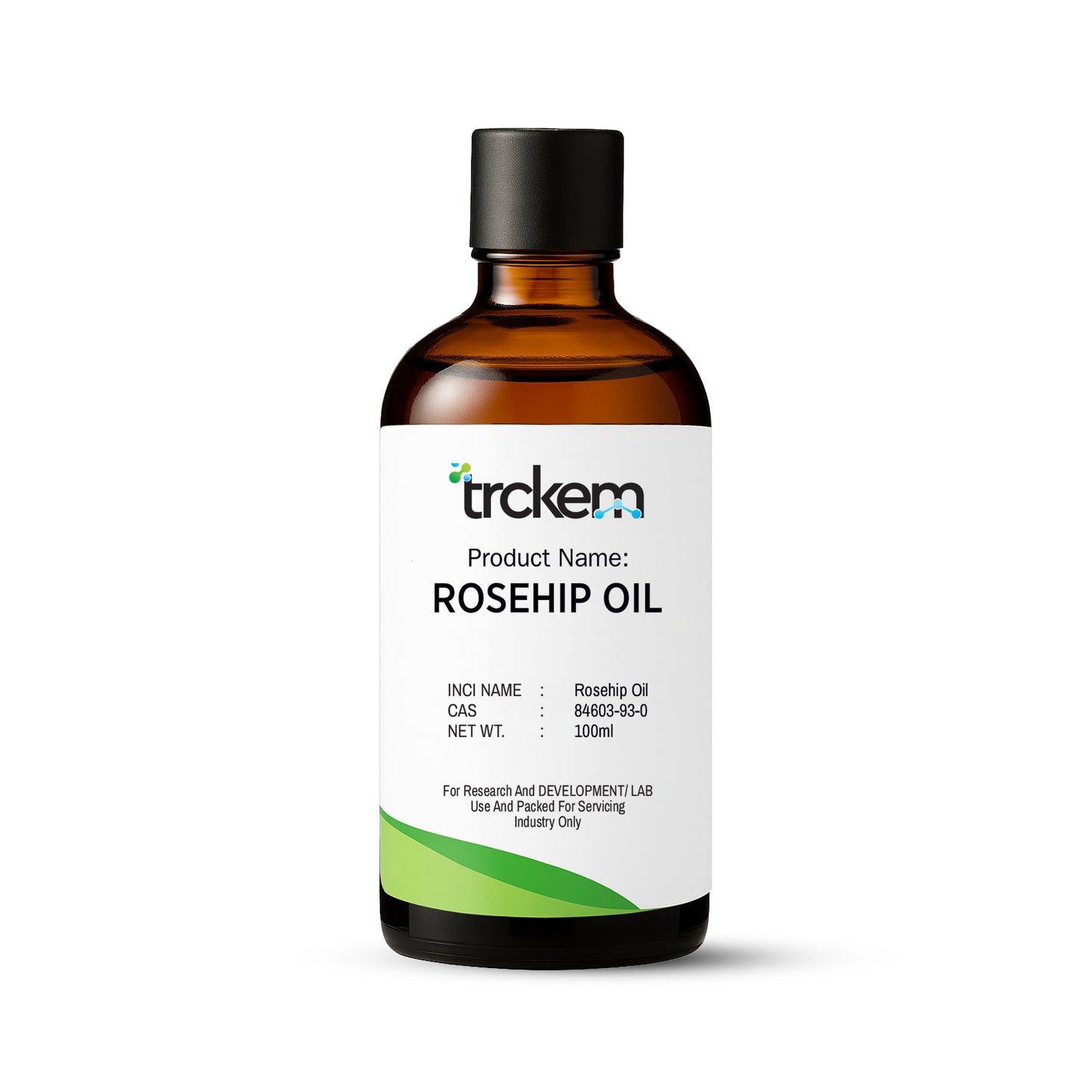
General Description
Rosehip Oil is a natural, cold-pressed vegetable oil extracted from the seeds of rose plants, primarily Rosa canina and Rosa rubiginosa. It is rich in essential fatty acids (linoleic acid and linolenic acid), antioxidants, and vitamins—especially Vitamin A (retinoic acid precursors) and Vitamin C. Known for its lightweight texture and fast absorption, Rosehip Oil is widely valued in cosmetic formulations for its regenerative, moisturizing, and skin-repairing properties. Its ability to improve skin tone, texture, and elasticity makes it a premium ingredient in modern skincare.
Uses in the Cosmetics Industry
Rosehip Oil is extensively used in a variety of personal care and cosmetic products, including:
- Facial Oils & Serums: Helps improve skin radiance, hydration, and overall complexion.
- Anti-aging Products: Supports the reduction of fine lines, wrinkles, and age spots.
- Scar & Stretch Mark Treatments: Promotes skin regeneration and improves the appearance of scars.
- Moisturizers & Creams: Enhances skin softness and barrier repair.
- Hair & Scalp Care: Nourishes the scalp, adds shine, and helps repair damaged hair.
- Lip Care Products: Provides hydration and smoothness to dry or chapped lips.
Due to its natural origin and proven skin benefits, cosmetic manufacturers frequently source Rosehip Oil in bulk for clean-label and premium skincare formulations.
Hazards
Rosehip Oil is generally safe and well-tolerated in cosmetic applications; however, the following considerations should be noted:
- Skin Sensitivity: Rarely, individuals with sensitive or acne-prone skin may experience mild irritation or breakouts.
- Oxidation Risk: High unsaturated fatty acid content makes it prone to oxidation if not properly stabilized with antioxidants.
- Allergic Reactions: Very uncommon, but patch testing is recommended for sensitive users.
- Eye Contact: Direct contact may cause temporary discomfort.
When used within recommended concentrations and properly preserved, Rosehip Oil presents minimal hazard.
Storage & Stability
- Storage: Store in a cool, dark place in tightly sealed containers to protect from light, heat, and oxygen.
- Stability: Shelf life can be extended by refrigeration or the addition of antioxidants such as Vitamin E.
Rosehip Oil is available for bulk and wholesale supply, offering cosmetic formulators a highly effective, natural oil for skin regeneration, hydration, and anti-aging formulations.
CAS Number: 84603-93-0
INCI: Rosa Canina Seed Oil
Composition:Rosehip Oil is composed primarily of triglycerides rich in essential fatty acids, especially linoleic acid (omega-6), alpha-linolenic acid (omega-3), and oleic acid (omega-9). It also naturally contains antioxidants such as tocopherols (vitamin E), carotenoids, and phytosterols.
Purity Grade: Cosmetic Grade (Cold-pressed / Refined grade available)
Appearance: Clear to slightly cloudy liquid; golden yellow to deep orange in color
Solubility:Insoluble in water; soluble in oils and lipid-based cosmetic systems
Preservation:Naturally contains antioxidants but may be stabilized with tocopherol (Vitamin E) to prevent oxidation
Storage:Store in a tightly closed container in a cool, dry place away from light and heat. Refrigeration is recommended for extended shelf life.
Raw Material Sources:Derived from the seeds of Rosa canina (rosehip fruit), typically harvested in South America, Europe, or Asia
Manufacture:Obtained through cold pressing or solvent extraction of rosehip seeds, followed by filtration and optional refining to cosmetic-grade standards
Animal Testing: Not animal tested
GMO: GMO-free (plant-derived, non-genetically modified)
Vegan: Does not contain animal-derived components
Proposition:ROSEHIP OIL complies with international cosmetic regulatory standards, including EU Cosmetics Regulation and FDA cosmetic ingredient guidelines
Warning:For external use only. Avoid contact with eyes. May cause sensitivity in very reactive skin—perform a patch test before use. Store properly to prevent oxidation.
Formulator’s Queries, We Answered
1) What is Rosehip Oil? What is its INCI name and CAS number?
Rosehip oil is a plant oil pressed from the fruit (and/or seeds) of wild roses (commonly Rosa canina, Rosa rubiginosa).
INCI name: commonly listed as Rosa Canina Fruit Oil or Rosa Canina Seed Oil.
Common CAS number:84696-47-9 (other listings and closely related extracts may use different registry numbers)
2) What does rosehip oil contain (key chemical constituents)?
Rosehip oil is rich in unsaturated fatty acids (notably linoleic acid (C18:2) and α-linolenic acid (C18:3), plus oleic acid), plus minor but important lipophilic micronutrients such as tocopherols (vitamin E), carotenoids, phytosterols and phenolic antioxidants. Seed oil composition may differ somewhat from whole-fruit oil; seeds are particularly high in polyunsaturated fatty acids.
3) What skin benefits are claimed and what does the evidence say?
Common consumer claims: moisturization, improved skin texture, reduced appearance of scars and stretch marks, support for visible signs of ageing (fine lines), and skin brightening. Clinical and observational studies suggest topical rosehip oil can improve skin quality and reduce the appearance of scars/age-related markers in some studies, but results vary by formulation, product quality, and individual skin type. Avoid making drug/medical claims without clinical substantiation
4) How is rosehip oil extracted and how does that affect quality?
Two common methods: cold-pressing (mechanical) and solvent extraction or CO₂ extraction. Cold-pressed oil retains more delicate antioxidants (carotenoids, tocopherols) and is often preferred for cosmetic use; however cold-pressed oils can be more oxidation-prone because of the high PUFA content and residual pro-oxidants unless stabilized. Always specify extraction method and grade on technical data sheets.
5) Which grade should I use in personal care formulations?
Use cosmetic-grade, cold-pressed Rosa canina (fruit/seed) oil from reputable suppliers that provide an SDS, COA (certificate of analysis) with fatty acid profile, peroxide & acid values, and storage recommendations. For formulations where color is an issue, consider refined or clarified grades — but refining reduces carotenoids and some antioxidants