


SKU:LIQ-TRC-POLYQUATERNIUM-500G
Polyquaternium 39
For Bulk Quantity:📞 8822636416
Couldn't load pickup availability
Polyquaternium 39 is a cationic copolymer that provides excellent film-forming, conditioning, and anti-static properties, enhancing hair manageability, shine, and skin softness in personal care formulations.
Product Document: Download Now 👇


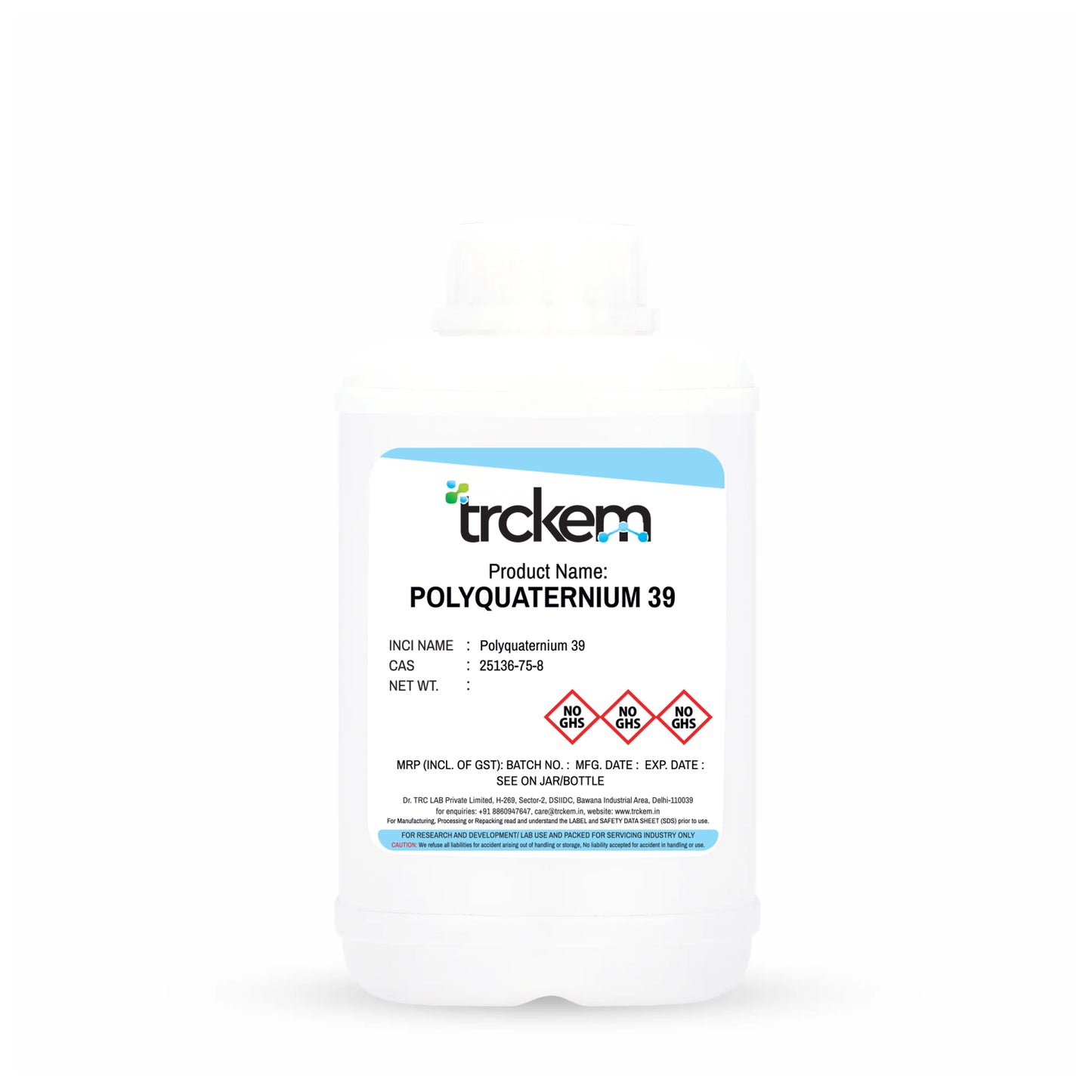
General Description:
Polyquaternium-39 is a high-performance, water-soluble polymer widely used in the cosmetic and personal care industry for its excellent film-forming, conditioning, and anti-static properties. This versatile ingredient enhances the texture, spreadability, and performance of a wide range of formulations. Derived from modern polymer technology, Polyquaternium-39 is particularly valued for its ability to improve skin and hair feel without leaving a sticky residue. Available for bulk supply, wholesale purchase, and large-scale manufacturing, it is an ideal choice for brands aiming to formulate high-quality skincare and hair care products.
Uses in the Cosmetic Industry:
Polyquaternium-39 is a go-to ingredient in many beauty and personal care products thanks to its moisturizing, smoothing, and protective benefits. Common applications include:
- Hair care products such as shampoos, conditioners, and styling gels to reduce static, enhance softness, and improve combability.
- Skin care fomulations including lotions, creams, and serums for a silky after-feel and moisture retention.
- Sunscreen and anti-aging products for improved spreadability and film-forming benefits that enhance product performance.
- Color cosmetics like foundations and BB creams for smoother application and longer wear.
Manufacturers and formulators can buy Polyquaternium-39 in bulk for consistent quality and reliable performance in a variety of cosmetic formulations.
Side Effects & Hazards:
Polyquaternium-39 is considered safe for cosmetic use when formulated within recommended concentrations. However, like all ingredients, it may cause mild irritation in individuals with extremely sensitive skin. It is non-toxic, non-irritating under normal usage, and poses minimal hazard when handled correctly. To avoid degradation or contamination, it should be stored in a cool, dry place, sealed properly after use. Manufacturers should ensure they source from trusted suppliers to guarantee purity and effectiveness.
Wholesale & Bulk Supply Information:
Whether you are developing a new cosmetic line or scaling up production, Polyquaternium-39 is available for wholesale purchase and bulk manufacturing supply. Partner with reputable distributors to ensure high-grade quality, timely delivery, and competitive pricing for your production needs.
CAS Number: 25136-75-8
INCI Name: Polyquaternium-39
Chemical Description: Polyquaternium-39 is a quaternized terpolymer composed of acrylic acid, acrylamide, and diallyldimethylammonium chloride (DADMAC) .
Composition: A polymeric quaternary ammonium salt derived from acrylic acid, acrylamide, and DADMAC.
Purity Grade: Typically supplied as an aqueous solution with 9–11% active polymer content .
Appearance: Clear to slightly hazy, colorless viscous liquid with a mild aldehydic odor .
Solubility: Soluble in water, glycerin, and propylene glycol .
Preservation: Commercial aqueous solutions may contain preservatives; consult the supplier's documentation for specific preservative systems .
Storage: Store in a cool, ventilated, and light-protected area. Keep containers tightly closed to prevent contamination .
Raw Material Sources: Synthesized from monomers: acrylic acid, acrylamide, and diallyldimethylammonium chloride .
Manufacture: Produced through polymerization processes that ensure the formation of a stable quaternary ammonium polymer .
Animal Testing: Not tested on animals .
GMO Status: GMO-free; does not contain genetically modified organisms .
Vegan: Suitable for vegan formulations; contains no animal-derived components
Regulatory Compliance: Complies with relevant cosmetic regulations; for example, listed under COSING with reference number 79207 .
Warnings: Avoid contact with eyes and skin. Use appropriate personal protective equipment (PPE) during handling.
Hazard Classification: Not classified as hazardous under CLP-GHS regulations; considered non-dangerous goods for transport .
THE STORY OF POLYQUATERNIUM 39

Polyquaternium-39: The Hydrating Conditioning Polymer for Soft, Smooth Hair & Skin
Polyquaternium-39 is a high-performance conditioning polymer known for its excellent film-forming, moisture-retaining, and smoothing properties. It enhances softness, boosts hydration, and improves manageability, making it ideal for haircare and skincare formulations that demand long-lasting conditioning without heaviness.

Developed Through Advanced Copolymer Technology for Balanced Performance
Polyquaternium-39 is created through the controlled copolymerization of acrylic acid and methacrylamidopropyl trimethyl ammonium chloride (MAPTAC). This precise polymer engineering results in a highly stable, water-soluble conditioning agent with exceptional compatibility across multiple formulation types.

Superior Conditioning, Moisture Lock-In & Improved Texture
Polyquaternium-39 functions as a conditioning agent, film former, and moisture-retention polymer.
It enhances wet and dry combability, reduces frizz, and boosts softness in haircare. In skincare, it provides smooth glide, improved hydration, and a lightweight conditioned feel. Its excellent film-forming ability ensures long-lasting performance without buildup.

Reliable, Mild & Highly Effective Across Haircare & Skincare Systems
Used in shampoos, conditioners, styling gels, body washes, lotions, and hydrating skincare formulas.
Recommended usage: typically 0.5–5%, depending on conditioning and viscosity needs.
Store in tightly sealed containers in cool, dry conditions.
Polyquaternium-39 is mild, non-irritating, water-soluble, and globally approved, offering dependable conditioning with excellent moisture retention.
Formulator’s Queries, We Answered
1. What is Polyquaternium-39?
Polyquaternium-39 is a synthetic, water-soluble, amphoteric terpolymer composed of acrylic acid, acrylamide, and diallyldimethylammonium chloride. It functions as a conditioning agent, film-former, and antistatic agent in personal care formulations, enhancing product performance and sensory attributes.
2. What are the CAS Number and INCI Name of Polyquaternium-39?
CAS Number: 25136-75-8
INCI Name:Polyquaternium-39
3. What are the benefits of using Polyquaternium-39 in personal care products?
Polyquaternium-39 offers multiple benefits:
Conditioning: Improves hair softness, manageability, and detangling.
Film-Forming: Creates a flexible film on skin and hair, enhancing moisture retention.
Antistatic: Reduces static electricity in hair care products.
Moisturizing: Provides a smooth, velvety skin feel and reduces tightness after drying.
Stabilization: Enhances the stability and consistency of emulsions.
4. What are the common applications of Polyquaternium-39 in personal care?
Polyquaternium-39 is widely used in:
Hair Care Products: Shampoos, conditioners, styling products, and hair dyes for improved conditioning and manageability.
Skin Care Products: Moisturizing creams, lotions, bath gels, and liquid soaps for enhanced moisturization and skin feel.
Cleansing Products: Facial cleansers and body washes for improved foam quality and skin conditioning.
5. Is Polyquaternium-39 safe for use in personal care products?
Yes, Polyquaternium-39 is considered safe for use in cosmetics and personal care products. Safety assessments have shown it to be non-irritating to the skin, hair, and eyes when used as directed. It is approved for use in various formulations within specified concentration limits.
6. Can Polyquaternium-39 cause skin irritation?
Polyquaternium-39 is generally non-irritating and suitable for most skin types. However, individuals with sensitive skin or allergies should perform a patch test before widespread use to ensure compatibility.
7. Is Polyquaternium-39 environmentally friendly?
Polyquaternium-39 is a synthetic polymer and may not be readily biodegradable. Its environmental impact is a subject of ongoing research, and efforts are being made to develop more sustainable alternatives.
8. Are there alternatives to Polyquaternium-39 in personal care products ?
Yes, alternatives include:
Natural Film-Formers: Such as shellac and plant-derived gums.
Biodegradable Polymers: Like polylactic acid (PLA) and polyhydroxyalkanoates (PHA).
Other Synthetic Polymers: Such as Polyquaternium-7, which also provides film-forming and conditioning properties.