


SKU:SOL-TRC-PYQ10-300G
Polyquaternium 10
For Bulk Quantity:📞 8822636416
Couldn't load pickup availability
Polyquaternium-10 is a conditioning polymer that improves hair softness, reduces static and frizz, and enhances detangling. It also helps protect and repair damaged hair by forming a smooth film.
Product Document: Download Now 👇


General Description:
Polyquaternium-10 is a high-performance, water-soluble polymer derived from cellulose. Renowned for its excellent film-forming, conditioning, and anti-static properties, it plays a vital role in enhancing the texture and performance of hair care and skincare products. This versatile ingredient is commonly used by formulators and manufacturers looking to improve product glide, smoothness, and overall user experience. Available for bulk sales, wholesale purchase, and large-scale manufacture, Polyquaternium-10 is a valuable addition to any personal care product line.
Uses in the Cosmetics Industry:
- Polyquaternium-10 is widely utilized in the cosmetic and personal care industry for its conditioning and protective properties. It is especially favored in hair care products for improving manageability and reducing frizz. Common applications include:
- Shampoos and conditioners to provide softness, detangling, and static control.
Hair serums and styling products to enhance smoothness and reduce flyaways. - Cleansers and body washes for mild conditioning benefits and improved skin feel.
Moisturizes and lotions to deliver a silky finish and prevent moisture loss. - Due to its compatibility with a wide range of surfactants and actives, Polyquaternium-10 is a go-to ingredient for brands involved in bulk manufacturing, wholesale formulation, and private-label production of personal care items.
Side Effects & Hazards:
Polyquaternium-10 is considered safe for cosmetic use and is non-toxic when used in recommended concentrations. However, overuse may lead to buildup in hair products, causing dullness or heaviness in some hair types. Rarely, individuals with highly sensitive skin may experience mild irritation. It is recommended to perform patch testing when developing new formulations. For safe handling during manufacturing, store in a cool, dry environment, and ensure proper hygiene practices to prevent contamination.
Wholesale & Bulk Availability:
Whether you're looking to buy Polyquaternium-10 in bulk, source it for large-scale manufacturing, or explore wholesale supply for your brand, ensure you're partnering with trusted suppliers who provide high-purity, cosmetic-grade polymers. This guarantees optimal performance and consistency in your skincare and hair care formulations.
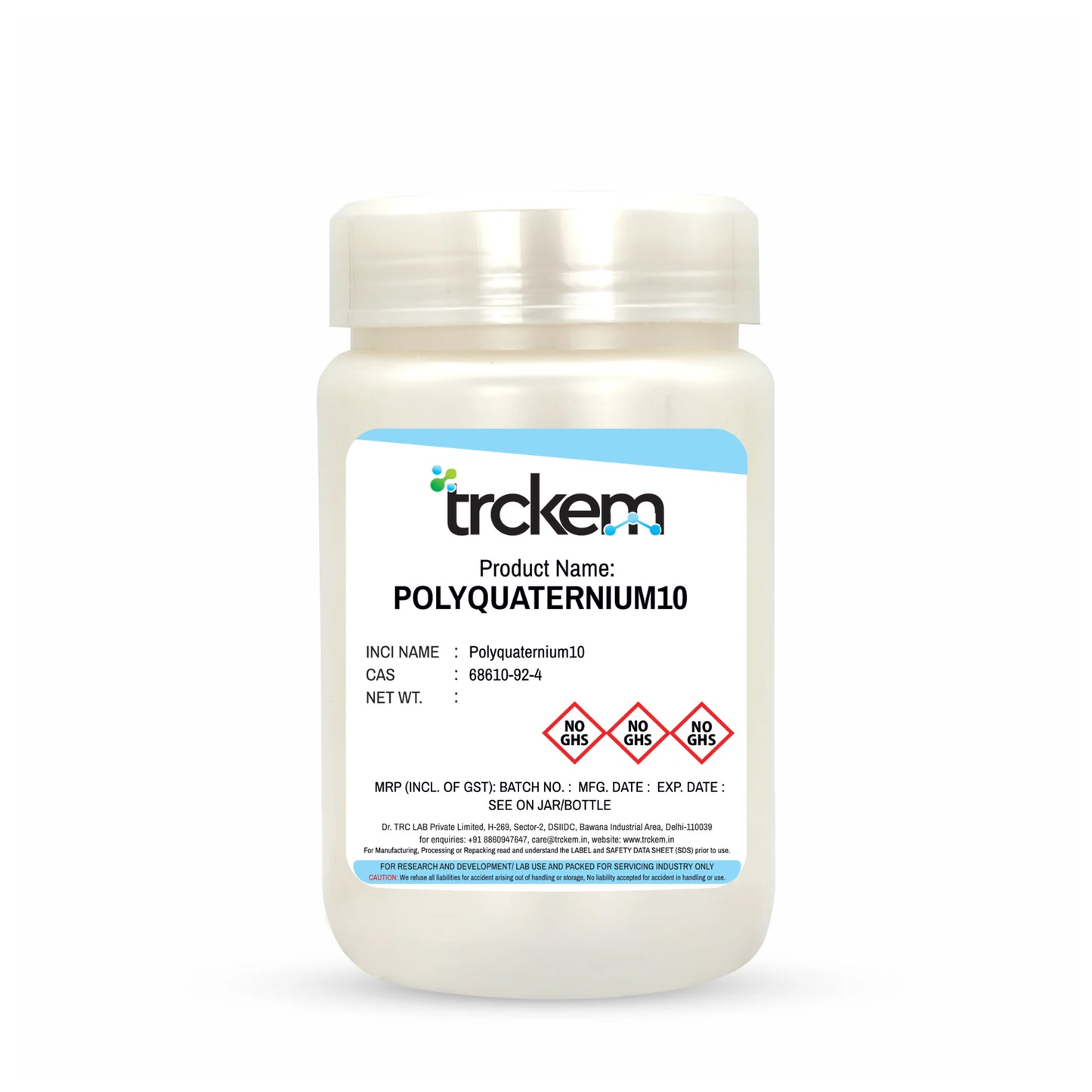
CAS Number: 68610-92-4
INCI : Polyquaternium-10
Composition : A cationic polymer derived from hydroxyethylcellulose, quaternized with trimethyl ammonium substituted epoxide
Purity Grade : No standard purity grade; varies by manufacture.
Appearance : Off-white to pale yellow powder or granules.
Solubility : Soluble in water.
Raw Material Source: Derived from natural cellulose (wood or cotton linters).
Manufacture: Produced through chemical modification of hydroxyethylcellulose by quaternization.
Animal Testing: Not animal tested (confirm with specific supplier for certification).
GMO: GMO-free (depends on cellulose source; verify with supplier).
Vegan: Contains no animal-derived components.
Proposition: Polyquaternium-10 complies with applicable cosmetic regulations.
Warning: Avoid inhalation of dust. Use appropriate protective equipment during handling.
THE STORY OF POLYQUATERNIUM 10

Polyquaternium-10: The Conditioning Polymer for Soft, Smooth & Manageable Hair
Polyquaternium-10 is a cationic cellulose derivative known for its excellent conditioning, detangling, and film-forming properties. It enhances smoothness, improves manageability, and reduces static, making it a key ingredient in premium haircare and personal-care formulations.

Derived from Natural Cellulose and Refined Through Advanced Quaternization
Polyquaternium-10 is produced by chemically modifying natural cellulose through quaternization, creating a positively charged polymer with superior conditioning performance. The resulting material is purified, dried, and milled into a fine powder that meets cosmetic-grade standards for clarity, safety, and consistency.

Superior Conditioning, Detangling & Sensory Enhancement
In personal care, Polyquaternium-10 acts as a conditioning agent, anti-static polymer, and film former.
It reduces friction, enhances slip, improves wet and dry combability, and imparts a soft, silky touch. Its ability to deposit a lightweight, protective film makes it ideal for haircare, cleansing products, and mild skin-conditioning formulas.

Mild, Effective & Highly Compatible with Haircare Systems
Used in shampoos, conditioners, leave-ins, body washes, and skin-cleansing systems.
Recommended usage: typically 0.1–1%, depending on conditioning intensity.
Store in a cool, dry area in well-sealed packaging.
Polyquaternium-10 is mild, biodegradable, and globally approved for cosmetic use, offering consistent performance in both rinse-off and leave-on formulations.
Formulator’s Queries, We Answered
1. What is Polyquaternium-10?
Polyquaternium-10 is a water-soluble, cationic polymer derived from hydroxyethyl cellulose. It is widely used in personal care formulations for its conditioning, film-forming, and anti-static properties. Its positive charge allows it to bond effectively with negatively charged surfaces like hair and skin, enhancing product performance.
2. What are the CAS Number and INCI Name of Polyquaternium-10?
CAS Number: 68610-92-4
INCI Name: Polyquaternium-10
Note: Other CAS numbers associated with Polyquaternium-10 include 81859-24-7 and 53568-66-4 .
3. What are the benefits of using Polyquaternium-10 in personal care products?
Hair Conditioning: Smooths the hair cuticle, reduces frizz, and enhances manageability.
Moisture Retention: Forms a protective film that helps retain moisture on hair and skin.
Anti-Static Properties: Neutralizes static charges, preventing flyaways in hair.
Improved Texture: Enhances the feel and spreadability of formulations.
Product Stability: Helps maintain the consistency and stability of emulsions .
4. What are the common applications of Polyquaternium-10 in personal care?
Hair Care: Shampoos, conditioners, hair masks, styling gels, and sprays.
Skin Care: Cleansers, moisturizers, serums, and exfoliants.
Color Cosmetics: Foundations, mascaras, and eyeliners for improved wear and texture .
5. Is Polyquaternium-10 safe for use in personal care products?
Yes, Polyquaternium-10 is considered safe for use in cosmetics and personal care products. The Cosmetic Ingredient Review (CIR) Expert Panel has assessed its safety and concluded that it is safe as a cosmetic ingredient. Studies indicate low toxicity and minimal skin penetration .
6. Can Polyquaternium-10 cause skin irritation?
At concentrations up to 2%, Polyquaternium-10 is generally non-irritating and non-sensitizing. However, at higher concentrations (e.g., 5%), it may cause mild irritation to the skin or eyes in some individuals .
7. Is Polyquaternium-10 environmentally friendly?
Polyquaternium-10 is a synthetic polymer and may not be readily biodegradable. Its environmental impact is a subject of ongoing research, and efforts are being made to develop more sustainable alternatives.
8. Are there alternatives to Polyquaternium-10 in personal care products?
Yes, alternatives include:
Polyquaternium-7: Another cationic polymer with similar conditioning properties.
Natural Film-Formers: Such as plant-derived gums and proteins.
Biodegradable Polymers: Like polylactic acid (PLA) and polyhydroxyalkanoates (PHA).