


SKU:SOL-TRC-PAPPIN-300G
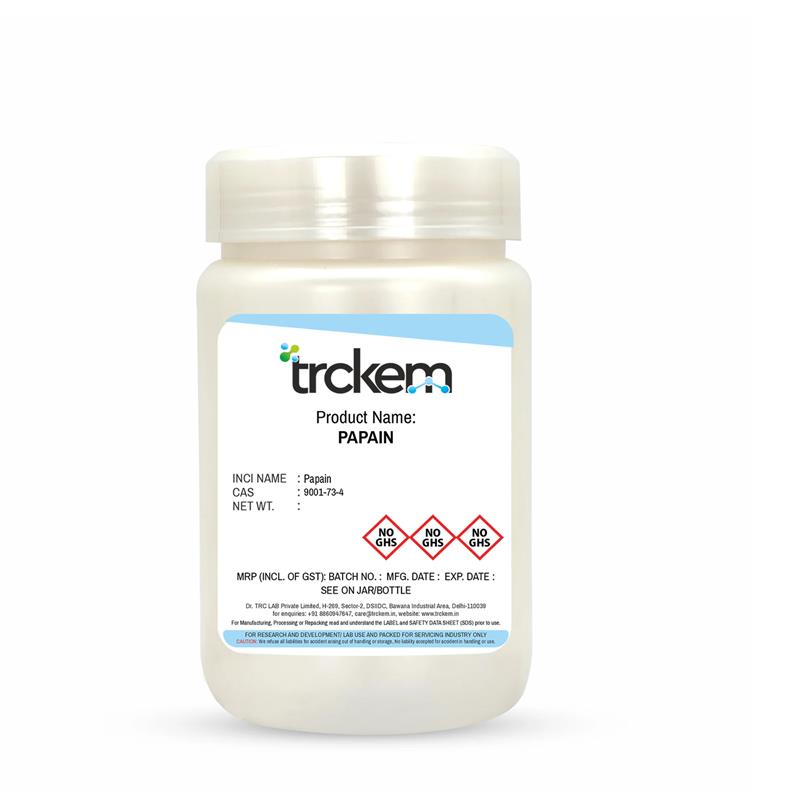
Papain
For Bulk Quantity:📞 8822636416
Couldn't load pickup availability
Papain is a natural proteolytic enzyme derived from papaya, widely used in skincare and cosmetic formulations for its gentle exfoliating and skin-renewing benefits. It helps break down dead skin cells, promotes smoother texture, and enhances product absorption, making it ideal for brightening treatments, enzyme masks, and mild exfoliation systems.
Product Document: Download Now 👇


General Description
Papain is a natural proteolytic enzyme derived from the latex of the Carica papaya fruit. It breaks down large proteins into smaller peptides and amino acids, giving it excellent exfoliating and skin-renewing properties. A mild, plant-derived enzyme, papain is widely used in cosmetic formulations as a gentle alternative to abrasive or chemical exfoliants. It is valued for improving skin texture, promoting cell turnover, and enhancing the clarity and brightness of the complexion.
Uses in the Cosmetic Industry
Papain is incorporated across various skincare and personal-care formulations due to its gentle enzymatic action:
- Enzyme Exfoliants & Peels:-Provides non-abrasive exfoliation, helping remove dead skin cells without irritation.
- Brightening & Clarifying Serums:-Helps improve uneven skin tone and dullness.
- Anti-Aging Products:-Supports smoother skin texture and reduces the appearance of fine lines by promoting gentle resurfacing.
- Cleansers & Face Washes:-Enhances cleansing efficiency by breaking down impurities and excess proteins on the skin surface.
- Body Care Products:-Used in body polishes and foot treatments to soften rough skin and calluses.
- Hair & Scalp Treatments:-Helps break down dead skin on the scalp and enhances product penetration.
Papain is especially favored in clean beauty and natural formulations due to its plant origin and mild action.
Hazards
While papain is generally safe and well-tolerated when used within regulated concentrations, the following safety considerations apply:
- Skin Irritation:-May cause mild irritation or sensitivity, especially in high concentrations or when applied to compromised skin.
- Allergic Reactions:-Users with latex or papaya allergies may experience cross-reactivity, including redness, swelling, or itching.
- Eye Irritation:-Can cause significant irritation if it enters the eyes; not recommended for eye-area products.
- Over-Exfoliation:-Excessive use may disrupt the skin barrier, leading to dryness or sensitivity.
- Inhalation Hazard (Powder Form)Fine papain powder can irritate the respiratory system during manufacturing; proper PPE is required.
CAS Number: 9001-73-4
INCI: Papain
Composition:Papain is a cysteine protease enzyme derived from the latex of the Carica papaya fruit. It consists primarily of proteolytic enzymes capable of breaking down proteins into peptides and amino acids.
Purity Grade:Food Grade / Cosmetic Grade / Pharmaceutical Grade (depending on supplier specifications)
Appearance:Off-white to light beige powder or granules; may also be available as a liquid enzyme preparation.
Solubility:Soluble in water; insoluble in oils and most organic solvents.
Preservation:Typically self-preserving in dry form. Liquid forms may require preservation depending on formulation (commonly sodium benzoate or potassium sorbate).
Storage:Store in a tightly closed container in a cool, dry environment.
Avoid heat, moisture, and direct sunlight.
Refrigeration recommended for enzyme stability.
Raw Material Sources:Latex extracted from unripe Carica papaya fruit.
Manufacture:
- Latex is collected by scoring unripe papaya fruit.
- Latex is dried and purified.
- Enzyme is filtered, concentrated, and standardized (activity units).
- Final product is milled or spray-dried into powder.
Animal Testing:Not animal tested
GMO:GMO-free (naturally plant-derived)
Vegan:Vegan; contains no animal-derived ingredients
Proposition:Complies with cosmetic and food regulations including
• EU Cosmetic Regulation (EC) No. 1223/2009
• IFRA safety guidelines (where applicable)
• FCC/USP for food/pharma grades (based on supplier)
Warning:
• Avoid inhalation of powder—may cause respiratory irritation.
• May cause skin sensitization in some individuals; patch test recommended.
• For external use only in cosmetic formulations.
• Handle with gloves and protective equipment to prevent enzyme dust exposure.
Formulator’s Queries, We Answered
1)What are the INCI name and CAS number?
INCI name: PAPAIN.
CAS number: 9001-73-4
2) What is Papain used for in personal-care products?
Papain is used primarily as a gentle enzymatic exfoliant and skin-conditioning agent. It helps loosen and remove dead surface skin cells, can improve skin texture, and is used in enzyme peels, scrubs, masks and some hair-care and oral formulations
3) Typical usage levels — how much Papain should a formulator use?
Reported/formulation guidance varies by product type: manufacturers and formulators commonly recommend ~0.1–0.5% for daily-use products and 0.5–2% (or higher for short-contact/weekly peels); some specialized enzyme peels use higher levels (reports and patents cite 1–5% in certain peel formulations). Always follow your supplier’s technical data sheet and perform stability/skin-safety testing
4) pH, temperature and stability — what conditions keep Papain active?
Papain is an enzyme whose activity is pH- and temperature-dependent. Typical optimal activity is reported around pH ~5.5–7.0 (many sources cite ~6–7), although activity can be retained over a broader range depending on preparation/immobilization. Papain powder is usually stored cold (2–8 °C or frozen as specified) and aqueous solutions can lose activity over time (some datasheets note ~1–2% activity loss per day in solution); papain is unstable under strongly acidic conditions (pH < ~2.8). Formulators often add stabilizers (e.g., cysteine, EDTA) or use immobilized/linked forms for improved stability.
5) Compatibility — what ingredients does Papain play well (or not) with?
Compatible / stabilizing: mild buffers at neutral/slightly acidic pH, reduced sulfur compounds (cysteine) and chelators (EDTA) can help preserve activity.
Incompatible / deactivating: strong acids (very low pH), strong oxidizers or harsh denaturants (e.g., high concentrations of guanidine HCl or trichloroacetic acid) reduce activity. Adjust formulation pH and avoid ingredients that oxidize cysteine residues. Always run compatibility and activity assays in final formulation