


SKU:LIQ-TRC-NAN(PATCHOULI)-100ML
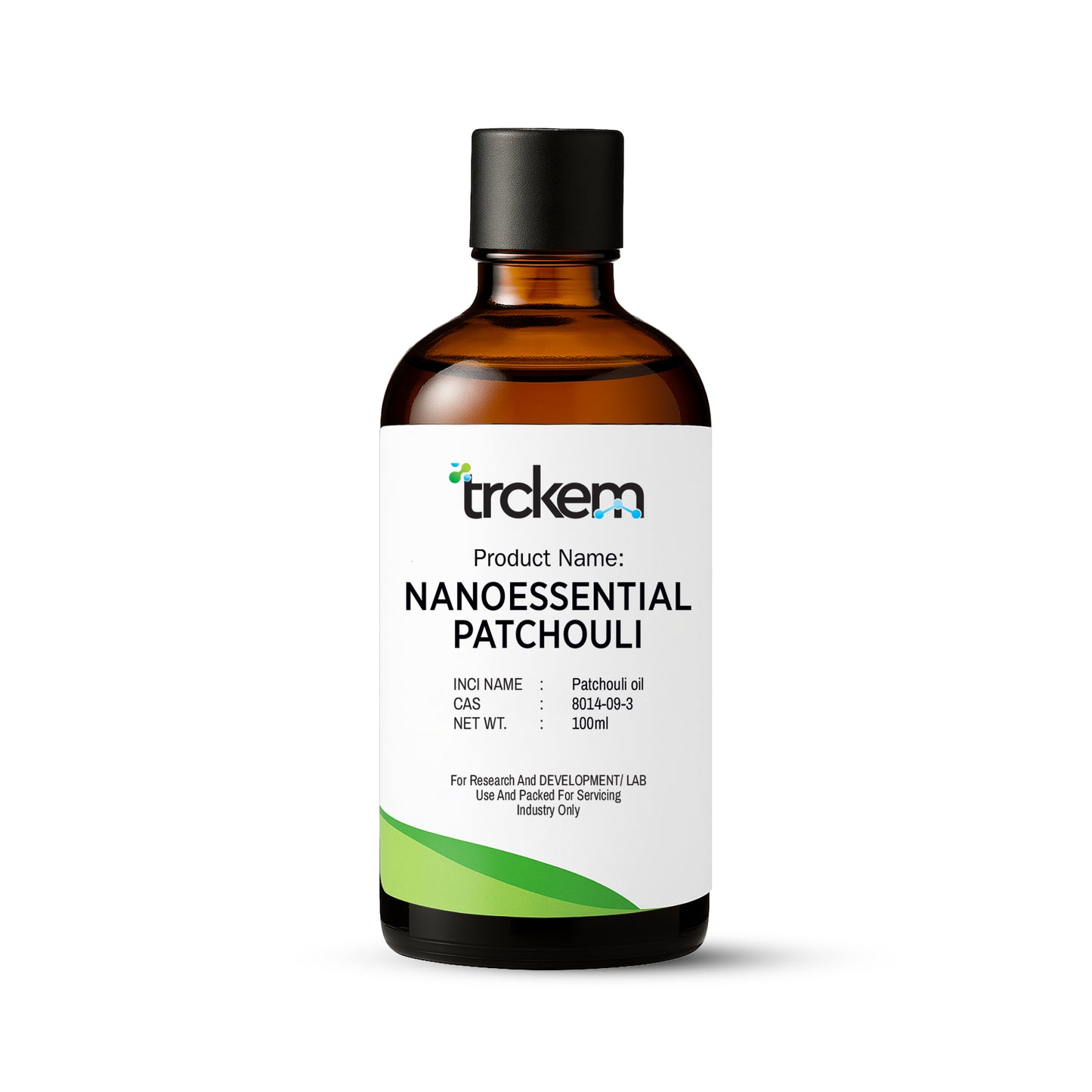
NANOESSENTIAL PATCHOULI
For Bulk Quantity:📞 8822636416
Couldn't load pickup availability
NANOESSENTIAL PATCHOULI is a rich, earthy essential oil with anti-inflammatory, antiseptic, and grounding properties, commonly used in skincare, aromatherapy, and perfumery for its deep, musky aroma.
Product Document: Download Now 👇

General Description
NANOESSENTIAL PATCHOULI, commonly known as Patchouli Oil, is a natural essential oil steam-distilled from the leaves of Pogostemon cablin. Recognized for its deep, earthy, woody aroma, it has long been valued in perfumery and skincare. Rich in sesquiterpenes—particularly patchoulol—it offers antioxidant, anti-inflammatory, and soothing benefits. In cosmetics, NANOESSENTIAL PATCHOULI is utilized to promote skin balance, support regeneration, and enhance fragrance performance in both natural and luxury formulations.
Uses in the Cosmetics Industry
NANOESSENTIAL PATCHOULI is widely incorporated in beauty and personal care products, including:
- Perfumes & Fragranced Products: Acts as a warm, long-lasting base note with excellent fixative properties.
- Anti-Aging & Regenerative Skincare: Supports skin elasticity and helps improve the appearance of fine lines.
- Acne & Blemish Care: Offers mild antimicrobial and anti-inflammatory activity to soothe breakouts.
- Body Oils & Balms: Enhances moisturization and provides a grounding aromatic experience.
- Hair & Scalp Treatments: Helps calm irritation and contributes to a richer fragrance profile.
- Aromatherapy & Wellness Beauty: Promotes relaxation, balance, and emotional grounding.
Manufacturers often purchase NANOESSENTIAL PATCHOULI in bulk for its fragrance longevity, formulation versatility, and natural skin-conditioning properties.
Hazards
While generally safe when properly diluted, NANOESSENTIAL PATCHOULI requires mindful handling:
- Skin Sensitivity: May cause irritation or sensitization at high concentrations; always dilute before topical use.
- Allergic Reactions: Possible in individuals with sensitivities to essential oils—patch testing recommended.
- Eye Irritation: Avoid direct eye contact, as it can cause stinging or discomfort.
- Inhalation Precaution: Highly concentrated vapors may irritate the respiratory system in enclosed spaces.
- Formulation Staining: Dark, resinous oil may alter product color if used in high amounts.
Storage & Stability
- Storage: Keep in airtight, light-resistant containers in a cool, dry environment to prevent oxidation.
- Stability: Naturally stable and often improves in aromatic depth with age, though antioxidant addition may extend shelf life.
NANOESSENTIAL PATCHOULI is available for wholesale and bulk procurement, ideal for formulators seeking a natural aromatic ingredient with long-lasting, skin-supportive benefits.
CAS Number: 8014-09-3 (also listed as 84238-39-1 depending on extraction source)
INCI: Pogostemon Cablin Oil
Composition:Naturally occurring essential oil composed mainly of patchoulol, α-bulnesene, α-guaiene, seychellene, and other sesquiterpenes and aromatic compounds.
Purity Grade: Cosmetic / Aromatherapy Grade (100% pure essential oil)
Appearance: Yellow to deep amber, clear to slightly viscous liquid with a strong, earthy, woody aroma
Solubility:
- Insoluble in water
- Soluble in alcohols, fixed oils, and organic solvents
Preservation:Self-preserving due to antimicrobial properties; antioxidants (e.g., tocopherol) may be added to prevent oxidation in long-term storage
Storage:Store tightly sealed in a cool, dry place away from heat, light, and air exposure. Use stainless steel or amber glass containers.
Raw Material Sources:Steam-distilled leaves of Pogostemon cablin (patchouli plant), primarily cultivated in Southeast Asia
Manufacture:Leaves are harvested, dried, fermented, and then steam-distilled. Oil is separated, filtered, and optionally aged to enhance aromatic profile.
Animal Testing: Not animal tested
GMO: GMO-free (plant-derived)
Vegan: Contains no animal-derived ingredients
Proposition:PATCHOULI OIL complies with IFRA Standards, EU Cosmetic Regulation (EC) 1223/2009, REACH, and other global cosmetic safety requirements
Warning:For external use only. Avoid direct eye contact. May cause irritation or sensitization in some individuals—conduct a patch test before use. Keep out of reach of children. Do not use undiluted on skin. Flammable—store away from ignition sources.
THE STORY OF NANOESSENTIAL PATCHOULI

Nanoessential Patchouli: The Earthy Aromatic Essence for Skin, Mind & Formulation Balance
Nanoessential Patchouli is a rich, earthy essential oil distilled from the leaves of Pogostemon cablin. Renowned for its grounding aroma and skin-conditioning benefits, it brings depth, warmth, and natural balancing properties to perfumes, skincare blends, aromatherapy, and wellness formulations.

Steam-Distilled from Carefully Dried Patchouli Leaves
Nanoessential Patchouli is obtained through steam distillation of sun-dried patchouli leaves. The drying process enhances the oil’s deep, resinous aroma. After distillation, the oil is aged for improved smoothness and complexity. This artisanal-meets-scientific process preserves its potent aromatic compounds, ensuring high-quality cosmetic and perfumery grades.

Aromatic Depth with Skin-Balancing and Calming Properties
In cosmetics, Nanoessential Patchouli functions as a fragrance ingredient, skin-conditioning agent, and aromatherapeutic enhancer.
It offers grounding, calming aromatic notes while supporting skin balance, soothing dryness, and enriching natural formulations with a warm, long-lasting scent. It blends well with woody, floral, and spicy fragrance families.

Versatile, Potent, and Naturally Aromatic
Used in perfumes, skincare, soaps, aromatherapy blends, massage oils, and natural wellness products.
Recommended usage:0.1–3% depending on the intensity of fragrance desired.
Store in tightly sealed amber bottles, away from heat and light.
Non-toxic when properly diluted, Nanoessential Patchouli meets cosmetic safety guidelines and offers long-lasting aromatic and skin-conditioning benefits.
Formulator’s Queries, We Answered
1. What is the CAS number and INCI name of Nanoessential Patchouli?
Nanoessential Patchouli is the nano-formulated version of patchouli essential oil ( botanical: Pogostemon cablin ). The commonly referenced CAS numbers for patchouli oil are 8014-09-3 and 84238-39-1. The INCI name used for patchouli oil is Pogostemon Cablin (Patchouli) Leaf Oil
2. What is “Nanoessential Patchouli”?
Nanoessential Patchouli is patchouli essential oil processed into a nano-scale delivery system (for example nanoemulsions, nanocapsules or nano-encapsulated dispersions) designed specifically for personal-care and cosmetic formulations. The nano form improves water-dispersibility, physical stability and bioavailability of the oil’s active constituents compared with using the bulk oil alone. Recent peer-reviewed work demonstrates effective nanoemulsion and nanocapsule systems for patchouli essential oil.
3. What are the main chemical constituents and what do they do?
The principal constituent of patchouli oil is patchoulol (patchouli alcohol), along with sesquiterpenes such as α- and β-patchoulene, α-bulnesene, seychellene, pogostone and pogostol. These constituents contribute to patchouli’s characteristic woody/earthy aroma and are associated with antioxidant, anti-inflammatory and antimicrobial activity that are relevant to personal-care formulations.
4. What personal-care benefits does Nanoessential Patchouli deliver?
Improved skin delivery of active molecules (better uptake and even distribution).
Enhanced stability of volatile constituents (less rapid evaporation, better shelf behaviour).
Preservative-adjunct activity — antioxidant and antimicrobial properties that can support formulation preservation strategies (note: not a replacement for validated preservative systems).
Sensory and fragrance benefits — a stable woody base note for perfumes, skin and hair products.
Multiple formulation studies and reviews show antioxidant/antimicrobial potential and successful incorporation into gels, creams and nanoemulsion systems
5. Which product types is Nanoessential Patchouli suited for?
Typical applications include: facial serums and gels, body lotions, creams, hair care (shampoos, conditioners, serums), deodorants, aromatherapy roll-ons, and leave-on or rinse-off personal-care products where fragrance plus functional benefit is desired. Nanoformats are particularly useful in water-based systems and gels where direct oils are difficult to incorporate