


SKU:SOL-TRC-NAN(ASX)-10G
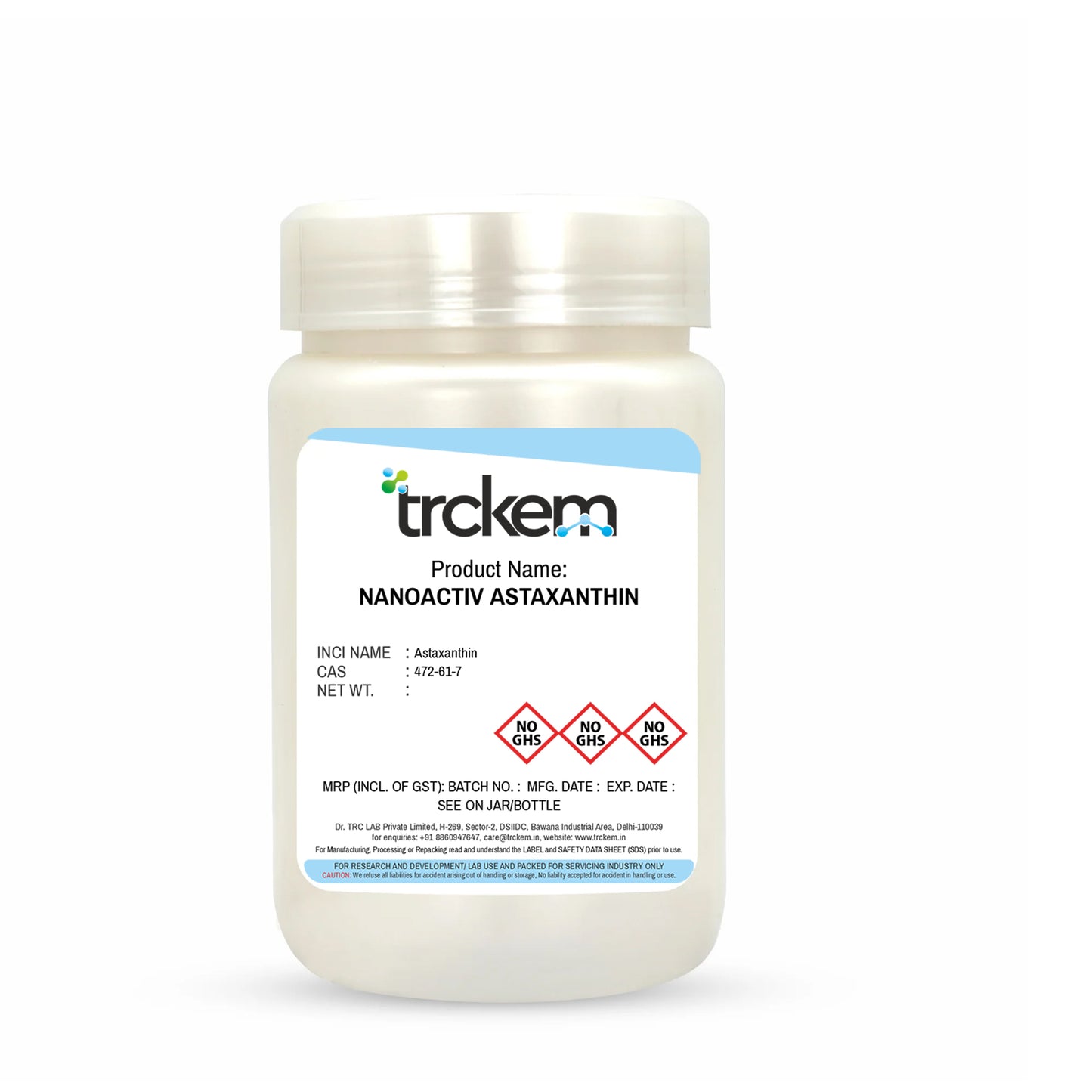
Nanoactiv Astaxanthin
For Bulk Quantity:📞 8822636416
Couldn't load pickup availability
Nanoactiv Astaxanthin is a potent antioxidant derived from microalgae, known for its exceptional ability to protect skin from oxidative stress. Its nano-enhanced format increases absorption, helping improve firmness, reduce visible signs of aging, and support overall skin resilience. Ideal for advanced skincare formulations seeking high-performance, natural bioactive protection.
Product Document: Download Now 👇


General Description
- Nanoactiv Astaxanthin is a high-performance antioxidant active derived from microalgae (Haematococcus pluvialis). Known as one of the most powerful natural antioxidants, astaxanthin is significantly stronger than Vitamin C, Vitamin E, β-carotene, and CoQ10.
- In its nano-enhanced form (Nanoactiv Astaxanthin), it offers improved stability, dispersion, and skin absorption, making it highly suitable for advanced skincare formulations. Its deep red color is due to carotenoid pigmentation, which contributes to potent free-radical neutralization and photo-protection.
Uses in the Cosmetic Industry
Nanoactiv Astaxanthin is widely incorporated into premium skincare formulations for its superior skin-protective and anti-aging properties. Common applications include:
- Anti-Aging Serums & Creams:Reduces the appearance of wrinkles, boosts skin elasticity, and protects collagen from oxidative damage.
- Sun Care & After-Sun Products:Helps minimize UV-induced stress and enhances the skin’s natural defense against photoaging.
- Brightening & Radiance Formulas:Improves tone uniformity and boosts natural skin glow.
- Moisturizers & Barrier Support Products:Enhances skin hydration levels and strengthens the lipid barrier.
- Hair & Scalp Care:Provides antioxidant protection to hair follicles and supports scalp health.
- Functional Color Cosmetics:Adds both antioxidant benefits and natural reddish tint for tinted creams, lip balms, and foundations.
The nanoform ensures better delivery, excellent solubility in cosmetic oils, and easier incorporation into various formulations.
Hazards
Although Nanoactiv Astaxanthin is generally considered safe for cosmetic use, certain hazards should be noted:
- Skin Staining:Due to its intense natural pigment, high concentrations may impart a red/orange tint to skin or formulations.
- Skin Sensitivity:Rarely causes irritation, but patch testing is recommended, particularly in high-activity serums.
- Formulation Stability:Astaxanthin is sensitive to heat, light, and oxidation; improper storage may cause degradation and color fading.
- Avoid Eye Contact:May cause mild irritation if applied directly to the eyes.
Storage & Stability
- Store in a cool, dark environment to protect from oxidation.
- Use air-tight, UV-protective packaging to maintain potency.
- Incorporation of antioxidants (e.g., tocopherols) is recommended for stability.
CAS Number: 472-61-7
INCI: Astaxanthin
Composition:Nano-enhanced astaxanthin derived from Haematococcus pluvialis microalgae, containing nano-dispersed carotenoid particles for improved stability and skin penetration.
Purity Grade: Cosmetic Nano-Grade / High Purity
Appearance:Bright to deep red nano-emulsified liquid concentrate
Solubility:
– Dispersible in water (nano-dispersion)
– Fully soluble in oils and lipid-based systems
Preservation:Stabilized with natural antioxidants; may include tocopherols or ascorbyl esters. Typically does not require additional preservatives when used in formulations.
Storage:Store in sealed, opaque containers at cool temperatures. Protect from light and heat to maintain nano-stability and antioxidant activity.
Raw Material Sources:Sustainably cultivated Haematococcus pluvialis microalgae
Manufacture:Astaxanthin oleoresin undergoes nano-emulsification using high-shear or ultrasonic dispersion technology to reduce particle size and enhance bioavailability.
Animal Testing: Not animal tested
GMO: GMO-free
Vegan: Suitable for vegan formulations
Proposition:NANOACTIV ASTAXANTHIN complies with cosmetic regulatory standards for safe use as a skin-conditioning and antioxidant ingredient.
Warning:For cosmetic use only. Avoid direct contact with eyes. Concentrate may cause staining; handle with care using gloves. Store properly to prevent oxidation.
Formulator’s Queries, We Answered
1) What is Nanoactiv Astaxathin? What is its CAS number and INCI name?
Nanoactiv Astaxathin is a nano-enabled form of the carotenoid antioxidant astaxanthin designed for use in topical personal-care products.
- INCI name: ASTAXANTHIN.
- CAS number: 472-61-7
2) How does Nanoactiv Astaxathin benefit the skin?
Astaxanthin is a potent antioxidant and anti-inflammatory carotenoid shown to: reduce oxidative stress, protect against photo-damage, help preserve collagen (reducing wrinkle depth), improve skin elasticity and moisture, and support an even skin tone. Topical astaxanthin complements oral intake for multi-layer skin protection
3) Why use a nano-enabled form (Nanoactiv) instead of plain astaxanthin?
Astaxanthin is highly lipophilic and sensitive to light, heat and oxygen. Nanoencapsulation (liposomes, nanoemulsions, polymer nanoparticles, etc.) increases water-system compatibility, protects the molecule from degradation, improves skin penetration and provides more reproducible delivery — so you get stability and better efficacy in finished serums/creams.
4) What product types is Nanoactiv Astaxathin suited for?
Serums, facial oils, emulsified creams (oil-in-water or water-in-oil), lightweight gel-creams, sunscreens (as an antioxidant booster), eye creams and targeted treatment masks. Nano-forms are especially helpful where a clear/fast-absorbing aesthetic is required
5) Typical formulation levels (how much should I use)?
Typical topical usage ranges commonly reported in literature and patents are 0.01%–0.5% (w/w) for over-the-counter cosmetics, with many effective products around 0.01%–0.1%. Clinical or professional formulas sometimes use higher levels (reports up to 1% or higher in development contexts). Start with 0.01–0.1% in consumer serums and adjust based on stability and sensory testing