


SKU:SOL-TRC-MYR-300G
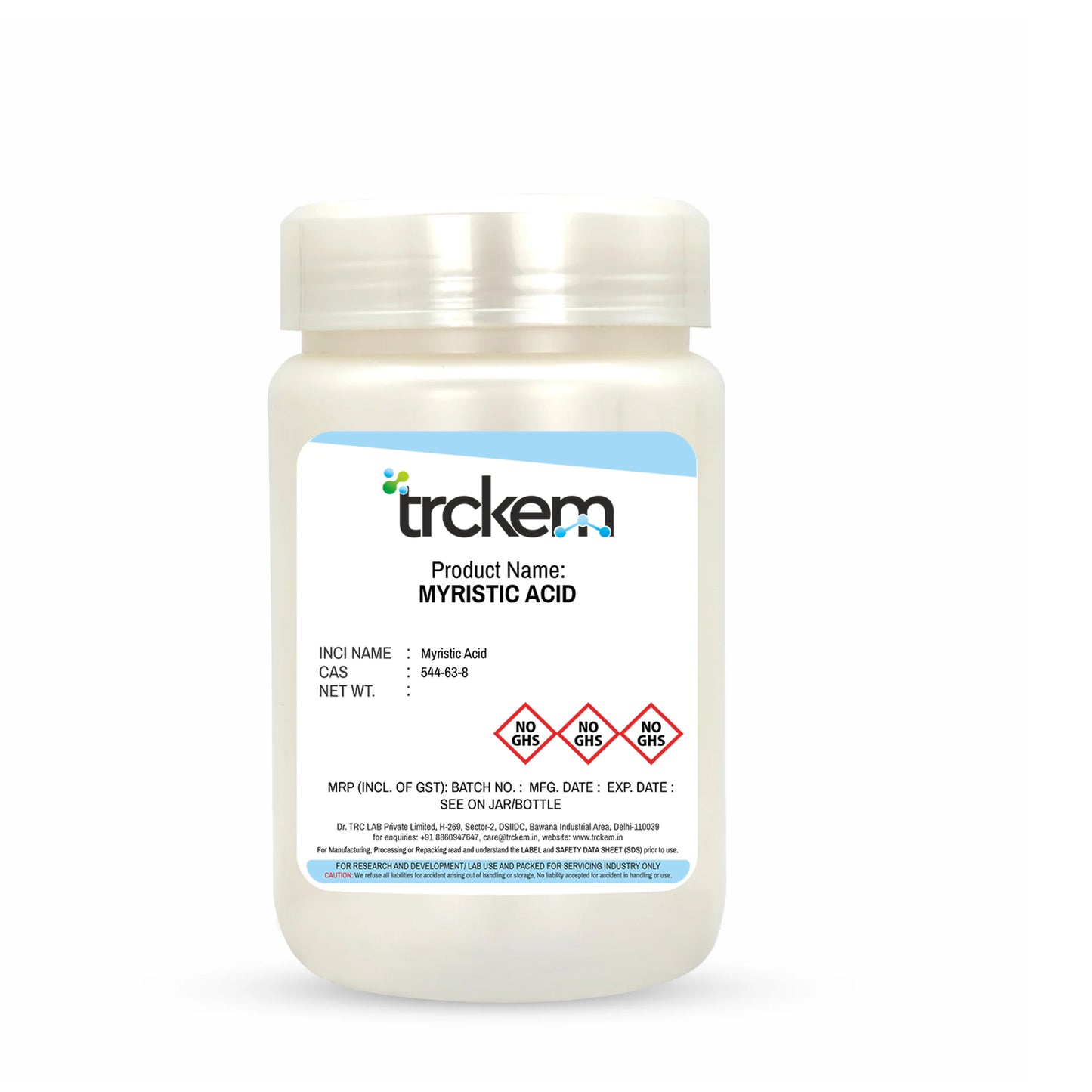
MYRISTIC ACID
For Bulk Quantity:📞 8822636416
Couldn't load pickup availability
Myristic Acid is a saturated fatty acid used in cosmetics for its cleansing and emulsifying properties. It helps improve product texture, moisturizes the skin, and enhances formulation stability.
Product Document: Download Now 👇


General Description
Myristic Acid is a naturally occurring saturated fatty acid derived from plant-based oils (such as coconut and palm oil) or animal fats. It is widely used in the cosmetic and personal care industry for its emollient, cleansing, and surfactant properties. With its ability to enhance the texture and performance of beauty formulations, myristic acid sales are in high demand among manufacturers and wholesale suppliers.
Uses in the Cosmetics Industry
Many cosmetic brands buy myristic acid in bulk for its versatility in various skincare and haircare products, including:
- Cleansers & Facial Washes – Acts as a mild surfactant to remove dirt and oil.
- Soaps & Body Washes – Enhances lather and cleansing properties.
- Moisturizers & Creams – Works as an emollient to improve skin softness.
- Shaving Foams & Lotions – Provides a rich, creamy texture for smooth application.
- Hair Conditioners & Styling Products – Adds conditioning effects for better hair manageability.
For businesses engaged in wholesale and private-label cosmetic manufacturing, myristic acid is a key ingredient due to its excellent foaming and emulsifying properties.
Side Effects & Hazards
While myristic acid is generally safe for cosmetic use, it may cause skin irritation in individuals with sensitive skin when used in high concentrations. It is also considered comedogenic, meaning it can contribute to clogged pores and breakouts in acne-prone skin. Manufacturers handling myristic acid in bulk should ensure proper storage to prevent oxidation and degradation.
Buy Myristic Acid in Bulk & Wholesale
Looking for a reliable myristic acid supplier? We offer high-quality myristic acid for sale, available in bulk and wholesale quantities for cosmetic and personal care manufacturing. Contact us today for competitive pricing, fast shipping, and premium-grade myristic acid to enhance your formulations.
CAS NO :-544-63-8
INCI:-Myristic Acid
COMPOSITION:-Myristic Acid (C14H28O2, a saturated fatty acid)
PURITY GRADE:-Cosmetic Grade
APPEARANCE:-White crystalline solid or waxy solid
SOLUBILITY:-Slightly soluble in water; soluble in ethanol, ether, and organic solvents
PRESEVATION:-Stable under normal conditions; no additional preservatives required
STORAGE:-Store in a cool, dry place, away from direct sunlight, in tightly sealed containers at temperatures below 25°C
RAW MATERIAL SOURCE:- Derived from natural oils, such as palm kernel oil, coconut oil, or synthetic sources
MANUFACTURE:-Produced through the hydrolysis of fats or oils containing myristic acid (e.g., palm kernel oil or coconut oil)
ANIMAL TESTING:-Not tested on animals (verify with supplier for certification)
GMO:-Non-GMO (verify with supplier for certification)
VEGAN:- Vegan-friendly if derived from plant-based sources (verify with supplier)
PROPOSITION:-Typically compliant (confirm with manufacturer for certification specific to California Proposition 65)
WARNING:-May cause irritation to skin or eyes upon direct contact.
- Use appropriate protective equipment (gloves and goggles) when handling.
- Keep away from heat or sources of ignition.
THE STORY OF MYRISTIC ACID

Myristic Acid: The Key Fatty Acid for Cleansing, Foaming & Creamy Texture
Myristic Acid is a saturated fatty acid (C14) widely used in cosmetics for its excellent cleansing, foaming, thickening, and emulsifying properties.
Commonly sourced from coconut and palm kernel oils, it is a core ingredient in soaps, face washes, shampoos, shaving creams, emulsifiers, and surfactant systems.

Derived from Natural Oils Through Hydrolysis & Fractional Distillation
Myristic Acid is produced by:
• Hydrolysis of coconut or palm kernel oils
• Separation of fatty acids
• Fractional distillation
• Purification & flaking
This results in a high-purity fatty acid ideal for surfactant synthesis and cream structuring.
TRCkem supplies cosmetic-grade Myristic Acid (≥ 98%) suitable for high-performance cleansing products.

Clean. Foam. Stabilize.
Myristic Acid delivers a range of cosmetic benefits:
✅ Enhances foaming & cleansing power
✅ Creates dense, creamy lather in face washes & soaps
✅ Acts as an emulsifier & thickener
✅ Improves texture & stability in creams
✓ Used to manufacture surfactants like Sodium Myristate
Commonly used in: face washes, bath soaps, shaving creams, cleansing bars, shampoos, and creamy cleansing systems.

Easy to Formulate — Ideal for Surfactant & Cream-Based Systems
• Typical use level:
– 5–20% in soaps & surfactants
– 1–10% in face washes & cleansing creams
– 1–5% in emulsions & lotions
• Melt temperature: 54–58°C
• Add to oil phase of emulsions
• Saponifies easily with alkali to form soap bases
• Safe, non-irritating & stable in most formulations
• Store in a cool, dry area away from heat and moisture
Formulator’s Queries, We Answered
1. What is Myristic Acid?
Myristic Acid is a saturated fatty acid commonly used in personal care and cosmetic products. It is derived from plant-based oils (such as coconut and palm oil) or animal fats and is known for its cleansing, emulsifying, and emollient properties.
2. What is the CAS number and INCI name of Myristic Acid?
CAS Number: 544-63-8
INCI Name: Myristic Acid
3. What are the benefits of Myristic Acid in personal care products?
Myristic Acid is valued for its:
Cleansing properties: Effectively removes dirt and excess oil from the skin.
Foaming ability: Enhances the lather in soaps and cleansers.
Moisturizing effect: Helps retain skin hydration.
Emulsification: Assists in blending oil and water-based ingredients.
Softening & smoothing: Provides a silky feel to skincare products.
4. How does Myristic Acid work in cosmetic formulations?
Myristic Acid acts as a surfactant and emulsifier, helping to lift away impurities and blend different ingredients seamlessly. It also improves the texture of creams, lotions, and cleansers.
5. Is Myristic Acid safe for all skin types?
Yes, Myristic Acid is generally safe for most skin types, but it may cause mild irritation in people with highly sensitive or acne-prone skin, especially when used in high concentrations.
6. What types of personal care products contain Myristic Acid?
Myristic Acid is commonly found in:
Facial cleansers & body washes
Shaving creams & foams
Moisturizers & lotions
Soaps & shampoos
Sunscreens & lip balms
Makeup removers
7. Can Myristic Acid be combined with other ingredients?
Yes, Myristic Acid is often combined with:
Other fatty acids (lauric acid, palmitic acid) for enhanced emulsification.
Surfactants (SLS, SLES) to improve cleansing and foaming.
Emollients (glycerin, shea butter, coconut oil) for added moisture.
8. Does Myristic Acid cause any side effects?
Myristic Acid is safe when used within recommended concentrations, but potential concerns include:
Mild skin irritation in sensitive individuals.
Possible clogging of pores in acne-prone skin when used in high amounts.
9. What is the recommended concentration of Myristic Acid in personal care formulations?
1% to 5% in creams and lotions.
Up to 30% in soaps and cleansers.
10. Is Myristic Acid natural or synthetic?
Myristic Acid is naturally derived from sources like coconut oil, palm oil, and nutmeg butter, but it can also be synthetically produced.
11. Where can I purchase high-quality Myristic Acid for formulation purposes?
Myristic Acid is available from cosmetic raw material suppliers, chemical distributors, and specialty ingredient manufacturers. Choose cosmetic or pharmaceutical-grade Myristic Acid for the best results.