


SKU:LIQ-TRC-MON-500G
Monoethanolamide
For Bulk Quantity:📞 8822636416
Couldn't load pickup availability
Monoethanolamine is an organic compound used in cosmetics as a pH adjuster and emulsifier, helping stabilize formulations and enhance texture, particularly in hair care and cleansing products.
Product Document: Download Now 👇


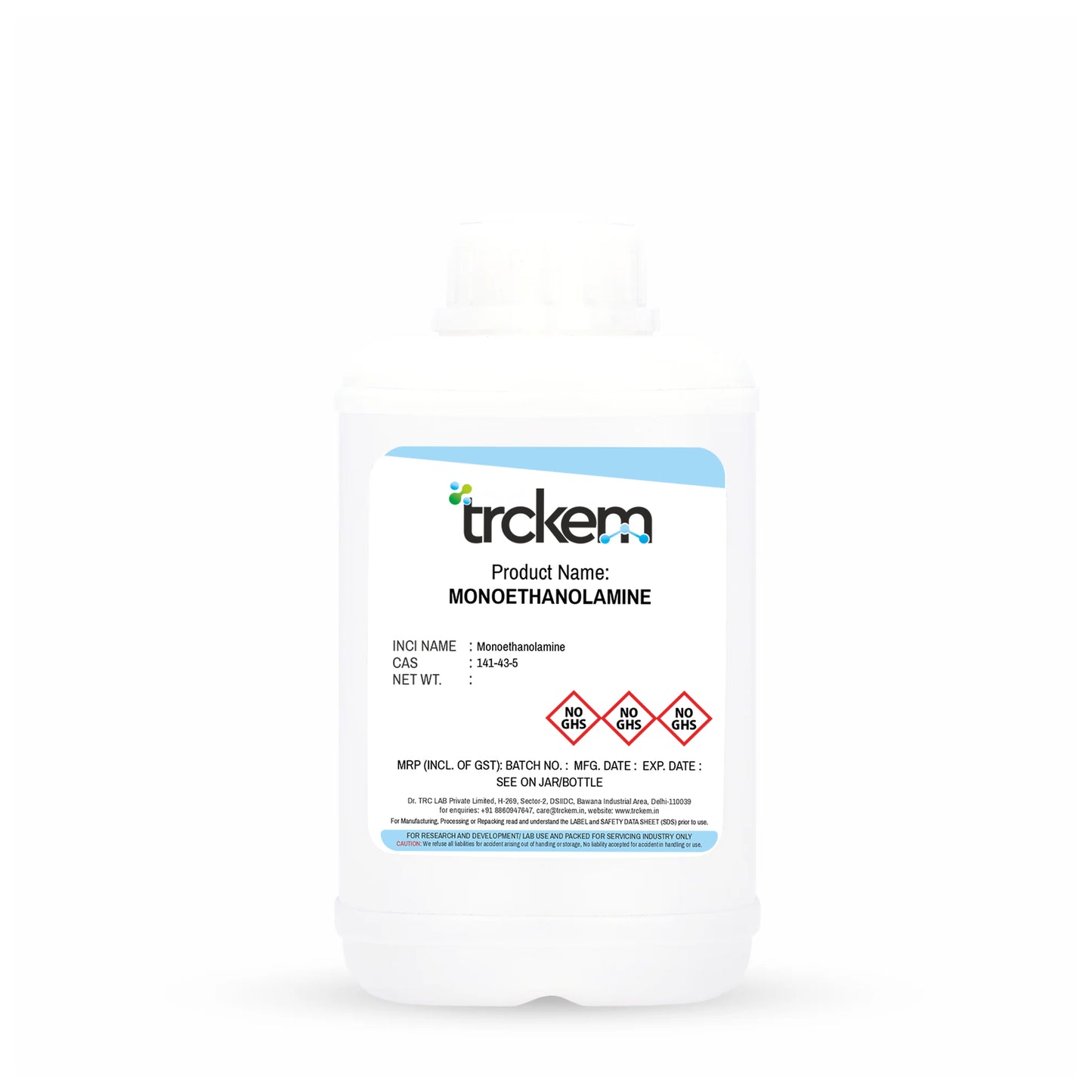
General Description:
Monoethanolamine (MEA) is an organic chemical compound that functions as a pH adjuster, emulsifier, and cleansing agent in cosmetic and personal care products. It is a colorless, viscous liquid with a mild ammonia-like odor and is water-soluble. MEA is both a primary amine and an alcohol, making it highly reactive and useful in a variety of formulation contexts. It is commonly used in the manufacturing of emulsifiers, surfactants, and fatty acid soaps. Available for industrial and bulk cosmetic applications, Monoethanolamine plays a key role in controlling pH and enhancing the performance of other formulation ingredients.
Uses in the Cosmetics Industry:
Monoethanolamine is used primarily in:
Hair care products such as hair dyes and relaxers to adjust pH and aid in active ingredient performance.
Cleansers and shaving creams as a surfactant or emulsifying agent.
Emulsion-based creams and lotions to neutralize fatty acids and stabilize emulsions.
Soap and detergent formulations to improve cleansing ability and lather quality.
Its versatility makes it a common additive in many pH-dependent formulations where alkaline conditions are needed.
Side Effects & Hazards:
While MEA is effective and widely used, it carries certain health and safety concerns. It can cause skin and eye irritation and may be harmful if inhaled or absorbed through prolonged skin contact. Overuse or poor formulation practices may lead to scalp sensitivity, dermatitis, or allergic reactions, particularly in hair dyes and chemical treatments. In addition, MEA can react with certain preservatives or nitrogen-containing compounds to form nitrosamines, which are potentially carcinogenic. Therefore, regulatory guidelines often restrict its concentration and combinations in cosmetic products. During manufacturing and handling, appropriate PPE (gloves, eye protection, and ventilation) should be used to minimize exposure. MEA should be stored in tightly closed containers in cool, well-ventilated areas away from acids and oxidizing agents.
CAS Number: 141-43-5
INCI Name:Ethanolamine
Composition:Ethanolamine with one hydroxyl group and one amino group attached to the ethanol backbone (C₂H₇NO)
Purity Grade: Industrial/Cosmetic Grade
Appearance: Colorless to pale yellow, viscous liquid
Solubility: Soluble in water, alcohols, and most organic solvents
Preservation: Does not require preservatives under normal storage conditions; can act as a stabilizer in some formulations
Storage: Store in a cool, dry, and well-ventilated area; keep container tightly closed and protect from moisture, heat, and direct sunlight
Raw Material Sources: Synthetic, produced from ethanol and ammonia or amine
Manufacture: Manufactured by ammonolysis of ethylene oxide or by reacting ammonia with ethylene oxide
Animal Testing: May vary depending on the specific supplier; often used in formulations subject to safety testing
GMO: Typically non-GMO as the raw materials are derived from petrochemical feedstocks
Vegan: Yes; synthetic and contains no animal-derived components
Warning:Corrosive to skin and eyes; can cause irritation or damage upon contact; vapors may cause respiratory irritation; proper PPE is required during handling
THE STORY OF MONOETHANOLAMINE

Monoethanolamine: The Essential pH Adjuster & Surfactant Builder for Cleansing Systems
Monoethanolamine (MEA) is a versatile organic compound widely used in cosmetic and home-care formulations as a pH adjuster, emulsifier, neutralizing agent, and surfactant builder.
Known for its strong alkalinity and reactivity, it helps optimize foaming, cleaning, and viscosity.
Commonly used in shampoos, detergents, creams, lotions, and industrial cleaners.

Produced by Reacting Ethylene Oxide with Ammonia for High-Purity MEA
MEA is synthesized through a controlled reaction between:
• Ethylene oxide
• Aqueous ammonia
followed by:
• Distillation
• Purification
• Safety-grade packaging
The result is a clear, hygroscopic, alkaline liquid used across cosmetics, pharmaceuticals, and industrial applications.
TRCkem supplies high-purity MEA (≥ 99%) suitable for cosmetic and detergent-grade formulations.

Neutralize. Stabilize. Boost Performance.
MEA adds multiple functional advantages:
✅ Neutralizes fatty acids to form soap and emulsifiers
✅ Adjusts pH in creams, lotions & shampoos
✅ Builds foam & cleaning strength in detergents
✅ Enhances viscosity & stability in surfactant systems
✓ Helps solubilize oils & active ingredients
Used in: shampoos, liquid detergents, household cleaners, shaving creams, metal-cleaning fluids & industrial formulations.

Powerful Alkaline Agent — Use with Precision & Controlled Handling
• Typical use level:
– 0.1–5% in cosmetics
– 2–15% in detergents & industrial cleaners
• Always add slowly to avoid overheating
• Strong base → handle with PPE (gloves, goggles)
• Avoid skin & eye contact; corrosive in concentrated form
• Store in tightly sealed containers away from heat & moisture
• Compatible with most surfactants, fatty acids & emulsifiers
• Not recommended for leave-on skincare
Formulator’s Queries, We Answered
1. What is Monoethanolamine (MEA)?
Monoethanolamine (MEA) is an organic compound that is commonly used as a pH adjuster, surfactant, and emulsifier in various personal care products. It is derived from ammonia and ethanol, and is used to modify the texture, stability, and consistency of formulations.
2. What is the INCI name and CAS number of Monoethanolamine?
CAS Number: 141-43-5
INCI Name: Ethanolamine
3. What are the key benefits of Monoethanolamine in personal care formulations?
Acts as an alkaline pH adjuster to stabilize formulations
Functions as a surfactant and emulsifier in creams, lotions, and shampoos
Enhances the solubility and efficacy of active ingredients
Improves foaming properties in cleansing products
Helps to stabilize and thicken aqueous-based products
4. In what types of personal care products is Monoethanolamine commonly used?
Monoethanolamine is commonly found in:
Shampoos and hair conditioners
Facial cleansers and body washes
Creams, lotions, and moisturizers
Depilatory products (hair removal creams)
Acne treatment products
5. Is Monoethanolamine safe for use in cosmetics?
Monoethanolamine is generally considered safe for use in cosmetics when used within recommended concentrations. It helps to maintain the stability of products, but excessive use or prolonged exposure may cause skin irritation. It should be used with caution in leave-on products, particularly for individuals with sensitive skin.
6. Are there any safety concerns with Monoethanolamine in cosmetics?
While Monoethanolamine is commonly used in cosmetic formulations, it is important to avoid overexposure, as it can cause skin irritation in some individuals. Additionally, nitrosamine formation may occur in the presence of nitrates, so formulations should be carefully prepared to avoid this reaction.
7. Is Monoethanolamine derived from natural sources?
Monoethanolamine is synthetically produced through the reaction of ammonia and ethylene oxide. Although it can be derived from natural sources, the final product is considered synthetic.
8. What is the typical usage level of Monoethanolamine in formulations?
The typical concentration of Monoethanolamine in personal care products ranges from 0.1% to 2%, depending on its role as a surfactant or pH adjuster. Higher concentrations are generally used in formulations requiring more significant emulsifying or foaming effects