


SKU:SOL-TRC-HYD-300G
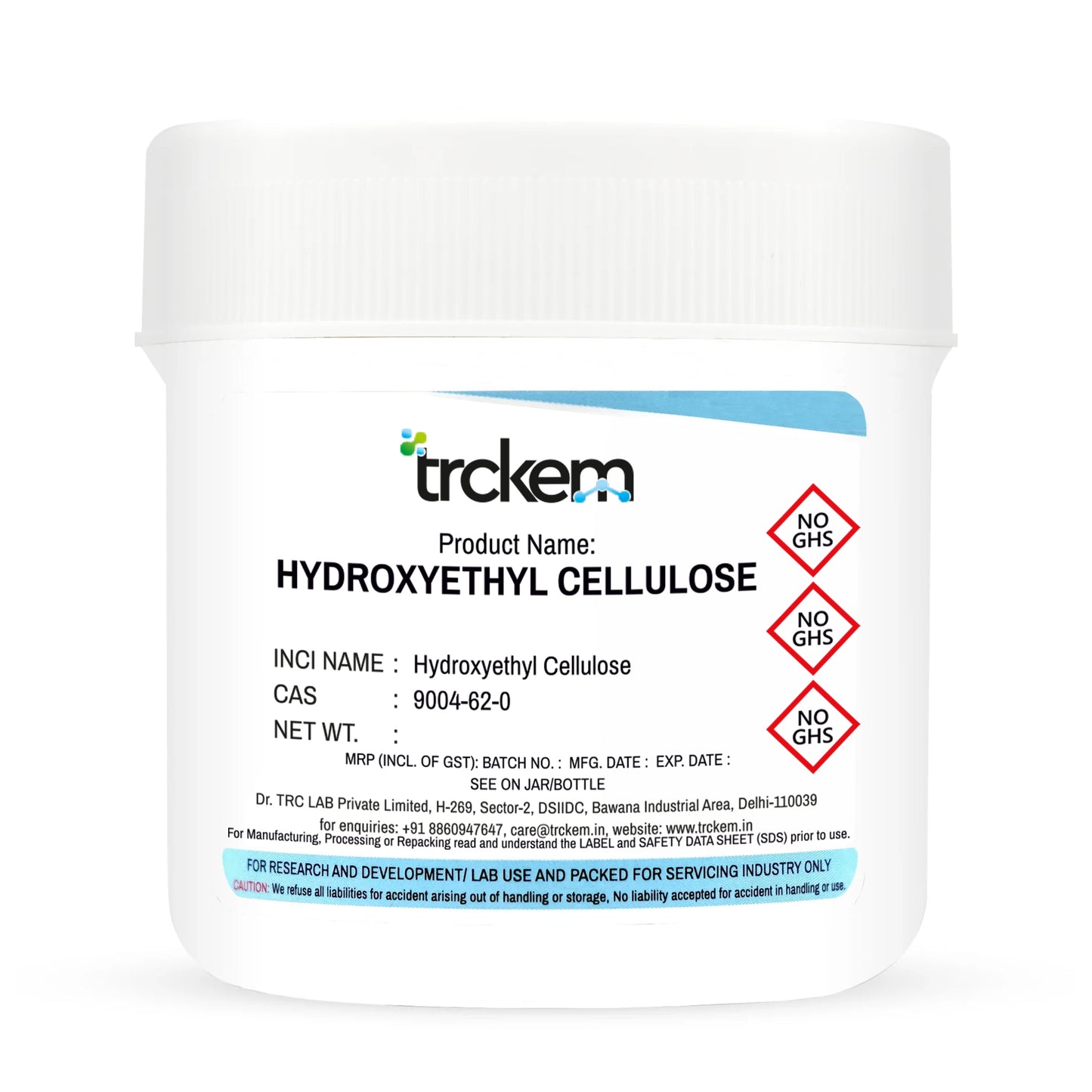
Hydroxyethyl Cellulose
For Bulk Quantity:📞 8822636416
Couldn't load pickup availability
Hydroxyethyl Cellulose is a water-soluble polymer used as a thickener, stabilizer, and film-former in cosmetics. It enhances texture, improves spreadability, and provides a smooth, luxurious feel.
Product Document: Download Now 👇

General Description:
Hydroxyethylcellulose (HEC) is a non-ionic, water-soluble polymer derived from cellulose, a naturally occurring plant fiber. It is chemically modified by the addition of hydroxyethyl groups, enhancing its solubility and performance in aqueous solutions. HEC functions as a rheology modifier, film-former, thickener, and stabilizer, and is widely valued for its clarity, smooth texture, and compatibility with a wide range of ingredients.
Uses in the Cosmetic Industry:
Hydroxyethylcellulose is a versatile multifunctional ingredient used across numerous personal care formulations due to its safety and performance. It is particularly favored for its ease of use, non-ionic nature, and mildness to skin and eyes.
Common Applications:
- Shampoos & Conditioners: Provides viscosity and enhances feel
- Gels & Serums: Used for clear, smooth gels with excellent skin glide
- Cleansers & Facial Washes: Stabilizes surfactant systems and improves texture
- Lotions & Creams: Acts as a thickener and emulsion stabilizer
- Toothpastes & Mouthwashes: Used for consistent texture and stability
Key Functions:
- Thickening agent
- Suspending agent
- Emulsion stabilizer
- Moisture retention enhancer
- Film-former for long-lasting cosmetic effects
Hazard / Safety Information:
General Safety: Hydroxyethylcellulose is considered safe, non-toxic, and non-irritating to skin, eyes, and mucous membranes.
Regulatory Status: Approved for cosmetic use by EU (Annex III), FDA, Health Canada, and COSMOS/ECOCERT (in natural cosmetics).
Allergenicity: No known allergens or sensitizing effects
Environmental Impact: Readily biodegradable; considered eco-friendly
Handling: In powder form, may cause mild dust inhalation irritation—use with proper ventilation and PPE in industrial settings.s.
CAS Number: 9004-62-0
INCI Name: Hydroxyethylcellulose
Composition: Chemically modified cellulose polymer
Made by reacting alkali-cellulose with ethylene oxide, introducing hydroxyethyl groups to the cellulose backbone
Consists primarily of glucose units with hydroxyethyl substitution
Purity Grade: Cosmetic Grade / USP Grade / Industrial Grade
Purity: Typically ≥99% polymer content (ash, salt, and solvent residues within safe limits)
Appearance: White to off-white, free-flowing powder or granules
Odorless or very slight cellulose-like odor
Solubility: Soluble in cold or warm water
Insoluble in oils and most organic solvents
Forms clear to slightly hazy, smooth gels
Preservation: Not self-preserving. Does not support microbial growth when dry
In formulations, requires preservative system to prevent microbial contamination in aqueous solutions
Storage Conditions: Store in a cool, dry place Protect from moisture and humidity
Keep container tightly closed
Recommended temperature: <25°C (77°F)
Shelf life: Minimum 24 months if properly stored
Raw Material Sources: Derived from natural cellulose found in wood pulp or cotton linters
Manufacture: Produced by alkaline etherification of cellulose with ethylene oxide
Followed by purification and drying steps to yield a stable powder form
No animal-derived materials used in production
Animal Testing: Not tested on animals (when sourced from certified cruelty-free suppliers)
GMO Status: Non-GMO Cellulose sources are naturally non-genetically modified
Vegan Status: 100% Vegan Derived entirely from plant-based raw materials
No animal ingredients or by-products involved
California Proposition 65 Compliance:
Compliant Not listed under California Prop 65 as a known carcinogen or reproductive toxin
Warning / Caution: Inhalation of fine dust during handling may cause mild respiratory irritation—use dust masks and ventilation in bulk handling
In wet form, may cause slippery surfaces
Avoid exposure to humidity before mixing, as it may cause premature gelling or clumping
THE STORY OF HYDROXYETHL CELLULOSE

Hydroxyethyl Cellulose: The Smooth Thickener for Luxurious Cosmetic Textures
Hydroxyethyl Cellulose (HEC) is a non-ionic, water-soluble polymer used as a thickener, stabilizer, and rheology modifier in cosmetic and personal-care products.
It creates smooth, crystal-clear gels, enhances texture, and improves product stability in serums, cleansers, shampoos, lotions, and hydrogel formulas.

Cellulose-Derived Polymer Modified for High Clarity & Flow Control
HEC is made by etherifying natural cellulose with ethylene oxide, creating a modified polymer that is:
• Fully water-soluble
• Non-ionic (compatible with most actives & surfactants)
• Able to form clear, stable gels
• Excellent for both surfactant-based and emulsion systems
TRCkem supplies various viscosity grades suitable for gel systems, shampoos, lotions, and premium clear formulations.

Thicken. Stabilize. Clarify.
HEC provides multiple advantages in formulations:
✅ Creates smooth, transparent gels
✅ Stabilizes surfactant systems (shampoos, body washes)
✅ Prevents phase separation in emulsions
✅ Enhances spreadability and silky feel
✅ Improves suspension of particles, beads & actives
Used in: serums, gels, cleansers, shampoos, hand sanitizers, lotions, and hydrogel masks.

Easy-to-Use, Safe & Versatile for Modern Formulations
• Typical use level: 0.2–2% depending on viscosity
• Best dispersed in room-temperature water then allowed to hydrate
• Compatible with anionic, cationic & nonionic systems
• Stable across pH 3–10
• Non-irritating, biodegradable & safe for skin and hair
• Store in cool, dry conditions to prevent moisture uptake
• Works well in both cold-process and hot-process formulations
Formulator’s Queries, We Answered
1. What is Hydroxyethylcellulose?
Hydroxyethylcellulose (HEC) is a non-ionic, water-soluble polymer derived from natural cellulose. It is commonly used in personal care products as a thickener, stabilizer, and film-former.
2. What is the CAS number and INCI name of Hydroxyethylcellulose?
CAS Number: 9004-62-0
INCI Name: Hydroxyethylcellulose
3. What is the primary function of Hydroxyethylcellulose in cosmetic formulations?
It functions as a rheology modifier, enhancing texture, thickening water-based systems, stabilizing emulsions, and improving the overall application experience of personal care products.
4. In which types of products is Hydroxyethylcellulose commonly used?
Hydroxyethylcellulose is widely used in:
Shampoos and conditioners
Facial cleansers
Body washes
Hair styling gels
Lotions and creams
Serums and masks
5. Is Hydroxyethylcellulose safe for skin and hair?
Yes, Hydroxyethylcellulose is non-toxic, non-irritating, and generally safe for use on all skin and hair types, including sensitive and allergy-prone skin.
6. Is Hydroxyethylcellulose vegan and cruelty-free?
Yes. It is a plant-derived, vegan-friendly ingredient and not tested on animals, provided it is sourced from certified suppliers.
7. Is it compatible with other cosmetic ingredients?
Hydroxyethylcellulose is non-ionic, making it compatible with a wide variety of surfactants, active ingredients, and other polymers, including electrolytes and mild acids.
8. Does Hydroxyethylcellulose contain any GMOs?
No. Hydroxyethylcellulose is typically derived from non-GMO plant sources such as cotton linters or wood pulp.
9. What is the recommended storage condition for Hydroxyethylcellulose?
Store in a cool, dry area, away from humidity. Avoid exposure to moisture to prevent premature clumping or degradation. It has a shelf life of about 2 years when stored properly.
10. Is Hydroxyethylcellulose biodegradable?
Yes, it is considered readily biodegradable and environmentally friendly, making it suitable for use in eco-conscious and natural formulations.