


SKU:LIQ-TRC-HYA-500G
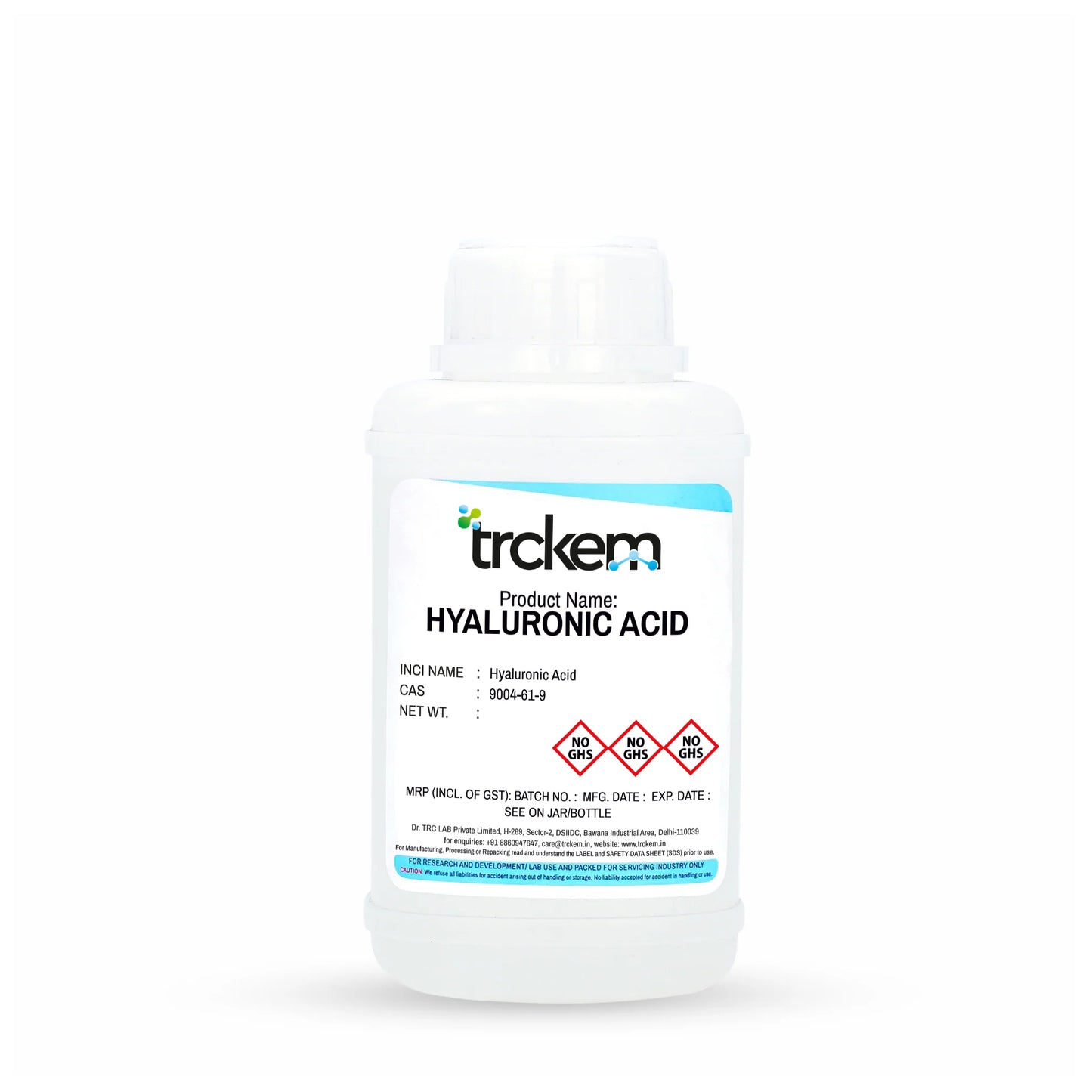
HYALURONIC ACID
For Bulk Quantity:📞 8822636416
Couldn't load pickup availability
Hyaluronic acid is a powerful humectant that attracts moisture to the skin. It helps hydrate, plump, and smooth the skin, reducing fine lines and promoting a youthful, radiant appearance.
Product Document: Download Now 👇

General Description
Hyaluronic Acid (HA) is a naturally occurring glycosaminoglycan found in the skin, connective tissues, and eyes. Known for its exceptional water-retention properties, it plays a crucial role in maintaining skin hydration, elasticity, and overall health. Available in different molecular weights, HA is widely used in skincare formulations to deliver intense hydration and anti-aging benefits.
Uses in the Cosmetics Industry
Hyaluronic Acid is a key ingredient in various skincare and personal care products, including:
- Moisturizers & Serums: Helps in deep skin hydration and plumping.
- Anti-Aging Creams: Reduces fine lines and wrinkles by improving skin elasticity.
- Facial Masks & Mists: Provides instant hydration and nourishment.
- Lip Balms & Fillers: Enhances lip volume and smoothness.
- Hair Care Products: Retains moisture in hair strands for improved shine and strength.
Cosmetic brands and skincare manufacturers buy Hyaluronic Acid in bulk for formulation development. Wholesale suppliers offer different grades, including low, medium, and high molecular weight HA, to cater to specific product needs.
Side Effects & Hazards
Hyaluronic Acid is generally safe for topical use, but some individuals may experience mild side effects such as:
Temporary redness or irritation, especially for sensitive skin.
Allergic reactions in rare cases when combined with other active ingredients.
Overuse may lead to dependency on external hydration, potentially affecting natural moisture retention.
For cosmetic manufacturers and businesses involved in Hyaluronic Acid sales, it's important to source high-quality, pure HA from reputable suppliers to ensure safety and efficacy. Proper storage and formulation practices are essential to maintain product stability.
Where to Buy & Wholesale Supply
Looking to buy Hyaluronic Acid for your skincare brand? Whether you're searching for wholesale suppliers, bulk Hyaluronic Acid sales, or manufacturers specializing in high-purity HA, it's crucial to choose trusted distributors. Many suppliers offer different molecular weights and grades to suit various product formulations.
CAS NO. :-9004-61-9
INCI:- Hyaluronic Acid
COMPOSITION:-Primarily composed of sodium hyaluronate, a salt derived from hyaluronic acid.
PURITY GRADE:-Pharmaceutical-grade or cosmetic-grade (usually ≥95%-99% purity, depending on the application).
APPEARANCE:-White to off-white fine powder or granular powder.
SOLUBILITY:-Soluble in water, forming a clear, viscous solution. Insoluble in oils and most organic solvents.
PRESEVATION:-No preservatives in pure form. Stabilizers or antimicrobial agents may be added in formulations.
STORAGE:-Store in a cool, dry place away from direct sunlight and moisture. Ideal storage temperature: 2–8°C.
RAW MATERIAL SOURCE:-Can be sourced from microbial fermentation using bacteria (e.g., Streptococcus zooepidemicus).
Animal-derived hyaluronic acid is sometimes sourced from rooster combs (less common in modern production).
MANUFACTURE:-Typically produced through fermentation or extraction processes. Biotechnological fermentation using non-animal derived sources is the most common and eco-friendly method.
ANIMAL TESTING:-Depends on the manufacturer. Most modern suppliers offer cruelty-free and non-animal-tested options.
GMO:-Non-GMO options are widely available. Some fermentation processes may involve genetically modified microorganisms, so labels should specify.
VEGAN:- Yes, when derived from microbial fermentation and not sourced from animals.
PROPOSITION:-Hyaluronic acid is widely used in cosmetics, skincare, injectables (dermal fillers), and medical applications for hydration, anti-aging, and wound healing.
WARNING:-Generally considered safe for topical and injectable use.
Rarely, allergic reactions or irritation may occur, especially if impurities are present.
Avoid inhalation of powder during handling.
Check with a healthcare professional before injectable use.
THE STORY OF HYALURONIC ACID

Hyaluronic Acid: The Ultimate Hydration Molecule for Plump, Healthy Skin
Hyaluronic Acid (HA) is a powerful natural humectant capable of holding up to 1000x its weight in water.
It provides deep hydration, skin plumping, smoothing, and anti-aging benefits.
Found in serums, creams, gels, masks, and haircare, it is one of the most trusted skincare ingredients globally.

Biotechnology-Derived Polysaccharide Engineered for Superior Moisture Retention
Modern Hyaluronic Acid is produced via microbial fermentation using:
• Streptococcus or Bacillus-based biofermentation
• Plant-based enzymatic technology
It is then purified and standardized into:
• High Molecular Weight (HMW) – surface hydration & film-forming
• Low Molecular Weight (LMW) – deeper penetration
• Oligo HA – maximum absorption & repair
TRCkem provides all molecular weight grades based on formulation needs.

Hydrate. Plump. Restore.
Hyaluronic Acid delivers exceptional skincare benefits:
✅ Deep moisture retention for long-lasting hydration
✅ Improves skin plumpness & elasticity
✅ Smoothens fine lines & early wrinkles
✅ Strengthens skin barrier
✅ Soothes irritation & boosts repair
Used in: serums, moisturizers, eye creams, hair conditioners, scalp tonics, sheet masks, gels, cleansers & medical cosmetics.

Safe, Versatile & Effective in All Skin Types and Formulations
• Typical use level:
– 0.01–0.5% depending on molecular weight
• Pre-dissolve in water or glycerin for easy dispersion
• Compatible with AHA, Vitamin C, Niacinamide, peptides & botanicals
• Works across pH 3–9
• Non-irritating, hypoallergenic & safe for all skin types
• Store airtight—protect from humidity to prevent clumping
• Ideal for both leave-on and rinse-off formulations
Formulator’s Queries, We Answered
1. What is Hyaluronic Acid?
Hyaluronic Acid (HA) is a naturally occurring polysaccharide found in the skin, connective tissues, and joints. It is widely used in personal care products due to its exceptional water-retention capacity, helping to hydrate, plump, and smooth the skin.
2. What is the CAS number and INCI name of Hyaluronic Acid?
CAS Number: 9004-61-9
INCI Name: Hyaluronic Acid
3. What are the benefits of Hyaluronic Acid in personal care products?
Hyaluronic Acid offers numerous skin benefits, including:
Deep hydration: Retains up to 1,000 times its weight in water.
Plumping effect: Reduces the appearance of fine lines and wrinkles.
Skin barrier protection: Enhances moisture retention and resilience.
Soothing & anti-inflammatory: Helps calm irritation and redness.
Non-comedogenic: Suitable for all skin types, including oily and acne-prone skin.
4. How does Hyaluronic Acid work in cosmetic formulations?
Hyaluronic Acid functions as a powerful humectant, attracting and holding moisture in the skin. It enhances hydration, elasticity, and firmness, making it a key ingredient in anti-aging and moisturizing products.
5. Is Hyaluronic Acid safe for all skin types?
Yes, Hyaluronic Acid is gentle, non-irritating, and safe for all skin types, including sensitive and acne-prone skin.
6. What types of personal care products contain Hyaluronic Acid?
Hyaluronic Acid is commonly used in:
Moisturizers & face creams
Serums & essences
Sheet masks & hydrating gels
Sunscreens & anti-aging formulations
Lip balms & eye creams
7. Can Hyaluronic Acid be combined with other ingredients?
Yes, Hyaluronic Acid pairs well with:
Vitamin C to boost brightening effects.
Peptides & ceramides to enhance skin barrier function.
Niacinamide for improved skin tone and texture.
Glycerin & Panthenol for enhanced hydration.
8. Does Hyaluronic Acid cause any side effects?
Hyaluronic Acid is generally well-tolerated. However, in rare cases, using it in very dry conditions without a moisturizer may lead to temporary dehydration as it can pull moisture from deeper skin layers.
9. What is the recommended concentration of Hyaluronic Acid in personal care formulations?
0.1% to 2% in serums and creams.
Up to 5% in professional skincare treatments.
Low molecular weight HA penetrates deeper for anti-aging benefits.
High molecular weight HA stays on the surface for hydration and barrier protection.
10. Is Hyaluronic Acid natural or synthetic?
Hyaluronic Acid can be naturally derived from bacterial fermentation or synthetically produced for high purity and stability. Most cosmetic-grade HA is vegan-friendly and sourced through fermentation.
11. Where can I purchase high-quality Hyaluronic Acid for formulation purposes?
Hyaluronic Acid is available from cosmetic raw material suppliers. Look for pharmaceutical-grade or cosmetic-grade HA to ensure optimal efficacy and safety in formulations.