


SKU:LIQ-TRC-GEL(AC-C)-500ML
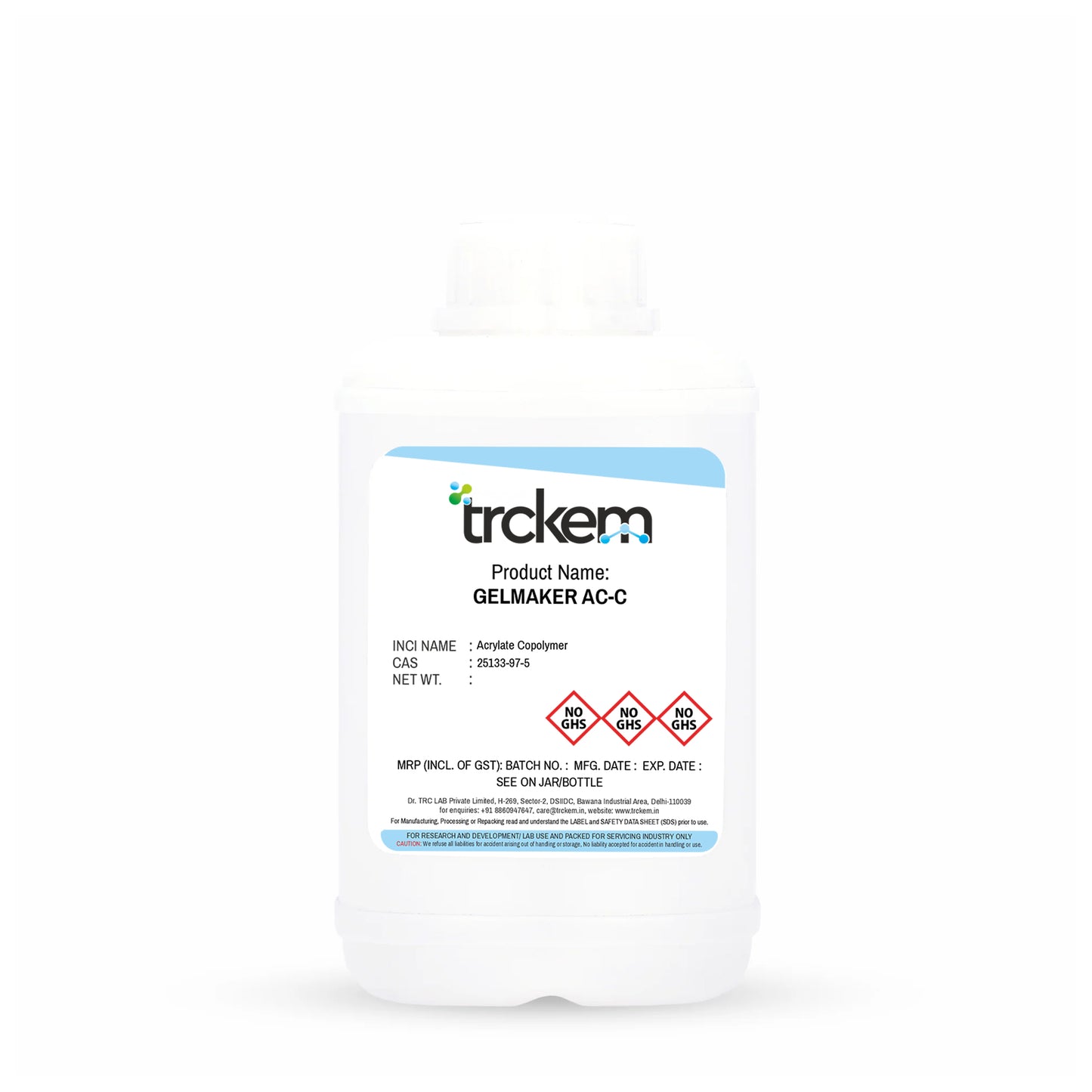
GELMAKER (AC-C)
For Bulk Quantity:📞 8822636416
Couldn't load pickup availability
GelMaker (AC-C) is a multifunctional ingredient used in cosmetic formulations to stabilize and thicken emulsions and gels. It enhances the viscosity and texture of products, providing a smooth and luxurious feel upon application.
Product Document: Download Now 👇


General Description
Gelmaker (ac-c) is a high-performance acrylate copolymer designed for use as a rheology modifier, thickening agent, and gel-forming polymer in cosmetic and personal care formulations. It appears as a free-flowing powder or dispersion and is valued for its ability to create clear, stable, and aesthetically pleasing gels across a wide pH range. As a versatile gelmaker (ac-c) chemical, it delivers excellent viscosity control and texture enhancement.
In skincare and hair care products, Gelmaker (ac-c) provides smooth, non-sticky sensory properties while maintaining formulation stability. It efficiently suspends actives, pigments, and exfoliating particles, making it suitable for both transparent and opaque systems. Cosmetic manufacturers frequently choose Gelmaker (ac-c) for modern gel-based formulations that demand consistency, elegance, and long-term stability. To streamline sourcing, many formulators prefer to buy gelmaker (ac-c) through reliable supply channels.
With increasing demand for lightweight and high-clarity cosmetic textures, suppliers offering wholesale gelmaker (ac-c) enable brands to scale production efficiently. The consistent performance of this gelmaker (ac-c) chemical supports formulation reproducibility and manufacturing reliability.
Uses in the Cosmetics Industry
- Gelmaker (ac-c) is widely used in personal care products that require controlled viscosity, suspension, and smooth application. Its key cosmetic applications include:
- Used in facial and body gels where Gelmaker (ac-c) creates clear, stable, and visually appealing textures.
- Incorporated into serums and essences to enhance spreadability and improve skin feel.
- Applied in hair styling gels, leave-in treatments, and scalp products to provide structure and hold without flaking.
- Utilized in cleansers and exfoliating products to evenly suspend beads and active ingredients.
- Manufacturers developing gel-based systems often buy gelmaker (ac-c) to ensure formulation consistency and processing ease.
- Access to wholesale gelmaker (ac-c) allows large-scale producers to control costs while maintaining product quality.
- The reliable performance of a trusted gelmaker (ac-c) chemical is essential for batch-to-batch uniformity.
Safety & Handling
- Gelmaker (ac-c) is considered safe for cosmetic use when handled according to industry standards and regulatory guidelines. Proper handling practices should be followed during formulation and processing.
- May cause mild eye or skin irritation in concentrated form.
- Avoid inhalation of dust during handling and weighing.
- Use appropriate personal protective equipment in manufacturing environments.
- Ensure controlled dispersion to avoid lump formation.
- Professionals who buy gelmaker (ac-c) or source wholesale gelmaker (ac-c) should consult supplier safety documentation.
- Responsible handling ensures safe and effective use of this gelmaker (ac-c) chemical in cosmetic applications.
Storage & Stability
Gelmaker (ac-c) should be stored in a tightly sealed container in a cool, dry, and well-ventilated area. It should be protected from moisture, excessive heat, and direct sunlight to preserve performance.
Under recommended storage conditions, Gelmaker (ac-c) remains stable and retains its thickening and suspending properties over time. Packaging supplied by wholesale gelmaker (ac-c) distributors is designed to maintain product integrity during transportation and storage. Manufacturers who buy gelmaker (ac-c) are advised to follow standard storage practices to ensure long shelf life of this gelmaker (ac-c) chemical.
CAS Number: 25133-97-5
INCI: Acrylates Copolymer
Composition:GELMAKER AC-C is composed of a copolymer of acrylic acid and its esters, designed to function as a film former, stabilizer, and rheology modifier in cosmetic and personal care formulations. It enhances viscosity, improves product texture, and provides a smooth, non-sticky finish.
Purity Grade: Cosmetic Grade
Appearance: White to off-white powder or viscous emulsion (depending on grade)
Solubility:Dispersible or soluble in water (depending on pH and neutralization); forms clear to slightly hazy gels
Preservation:Self-stable polymer; does not require additional preservatives in raw material form. Finished formulations should include appropriate preservation systems as needed.
Raw Material Sources:Synthetic origin, derived from acrylic acid and related monomers
Manufacture:Produced through controlled free-radical polymerization of acrylic acid and other monomers, followed by purification and stabilization to ensure consistent performance in cosmetic systems.
Animal Testing: Not animal tested
GMO: GMO-free (synthetic polymer, not derived from genetically modified organisms)
Vegan: Does not contain animal-derived ingredients
Proposition:GELMAKER AC-C complies with EU Cosmetic Regulation (EC) No. 1223/2009, U.S. FDA cosmetic ingredient standards, and REACH requirements.
Warning:Avoid inhalation of fine powder. Use appropriate personal protective equipment (mask, gloves) during handling. Store in a cool, dry, and well-ventilated area away from heat and moisture. Intended for professional formulation use only.
THE STORY OF GELMAKER AC-C

GELMAKER AC-C: The Invisible Film of Perfection
Gelmaker AC-C is a high-performance film-forming ingredient widely used in cosmetics for its superior adhesion, flexibility, and clarity. Known for creating a smooth, invisible layer on skin and hair, it enhances the texture and longevity of beauty formulations — from makeup to sunscreens and hair styling products.

Origin & Extraction
Developed through the controlled polymerization of acrylic monomers, Gelmaker AC-C represents a blend of science and stability. Produced under strict quality parameters, each polymer chain is designed for specific performance — whether for film formation, adhesion, or water resistance — ensuring consistency across every batch.

Cosmetic Role & Benefit
Gelmaker AC-C creates a breathable, flexible film that locks in active ingredients and improves wear time. In makeup, it prevents smudging and creasing; in sunscreens, it enhances water resistance; in hair products, it provides strong hold and humidity protection. Its transparent finish and smooth feel make it an essential for next-generation cosmetics.

Application & Safety
Gelmaker AC-C is safe and stable for use in skincare, color cosmetics, and haircare formulations. Recommended usage level: 0.5–10%, depending on system type. Non-irritating, non-sensitizing, and compliant with major cosmetic regulatory standards (EU, FDA, REACH). Store in a cool, dry place away from direct sunlight to maintain optimal performance.
Formulator’s Queries, We Answered
What is GEL MAKER AC-C?
GEL MAKER AC-C is a high-performance rheology modifier and film-forming polymer derived from Acrylate Copolymer. It is engineered for cosmetic and personal care applications to provide thickening, stability, clarity, and film formation in gels, creams, sprays, and emulsions.
Is GEL MAKER AC-C safe for use in personal care products?
Yes. Acrylate Copolymers have a well-established safety profile in cosmetics when used at appropriate concentrations.
Can GEL MAKER AC-C cause skin irritation?
In general, no—properly purified grades of Acrylate Copolymer are unlikely to irritate skin. However, as with all cosmetic ingredients, a patch test is recommended, especially for highly sensitive users or leave-on applications.
Is GEL MAKER AC-C environmentally friendly?
Acrylate Copolymers are synthetic polymers and are not readily biodegradable in many cases. Their environmental fate depends on polymer structure and disposal method. For eco-conscious formulators, using lower dosage, blending with biodegradable agents, or sourcing sustainably engineered variants is advisable