


SKU:LIQ-TRC-FC(TGA)-500G
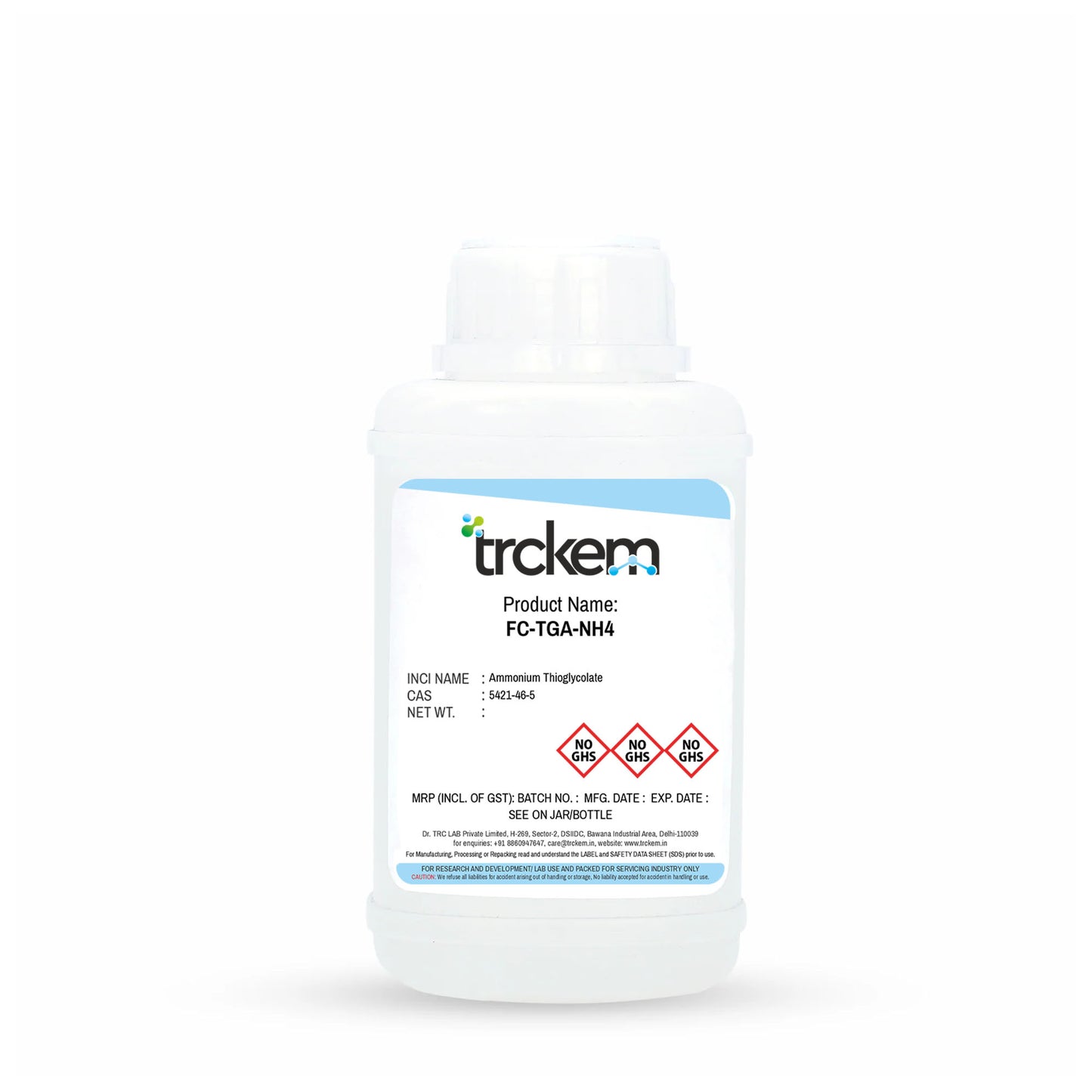
FC-TGA-NH4
For Bulk Quantity:📞 8822636416
Couldn't load pickup availability
FC-TGA-NH4 is a versatile reducing agent widely used in hair care formulations, particularly for permanent waving and straightening systems. It works by breaking and reforming disulfide bonds in keratin, enabling reshaping of hair structure. Common in salon treatments, it offers effective performance but requires careful handling due to its strong odor and potential skin and eye irritation.
Product Document: Download Now 👇


General Description
Fc-tga-nh4 is a widely used reducing agent in cosmetic and personal care formulations, known for its ability to break and rearrange disulfide bonds in keratin structures. It typically appears as a clear to pale yellow liquid with a characteristic sulfur odor and is valued for its predictable reactivity in professional hair treatment systems. As a high-purity fc-tga-nh4 CHEMICAL, it delivers reliable performance in formulations requiring controlled bond modification.
In the cosmetics industry, fc-tga-nh4 is primarily associated with hair restructuring applications such as permanent waving and hair straightening. Its controlled reduction mechanism allows hair fibers to be reshaped effectively while maintaining formulation consistency. Manufacturers that develop salon-grade products often depend on the stability and processing efficiency of this fc-tga-nh4 CHEMICAL for consistent results.
Uses in the Cosmetics Industry
- Fc-tga-nh4 plays a critical role in professional hair care formulations where structural modification of hair is required. Its main cosmetic uses include:
- Used as an active reducing agent in permanent wave lotions to reshape hair curls.Incorporated into hair straightening and relaxing systems to alter hair fiber structure.
- Applied in professional salon products designed for controlled and uniform hair processing.
- Cosmetic manufacturers frequently BUY fc-tga-nh4 to support high-performance hair treatment lines.
- Large-scale producers often source WHOLESALE fc-tga-nh4 to maintain batch consistency and cost efficiency.
- The reliability of a well-specified fc-tga-nh4 CHEMICAL is essential for achieving predictable salon-quality outcomes.
Hazards & Safety Information
- Due to its reactive nature, fc-tga-nh4 must be handled with appropriate care in manufacturing and professional environments.
- May cause skin and eye irritation upon direct contact.
- Vapors may be irritating to the respiratory system if ventilation is inadequate.
- Prolonged or repeated exposure can increase the risk of sensitization.
- Requires proper personal protective equipment during handling and formulation.
- Professionals who BUY fc-tga-nh4 should strictly follow safety guidelines and regulatory requirements.
- Suppliers of WHOLESALE fc-tga-nh4 typically provide detailed safety documentation to ensure responsible handling of this fc-tga-nh4 CHEMICAL.
Storage & Stability
Fc-tga-nh4 should be stored in tightly sealed containers in a cool, dry, and well-ventilated area, away from oxidizing agents and direct heat sources. Proper storage conditions help maintain chemical stability and functional performance over time.
Manufacturers sourcing WHOLESALE fc-tga-nh4 benefit from packaging designed to preserve quality during transport and long-term storage. Companies that BUY fc-tga-nh4 for cosmetic production should adhere to recommended storage practices to ensure the integrity of this fc-tga-nh4 CHEMICAL throughout its shelf life.
CAS Number: 5421-46-5
INCI: Ammonium Thioglycolate
Composition:FC-TGA-NH4 is composed of the ammonium salt of thioglycolic acid. It is a reducing agent commonly used in hair perming, waving, and depilatory formulations due to its ability to break disulfide bonds in keratin.
Purity Grade: Cosmetic Grade (typically ≥ 98%)
Appearance: Colorless to pale yellow liquid with a characteristic sulfur-like odor
Solubility: Soluble in water and alcohols
Preservation: Stable under recommended storage conditions. In formulations, preservation should follow cosmetic regulatory guidelines.
Storage:Store in a tightly sealed container, in a cool, dry, and well-ventilated area. Protect from heat, light, and moisture. Avoid contact with strong oxidizing agents.
Raw Material Sources:Synthetic – derived from thioglycolic acid neutralized with ammonium hydroxide.
Manufacture:Produced by neutralization of thioglycolic acid with ammonium hydroxide under controlled conditions to yield ammonium thioglycolate.
Animal Testing: Not animal tested
GMO: GMO-free (synthetic origin, not derived from genetically modified organisms)
Vegan: Contains no animal-derived ingredients
Proposition:FC-TGA-NH4 complies with global cosmetic safety regulations (EU, FDA, and other regions) for controlled use in hair care and depilatory formulations.
Warning:Corrosive May cause burns to skin and serious eye damage. Harmful if inhaled or swallowed. Use only in well-ventilated areas. Wear suitable protective clothing, gloves, and eye/face protection when handling. Keep out of reach of children.
THE STORY OF FC-TGA-NH4

FC-TGA-NH4: The Precision Bond-Breaking Agent
FC-TGA-NH4 is a key active ingredient used in professional hair reshaping systems, including permanent waving, straightening, and relaxing creams. It works by breaking disulfide bonds within hair keratin, allowing irreversible restructuring of curl pattern, texture, and shape.

High-Purity Synthesis for Controlled Reactivity
Produced by neutralizing thioglycolic acid with ammonium hydroxide, FC-TGA-NH4 is supplied as a stabilized, cosmetic-grade aqueous solution. Each batch is filtered, pH-adjusted, and quality-tested to ensure predictable bond-breaking strength, low odor, and long-term storage stability.

Reshape. Reform. Redefine
Primary functions of FC-TGA-NH4 in cosmetics:
✅ Breaks disulfide (–S–S–) bonds in keratin
✅ Enables permanent waving, curling, or straightening
✅ Works efficiently under alkaline pH (8–10)
✅ Compatible with creams, gels, and lotion formats
✅ Allows controlled processing time for salon professionals
Used in: perm lotions, Brazilian straightening systems, texture-softening formulas, and chemical hair relaxing.

Powerful Chemistry. Strict Handling. Professional Use Only
Typical use level:5–15% activein hair perming systems.
Must be handled with gloves and eye protection.
Store in airtight containers away from heat, metal ions, and oxidizers.
Requires secondary neutralizer in final formulation (commonly hydrogen peroxide or sodium bromate).
Complies with global cosmetic regulatory limits when used inprofessional-only formulations.
Formulator’s Queries, We Answered
1. What is FC-TGA-NH4?
FC-TGA-NH4 is a high-quality cosmetic-grade form of Ammonium Thioglycolate, widely used in the personal care industry, particularly in hair treatment formulations. It acts as a reducing agent that breaks disulfide bonds in hair, allowing for reshaping in processes such as perming, relaxing, and straightening.
2. What is the CAS Number and INCI Name of FC-TGA-NH4?
CAS Number: 5421-46-5
INCI Name: Ammonium Thioglycolate
3. What are the benefits of using FC-TGA-NH4 in personal care products?
Hair Restructuring: Breaks and reforms hair’s disulfide bonds for perming and relaxing.
Controlled Action: Provides effective and predictable results in hair shaping treatments.
Versatility: Can be used for both permanent waves and hair straightening creams.
Stability: Offers reliable performance when formulated under controlled pH conditions.
4. What are the common applications of FC-TGA-NH4 in personal care?
Hair Perming Solutions – For creating long-lasting curls or waves.
Hair Straightening Creams – Used in chemical relaxers to smooth and straighten hair.
Depilatory Products – Sometimes included in hair removal formulations due to its keratolytic action.
5. Is FC-TGA-NH4 safe for use in personal care products?
Yes, FC-TGA-NH4 is considered safe when used within regulated concentrations and in properly formulated products. It is widely approved for professional hair treatments under cosmetic safety regulations.
6. Can FC-TGA-NH4 cause skin or scalp irritation?
Yes, improper use or high concentrations may cause irritation, redness, or sensitivity. It should always be used according to cosmetic safety guidelines, and professional application is recommended. A patch test is advisable before full use.