


SKU:SOL-TRC-ETH-300G
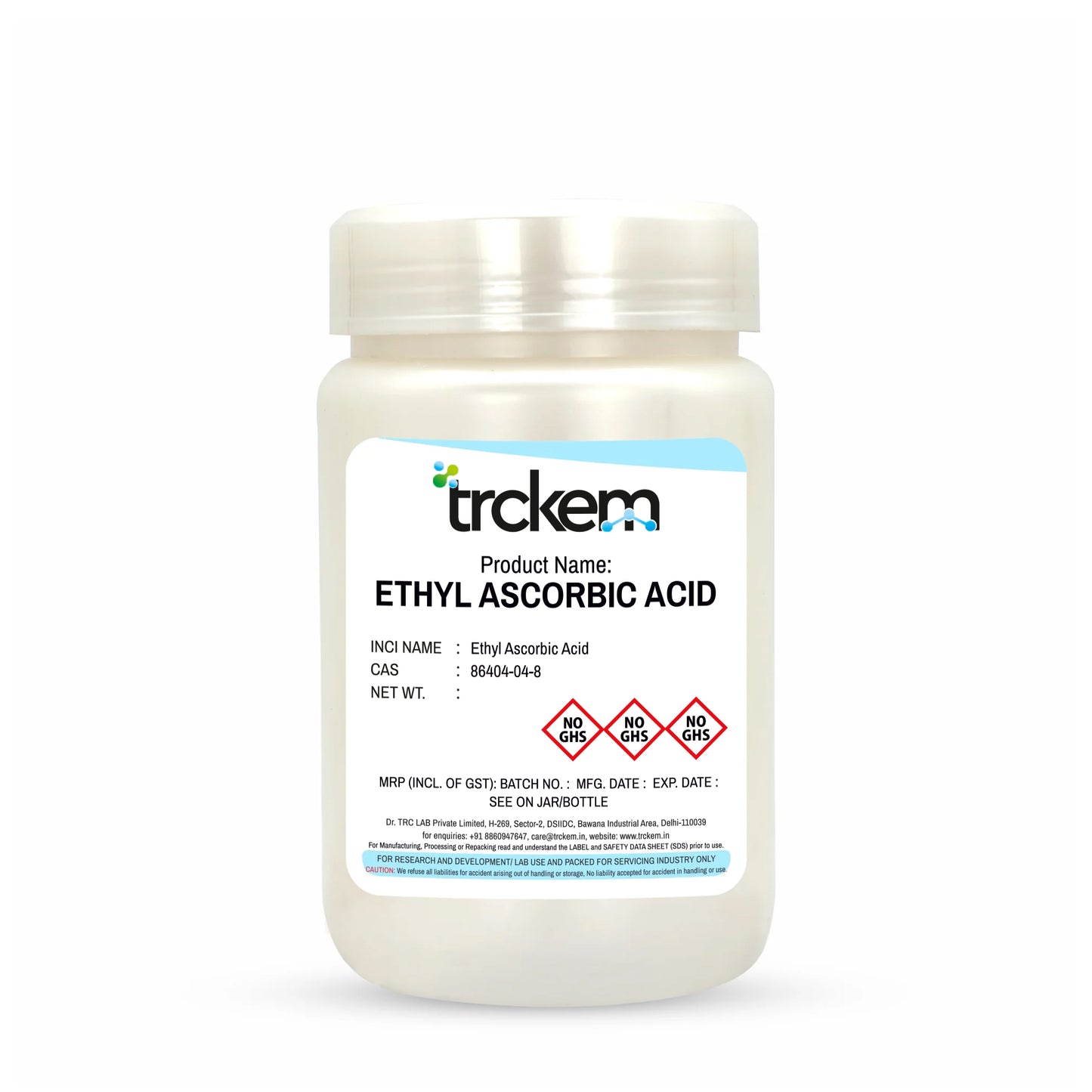
Ethyl Ascorbic Acid
For Bulk Quantity:📞 8822636416
Couldn't load pickup availability
Ethyl Ascorbic Acid is a stable, water-soluble vitamin C derivative that brightens skin, boosts collagen, and fights free radicals with excellent skin penetration and reduced irritation.
Product Document: Download Now 👇


General Description:
Ethyl Ascorbic Acid is a stable, water-soluble derivative of Vitamin C, widely recognized for its potent antioxidant properties and skin-brightening effects. Unlike pure ascorbic acid, this advanced form resists oxidation and penetrates the skin more effectively, delivering superior results in cosmetic formulations. Ethyl Ascorbic Acid is available for bulk purchase, wholesale supply, and large-scale manufacturing, making it an ideal ingredient for brands developing high-performance skincare solutions focused on radiance and anti-aging.
Uses in the Cosmetics Industry:
- Ethyl Ascorbic Acid is a sought-after ingredient in the cosmetic and personal care industry due to its multifunctional benefits. It is commonly used to:
- Brighten the Complex and reduce the appearance of dark spots and hyperpigmentation.
- Boost collagen production for firmer, more youthful-looking skin.
- Even out skin tone and environmental damage.
- Serve as a key active in anand enhance radiance in facial serums, creams, and masks.
- Serve as a key active in anti-aging and skin-repair products.
- Its high stability and excellent absorption make it ideal for formulators and manufacturers seeking long-lasting results in vitamin C skincare lines. Many skincare brands buy Ethyl Ascorbic Acid in bulk or wholesale to create premium, high-efficacy products.
Side Effects & Hazards:
Ethyl Ascorbic Acid is generally well-tolerated in cosmetic applications, but some individuals may experience mild irritation, especially when used in high concentrations. It is important to follow recommended usage levels during formulation to minimize the risk of sensitivity. As with all active ingredients, proper handling and storage—in a cool, dry, and light-protected environment—is essential to preserve potency and prevent degradation.
For safe, effective, and high-quality formulations, always buy Ethyl Ascorbic Acid from trusted suppliers who specialize in wholesale and manufacturing-grade ingredients for the cosmetic industry.
CAS Number: 86404-04-8
INCI: 3-O-Ethyl Ascorbic Acid
Composition: ETHYL ASCORBIC ACID is a stable etherified derivative of ascorbic acid, where the 3-hydroxyl group is modified with an ethyl group to enhance stability and skin penetration.
Purity Grade: Cosmetic grade (typically ≥ 98% purity)
Appearance: White to off-white crystalline powder
Solubility: Soluble in water and ethanol
Preservation: Typically self-preserving; follow supplier recommendations for formulation compatibility and stability.
Storage: Store in a cool, dry, and dark place in a tightly closed container; protect from light and moisture
Raw Material Source: Synthetic derivative of L-Ascorbic Acid
Manufacture: Produced via selective ethylation of ascorbic acid under controlled conditions to maintain molecule integrity and stability
Animal Testing: Not animal tested
GMO: GMO-free (not derived from genetically modified organisms)
Vegan: Does not contain animal-derived components
HS Code: 29362700
Proposition: ETHYL ASCORBIC ACID complies with cosmetic regulatory standards and safety guidelines
Warning: Avoid inhalation and direct contact with skin and eyes. Use appropriate protective equipment when handling.
THE STORY OF ETHYL ASCORBIC ACID

Ethyl Ascorbic Acid: The Stable, High-Performance Vitamin C for Radiant Skin
Ethyl Ascorbic Acid is a next-generation, highly stable derivative of Vitamin C. It offers strong brightening, antioxidant, and collagen-boosting benefits while being far more stable than traditional L-ascorbic acid. Widely used in premium skincare such as serums, brightening creams, anti-aging treatments, and spot-correcting formulas, it delivers visible radiance with reduced irritation.

A Stabilized Vitamin C Molecule Engineered for Deep Dermal Activity
Ethyl Ascorbic Acid is formed by ethylation of the 3-hydroxyl group of Vitamin C, creating the stable compound 3-O-Ethyl Ascorbic Acid.
This modification allows it to:
• Resist oxidation
• Remain active across broader pH ranges
• Penetrate the skin more deeply
• Convert into L-Ascorbic Acid inside the skin
TRCkem supplies high-purity (>99%) cosmetic-grade EAA suitable for advanced skincare formulations.

Brighten. Protect. Renew.
Ethyl Ascorbic Acid provides multiple high-performance skincare benefits:
✅ Brightens complexion and reduces dullness
✅ Helps fade dark spots, pigmentation & acne marks
✅ Strong antioxidant activity to fight oxidative damage
✅ Boosts collagen production for firmer skin
✅ Suitable for sensitive skin compared to pure Vitamin C
Used in: brightening serums, anti-aging creams, eye treatments, spot correctors, sheet masks & sun-care formulations.

Stable, Effective & Compatible with Modern Formulations
• Typical use level: 1–5% (up to 10% for strong brightening serums)
• Works in pH 4–6.5, allowing easy formulation
• Soluble in water, propanediol, and light glycols
• Stable against heat & oxidation
• Safe, non-irritating, and globally approved for cosmetics
• Store in airtight, cool, dark conditions to maintain potency
• Compatible with Niacinamide, Hyaluronic Acid, Ferulic Acid & Peptides
Formulator’s Queries, We Answered
1. What is Ethyl Ascorbic Acid?
Ethyl Ascorbic Acid (EAC) is a stable, water- and oil-soluble derivative of Vitamin C (ascorbic acid). It is formed by adding an ethyl group to the third carbon position of the ascorbic acid molecule, enhancing its stability and skin penetration. Once absorbed, it is metabolized into active Vitamin C within the skin.
2. What are the CAS Number and INCI Name of Ethyl Ascorbic Acid?
CAS Number: 86404-04-8
INCI Name: 3-O-Ethyl Ascorbic Acid
3. What are the benefits of using Ethyl Ascorbic Acid in personal care products?
Ethyl Ascorbic Acid offers multiple skin benefits:
Beauty Spark Review
Antioxidant Protection: Neutralizes free radicals, protecting the skin from oxidative stress.
Collagen Synthesis: Stimulates collagen production, improving skin elasticity and reducing wrinkles.
Skin Brightening: Inhibits melanin production, helping to fade hyperpigmentation and even out skin tone.
Anti-Inflammatory: Reduces inflammation, beneficial for conditions like acne and rosacea.
Enhanced UV Protection: When used with sunscreen, it enhances protection against UV-induced damage.
4. What are the common applications of Ethyl Ascorbic Acid in personal care?
Ethyl Ascorbic Acid is incorporated into various skincare products, including:
Serums: For targeted antioxidant and brightening effects.
Moisturizers: To provide hydration along with Vitamin C benefits.
Sunscreens: Enhances UV protection when combined with SPF formulations.
Anti-Aging Products: Addresses signs of aging by promoting collagen synthesis.
Brightening Creams: Targets hyperpigmentation and uneven skin tone.
5. Is Ethyl Ascorbic Acid safe for use in personal care products?
Yes, Ethyl Ascorbic Acid is generally considered safe for topical use in cosmetics. Its enhanced stability reduces the risk of oxidation, making it suitable for various formulations. However, as with all skincare ingredients, it's advisable to perform a patch test before widespread use, especially for individuals with sensitive skin.
6. Can Ethyl Ascorbic Acid cause skin irritation?
Ethyl Ascorbic Acid is typically well-tolerated. However, in rare cases, individuals may experience mild irritation, redness, or allergic reactions. A study reported instances of allergic contact dermatitis linked to products containing 3-O-ethyl-L-ascorbic acid. Conducting a patch test prior to full application is recommended to ensure compatibility.
7. Is Ethyl Ascorbic Acid environmentally friendly?
While Ethyl Ascorbic Acid is a synthetic derivative, specific data on its environmental impact is limited. Its stability and efficacy may reduce the need for higher concentrations, potentially minimizing environmental load. However, further research is needed to fully assess its biodegradability and ecological footprint.
8. Are there alternatives to Ethyl Ascorbic Acid in personal care products?
Yes, alternatives include:
Virtue Supplements
Ascorbic Acid (L-Ascorbic Acid): Pure Vitamin C with high potency but less stability.
Ascorbyl Glucoside: A stable, water-soluble derivative suitable for sensitive skin.
Magnesium Ascorbyl Phosphate: A stable, water-soluble form with skin-brightening properties.
Sodium Ascorbyl Phosphate: Known for its stability and acne-fighting benefits.
Each alternative varies in stability, potency, and suitability for different skin types.