


SKU:LIQ-TRC-CTAC-500G
CTAC
For Bulk Quantity:📞 8822636416
Couldn't load pickup availability
CTAC (Cetrimonium Chloride) is a quaternary ammonium compound used as a surfactant and conditioner in personal care products. It enhances texture, detangles hair, and provides antimicrobial properties.
Product Document: Download Now 👇


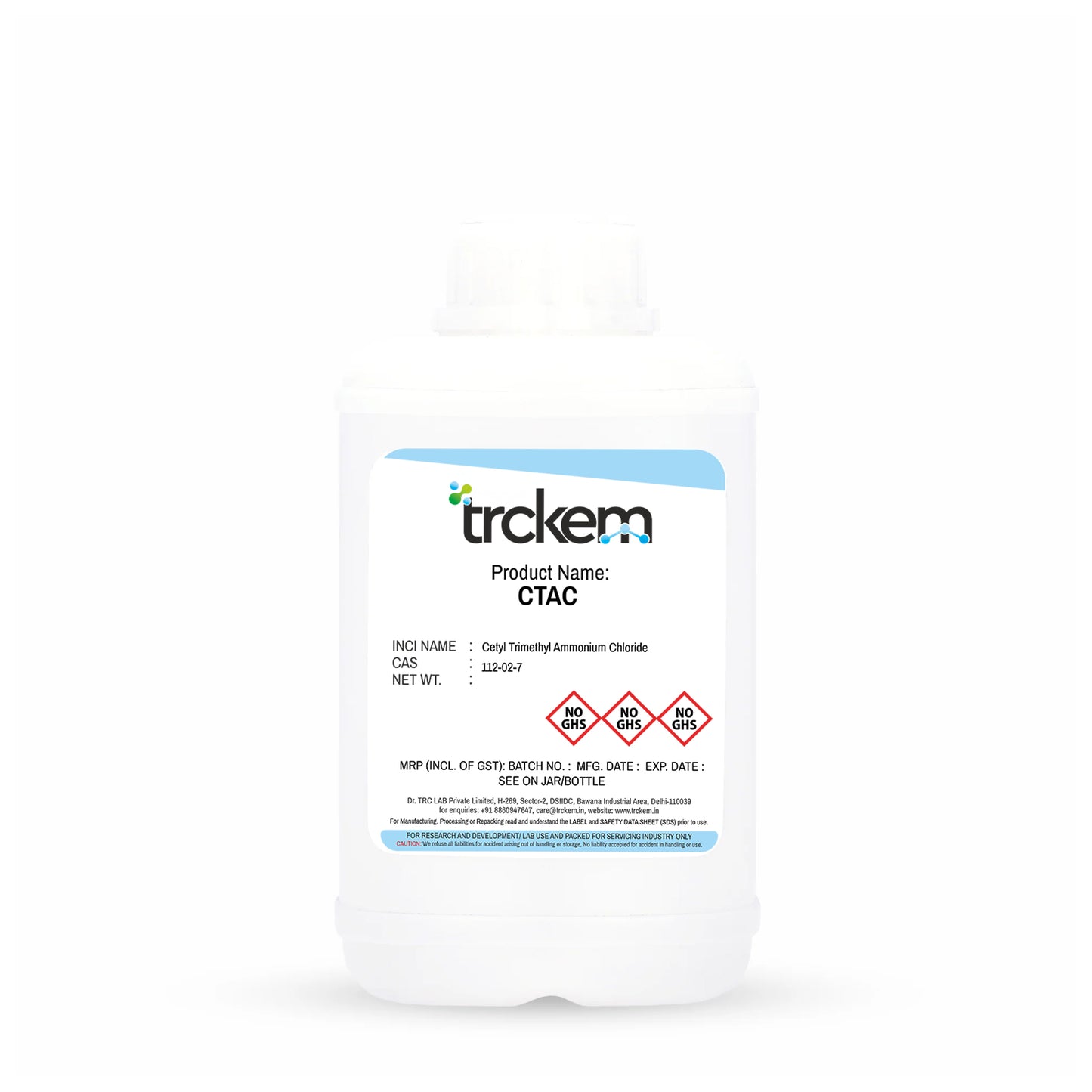
General Description
Cetrimonium Chloride (CTAC) is a quaternary ammonium compound widely used in the cosmetic and personal care industry. Known for its excellent conditioning, emulsifying, and antimicrobial properties, CTAC is a key ingredient in hair care and skincare formulations. Manufacturers prefer CTAC for its ability to reduce static, improve texture, and enhance product stability. If you're looking to buy CTAC in bulk or wholesale, it is available in liquid or solid form for easy formulation.
Uses in the Cosmetics Industry
CTAC is a versatile ingredient used in various personal care products, offering multiple benefits:
- Hair Conditioner: Helps detangle, soften, and reduce frizz in hair care products like shampoos, conditioners, and leave-in treatments.
- Emulsifier: Aids in blending oil and water-based ingredients, ensuring smooth and stable formulations.
- Antimicrobial Agent: Inhibits bacterial and fungal growth, extending the shelf life of cosmetic products.
- Anti-Static Agent: Reduces static electricity in hair, making it easier to manage and style.
CTAC is commonly used in shampoos, hair conditioners, styling products, lotions, and creams. Many manufacturers and formulators rely on CTAC for its multifunctional benefits and cost-effectiveness.
Side Effects & Hazards
While CTAC is widely used in cosmetics, it should be used within regulated concentrations to ensure safety:
- Skin & Eye Irritation: High concentrations may cause irritation, especially in sensitive individuals.
- Toxic if Swallowed: CTAC should not be ingested, as it can be harmful.
- Potential Allergic Reactions: Some users may experience mild allergic responses, such as redness or itching.
When handling CTAC in cosmetic manufacturing, it is essential to follow safety precautions, including wearing gloves and avoiding direct skin contact.
CAS Number: 112-02-7
INCI: Cetrimonium Chloride
Composition: CETRIMONIUM CHLORIDE is a quaternary ammonium salt derived from cetyltrimethylammonium chloride. It is commonly used as a conditioning agent, surfactant, and preservative booster in hair and skincare products.
Purity Grade: Cosmetic and pharmaceutical grade available; purity typically ≥ 98% (check with supplier specification).
Appearance: Clear to pale yellow liquid or white crystalline powder (depending on concentration and form)
Solubility: Soluble in water and alcohol; forms clear solutions
Preservation: Does not require additional preservation when supplied as a concentrated solution. However, formulations containing water may require preservatives based on overall formulation.
Storage: Store in tightly closed containers in a cool, dry, well-ventilated area away from heat, strong oxidizers, and direct sunlight.
Raw Material Sources: Derived from fatty alcohols (typically from coconut or palm oil) and trimethylamine
Manufacture: Produced by quaternization of cetyl alcohol-derived amine (e.g., cetyl dimethyl amine) with methyl chloride or similar agents, followed by purification
Animal Testing: Not animal tested (subject to supplier declaration)
GMO: GMO-free when raw materials are sourced from non-GMO plant origins (check supplier certification)
Vegan: Can be considered vegan if derived from plant-based fatty alcohols and synthetic amines (verify source with manufacturer)
Proposition: CETRIMONIUM CHLORIDE complies with relevant cosmetic regulations (EU Regulation EC No. 1223/2009, FDA guidelines for cosmetics, etc.). Maximum allowable concentrations apply (e.g., ≤ 2.5% in leave-on products in EU).
Warning: May cause eye and skin irritation. Harmful if swallowed in large amounts. Avoid direct contact during handling. Use appropriate PPE. For external use only. Follow regional regulations for safe concentrations in formulations.
THE STORY OF CETRIMONIUM CHLORIDE

CTAC: The Classic Conditioning Agent for Smooth, Manageable Hair
Cetrimonium Chloride (CTAC) is a cationic surfactant and hair-conditioning agent widely used in conditioners, serums, detanglers, and creams. Known for its antistatic, detangling, and softening effects, CTAC adheres to damaged hair fibers, restoring smoothness and shine while reducing frizz and breakage.

Quaternary Ammonium Compound Engineered for Hair Conditioning
CTAC is a quaternary ammonium salt derived from cetyltrimethylammonium chloride. It combines hydrophilic and lipophilic groups, enabling it to condition hair by adsorbing onto negatively charged keratin.
TRCkem supplies 25%, 30%, and 50% active solutions of cosmetic-grade CTAC, optimized for safe and effective haircare formulations.

Detangle. Condition. Protect.
Key formulation benefits:
✅ Detangles and smooths damaged, frizzy hair
✅ Provides antistatic and conditioning effects
✅ Improves wet & dry combability
✅ Enhances shine, softness, and manageability
✅ Acts as a mild preservative booster due to antimicrobial properties
Commonly used in: conditioners, serums, leave-in treatments, relaxer creams, hair masks, and cleansing conditioners.

Cationic Surfactant – Effective at Low Levels, Handle with Care
• Typical use level:
– 0.5–2% in rinse-off conditioners
– 0.1–1% in leave-on treatments
• Add during cool-down phase (<45°C) to preserve stability
• Compatible with fatty alcohols (Cetyl / Cetearyl Alcohol) and silicones
• Approved globally (EU, FDA, ASEAN, India, Japan)
• Avoid eye contact and use proper PPE when handling concentrate
• Store sealed, cool, and protected from direct sunlight
Formulator’s Queries, We Answered
1. What is Cetrimonium Chloride (CTAC)?
Cetrimonium Chloride, commonly known as CTAC, is a cationic surfactant and quaternary ammonium compound widely used in personal care products. It serves multiple functions, including acting as a conditioning agent, emulsifier, and preservative.
2. What is the CAS number and INCI name of CTAC?
The Chemical Abstracts Service (CAS) number for Cetrimonium Chloride is 112-02-7. Its International Nomenclature of Cosmetic Ingredients (INCI) name is Cetrimonium Chloride.
3. In which personal care products is CTAC commonly used?
CTAC is prevalent in various personal care formulations, such as:
Hair Care Products: Shampoos, conditioners, hair dyes, and styling products.
Skin Care Products: Creams, lotions, and cleansers.
Cosmetics: Facial masks, scrubs, and makeup products.
4. What benefits does CTAC provide in hair care products?
In hair care formulations, CTAC offers several advantages:
Conditioning: Enhances softness and manageability of hair.
Detangling: Facilitates easier combing of wet and dry hair.
Anti-static: Reduces static electricity, minimizing frizz.
Preservative: Exhibits antimicrobial properties, extending product shelf life.
5. Is CTAC safe for use in personal care products?
CTAC is generally considered safe when used within recommended concentrations. Regulatory authorities have evaluated its safety, and it is approved for use in various cosmetic and personal care products. However, individuals with sensitive skin or allergies should perform a patch test or consult a dermatologist before use.
6. Are there any environmental concerns associated with CTAC?
As with many chemical compounds, environmental considerations are essential. CTAC is known to be toxic to aquatic life; therefore, manufacturers are encouraged to implement proper waste management practices to minimize environmental impact.
7. Can CTAC cause skin irritation?
While CTAC is widely used and generally safe, some individuals may experience skin irritation, especially if they have sensitive skin or if the product formulation contains higher concentrations than recommended. It's advisable to discontinue use and consult a healthcare professional if irritation occurs.
8. How is CTAC typically formulated in products?
CTAC is often incorporated into formulations at concentrations ranging from 0.5% to 2.5%, depending on the desired effect and product type. It is compatible with various other ingredients, including fatty alcohols, which can enhance its conditioning properties.
9. Is CTAC suitable for all hair types?
Yes, CTAC is versatile and can benefit various hair types, including straight, wavy, curly, and coily hair. Its conditioning and anti-static properties make it especially beneficial for dry or chemically treated hair.
10. Where can I find products containing CTAC?
Products containing CTAC are widely available in retail stores, salons, and online platforms. Reviewing the ingredient list on product labels can help identify the presence of Cetrimonium Chloride.
For more detailed information or specific inquiries about CTAC, please contact our customer service team or consult with a qualified cosmetic chemist.