


SKU:LIQ-TRC-CLOVE-500G
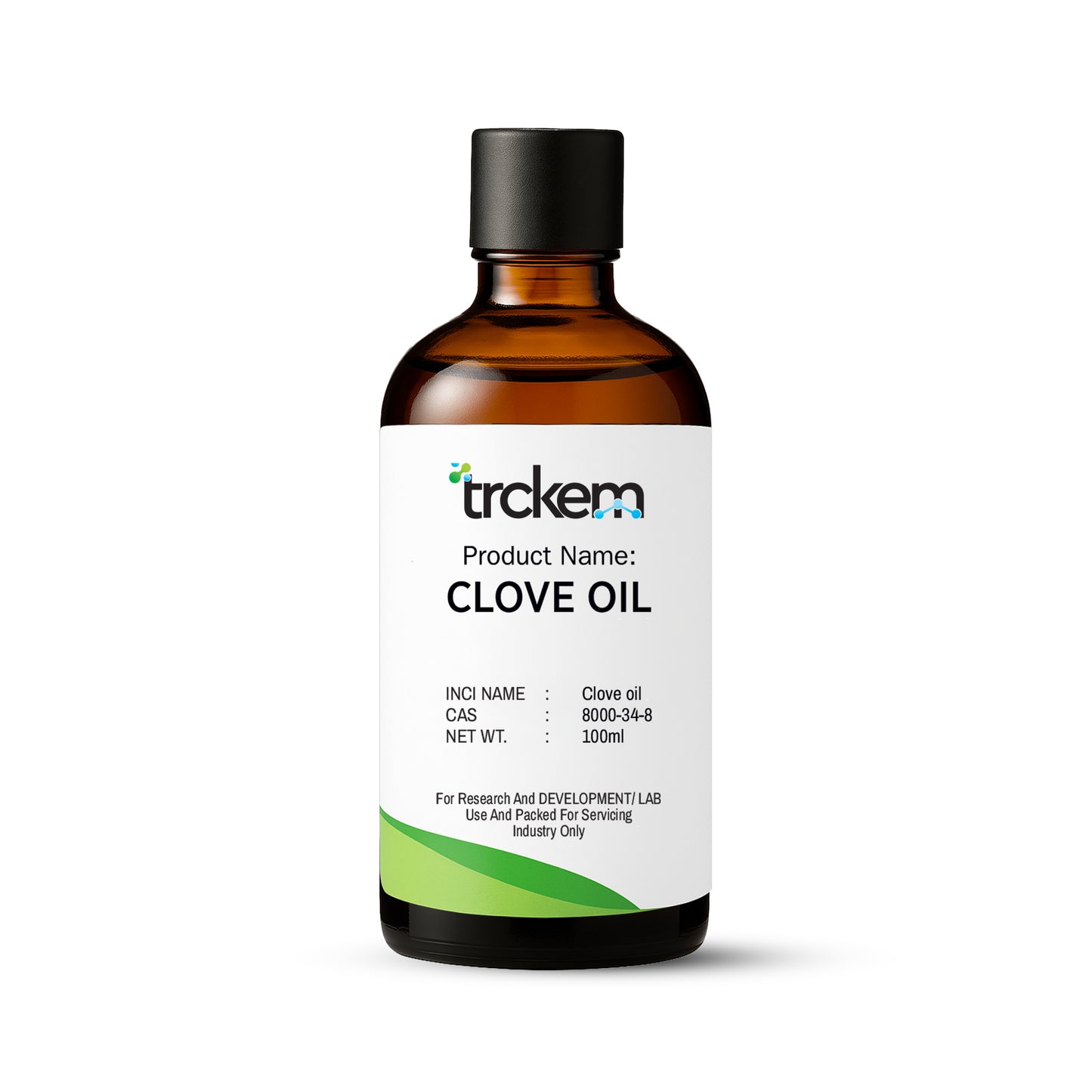
CLOVE OIL
For Bulk Quantity:📞 8822636416
Couldn't load pickup availability
Clove Oil is a powerful essential oil with antiseptic, analgesic, and antimicrobial properties, widely used in oral care, skincare, and aromatherapy for its warming effects.
Product Document: Download Now 👇


General Description
Clove Oil is a potent essential oil extracted from the dried flower buds of the clove tree (Syzygium aromaticum). Known for its warm, spicy aroma and powerful antibacterial properties, it is widely used in personal care and cosmetic formulations. Rich in eugenol, this natural oil offers therapeutic benefits, making it a valuable ingredient for skincare, oral care, and hair care products.
Uses in the Cosmetics Industry
Cosmetic manufacturers and formulators buy Clove Oil in bulk for various applications, including:
- Used in creams, lotions, and serums for its antibacterial and anti-inflammatory properties, helping to combat acne and skin irritation.
- Found in shampoos and scalp treatments to promote healthy hair growth and combat dandruff.
- A key ingredient in toothpaste and mouthwashes due to its antiseptic properties, freshening breath and soothing gums.
- Commonly used in essential oil blends to relieve stress and muscle pain.
Side Effects & Hazards
While Clove Oil offers multiple benefits, it must be used with caution:
- Direct application may cause redness or irritation, especially for sensitive skin. It should be diluted with a carrier oil before use.
- Some individuals may experience allergic reactions, including rashes or respiratory issues.
- Ingesting high concentrations of Clove Oil can be toxic and lead to nausea, dizziness, or liver damage.
- As an essential oil, it is highly flammable and should be stored properly.
Buy Clove Oil – Wholesale & Bulk Sales
Looking to buy Clove Oil for your cosmetic manufacturing needs? We offer wholesale and bulk sales for high-quality, pure Clove Oil. Whether you're a skincare brand, haircare manufacturer, or essential oil supplier, we provide premium-grade Clove Oil to enhance your product formulations
CAS Number: 8000-34-8
INCI: Eugenia Caryophyllus (Clove) Leaf Oil
Composition: Primarily consists of eugenol (70-90%), eugenyl acetate, caryophyllene, and other minor components.
Purity Grade: Available in different grades, including food-grade, cosmetic-grade, and pharmaceutical-grade.
Appearance: Pale yellow to brown liquid with a strong spicy aroma.
Solubility: Insoluble in water but soluble in alcohol and essential oils.
Preservation: Naturally contains antioxidant properties due to eugenol but should be stored in airtight containers to prevent oxidation.
Storage: Store in a cool, dry, and dark place in well-sealed containers, away from direct sunlight and heat.
Raw Material Sources: Extracted from clove tree leaves, buds, or stems (Syzygium aromaticum).
Manufacture: Typically obtained through steam distillation of clove buds, leaves, or stems.
Animal Testing: Generally not tested on animals for cosmetic and essential oil applications.
GMO: Non-GMO, derived from natural plant sources.
Vegan: Yes, 100% plant-based with no animal-derived ingredients.
Warning : Can cause skin irritation or sensitization in some individuals—should be diluted before topical application.
Avoid contact with eyes and mucous membranes.
High doses may be toxic if ingested, particularly due to eugenol content.
Not recommended for pregnant or breastfeeding women without medical advice.
THE STORY OF CLOVE OIL

Clove Oil: The Natural Antimicrobial Power for Skin & Oral Care
Clove Oil is a potent essential oil obtained from the flower buds of Syzygium aromaticum. Rich in eugenol, it possesses strong antimicrobial, antiseptic, and warming properties. Used in oral care, skincare, aromatherapy, and muscle-care products, it delivers natural defense and comforting warmth to the skin and body.

Steam-Distilled from Sun-Dried Clove Buds for Pure Eugenol Aroma
Clove Oil is produced by steam distillation of dried flower buds, leaves, or stems of the clove tree. The oil is rich in Eugenol (70–90%), the main active component responsible for its antimicrobial and anesthetic qualities. TRCkem provides pharma, cosmetic, and aromatherapy grades of Clove Oil, filtered and standardized for consistent purity.

Purify. Protect. Revitalize.
Key functions in cosmetics and personal care:
✅ Natural antiseptic & antimicrobial active
✅ Supports acne treatment, oral care & scalp purification
✅ Provides warming & soothing effect in balms and massage blends
✅ Acts as a natural fragrance and preservative enhancer
✅ Offers rich, spicy aroma for aromatherapy and spa applications
Used in: toothpaste, mouthwash, acne gels, deodorants, muscle balms, scalp tonics, and perfumery blends.

Highly Potent – Use in Low Concentrations Under IFRA Guidelines
• Typical use level: 0.05–1% in leave-on; up to 2% in rinse-off products
• Oil-soluble; add in cool-down phase (<45 °C)
• Must comply with IFRA Category 4/5 limits due to eugenol content
• Avoid direct undiluted skin contact — can irritate sensitive skin
• Store cool, dark, sealed; oxidized oil may increase sensitization risk
• Approved globally for cosmetic and oral care applications (EU, FDA, ASEAN)
Formulator’s Queries, We Answered
1. What is Clove Oil?
Clove Oil is a natural essential oil derived from the dried flower buds, leaves, or stems of the clove tree (Syzygium aromaticum). It is widely used in personal care and cosmetic formulations for its aromatic, antimicrobial, and soothing properties.
2. What is the CAS Number and INCI Name of Clove Oil?
CAS Number: 8000-34-8
INCI Name: Eugenia Caryophyllus (Clove) Leaf Oil
3. What are the key benefits of Clove Oil in personal care products?
Clove Oil offers several benefits, including:
Antimicrobial properties – Helps prevent bacterial and fungal growth.
Soothing effect – Provides relief for irritated skin.
Aromatherapy benefits – Adds a warm, spicy scent to formulations.
Natural antioxidant – Helps protect skin from oxidative damage.
4. In which personal care products is Clove Oil commonly used?
Clove Oil is found in:
Toothpastes and mouthwashes (for its antibacterial effect)
Skincare products (for acne-prone and sensitive skin)
Massage oils and balms (for its warming properties)
Haircare products (to promote scalp health)
Fragrances and deodorants (for its distinct spicy aroma)
5. Is Clove Oil safe for use on the skin?
Clove Oil is generally safe for topical use when properly diluted. However, it is potent and may cause irritation or sensitization in some individuals. A patch test is recommended before use. Avoid direct application to sensitive or broken skin.
6. Are there any precautions when using Clove Oil in formulations?
Yes, Clove Oil should be used with caution:
Dilution is necessary – Avoid using it at high concentrations to prevent skin irritation.
Avoid contact with eyes and mucous membranes – It can be irritating.
Not recommended for very sensitive skin – May cause redness or sensitivity reactions.
Regulatory limits apply – Some regulations limit its use in cosmetics due to its eugenol content.
7. What is the recommended concentration of Clove Oil in cosmetics?
The recommended concentration varies based on formulation type but is typically 0.1% to 1% in personal care products. Higher concentrations may require additional safety evaluation
8. Can Clove Oil be used in natural and organic formulations?
Yes, Clove Oil is a natural ingredient and is commonly used in organic and clean beauty formulations, especially in products promoting natural antimicrobial benefits
9. How should Clove Oil be stored?
Clove Oil should be stored in a cool, dark place, away from direct sunlight and heat, in an airtight container to prevent oxidation and maintain its potency.
10. Is Clove Oil compliant with cosmetic regulations?
Clove Oil is generally permitted in cosmetic formulations, but its use is regulated in some regions due to its eugenol content. It’s advisable to check local regulatory guidelines (such as EU, FDA, and IFRA restrictions) before use.