


SKU:SOL-TRC-CITRIC-1000G
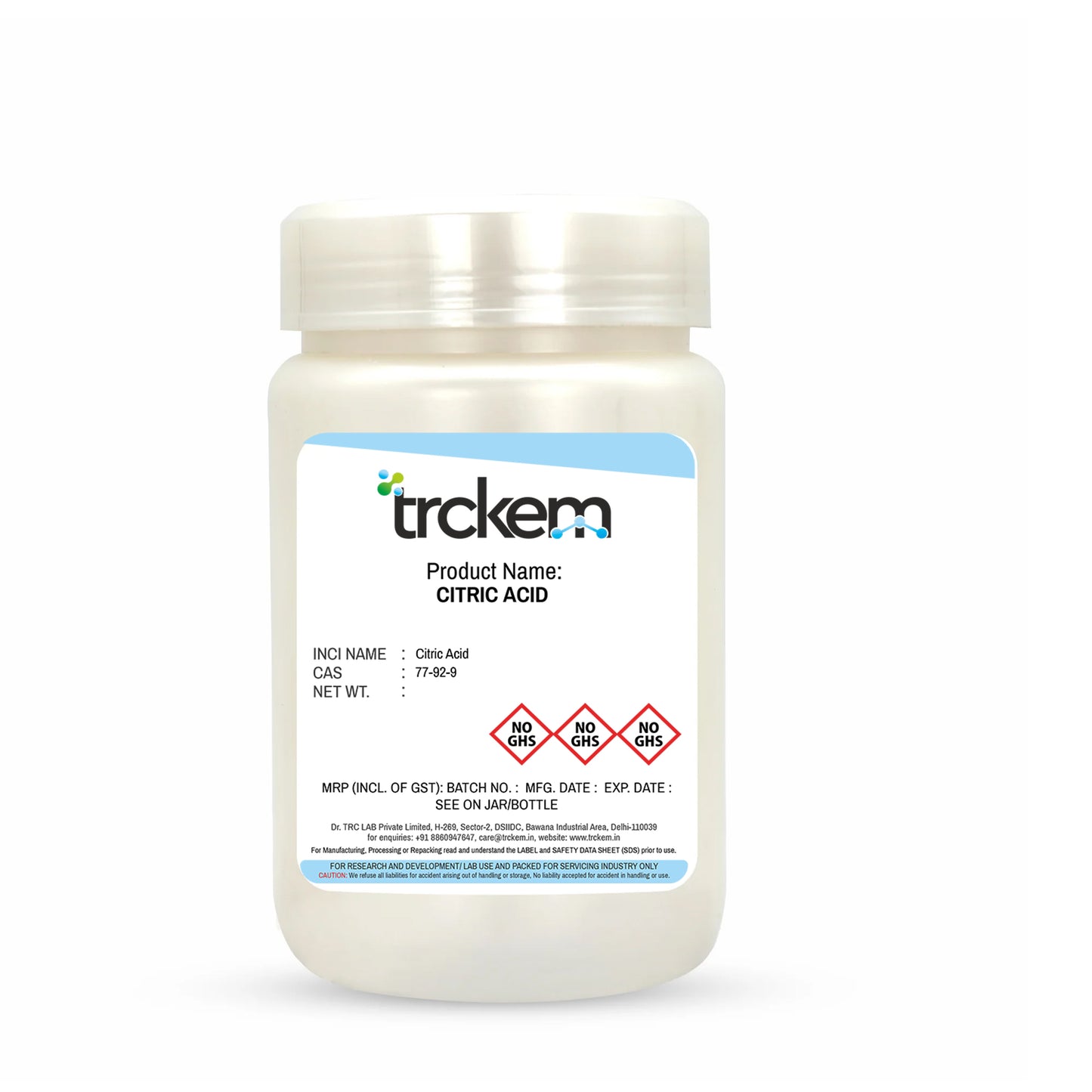
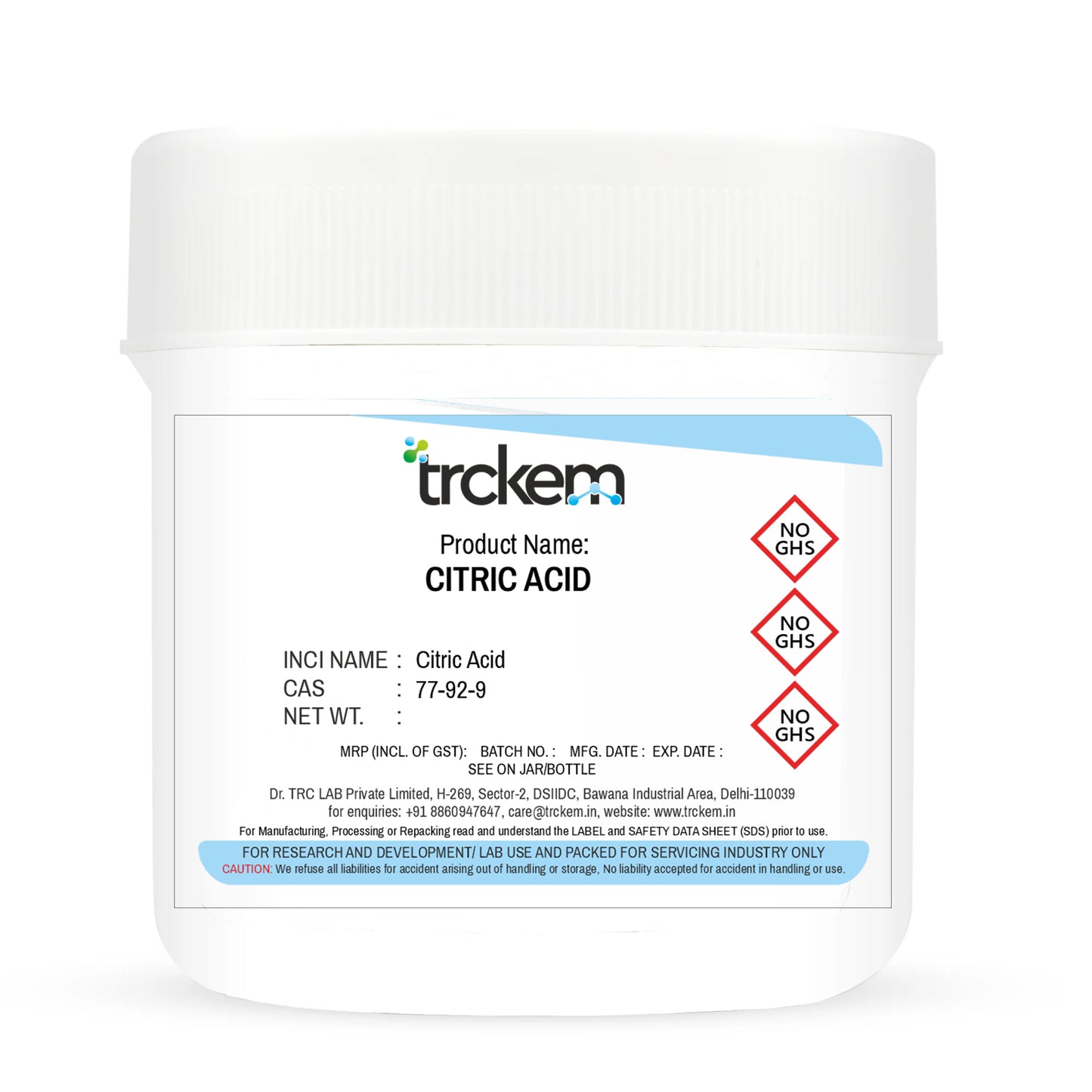
CITRIC ACID
For Bulk Quantity:📞 8822636416
Couldn't load pickup availability
Citric acid is a naturally occurring organic acid found in citrus fruits. It is commonly used in cosmetics for its exfoliating, antioxidant, and pH-balancing properties, promoting healthy, glowing skin.
Product Document: Download Now 👇

General Description
Citric acid is a naturally occurring organic acid found in citrus fruits such as lemons and oranges. It is widely used in various industries, including food, pharmaceuticals, and cosmetics, due to its excellent acidity regulation, preservative properties, and chelating abilities. Manufacturers produce citric acid through fermentation processes, making it an essential ingredient in many formulations.
Uses in the Cosmetics Industry
Citric acid is a key ingredient in skincare and personal care products, offering multiple benefits:
- pH Adjuster: Used to balance the pH of cosmetics, ensuring formulations remain skin-friendly.
- Exfoliant: A mild alpha hydroxy acid (AHA) that helps remove dead skin cells and promote a radiant complexion.
- Preservative: Helps prevent microbial growth, extending product shelf life.
- Chelating Agent: Improves product stability by binding to metal ions that may degrade formulations.
Citric acid is commonly found in facial cleansers, shampoos, conditioners, serums, and bath bombs. If you’re looking to buy citric acid in bulk or wholesale for cosmetic manufacturing, ensure you choose high-purity grades for best results.
Side Effects & Hazards
While citric acid is generally safe for cosmetic use, excessive concentrations may lead to:
- Skin Irritation: High doses can cause redness, dryness, or a burning sensation, especially on sensitive skin.
- Eye Irritation: Direct contact with eyes can cause discomfort and stinging.
- Allergic Reactions: Some individuals may experience mild allergic reactions, such as itching or rash.
When handling citric acid in manufacturing, use protective gloves and avoid inhaling fine powders, as they can be irritating to the respiratory system.
For those involved in cosmetic formulation and manufacturing, wholesale suppliers and sales of citric acid ensure cost-effective procurement for large-scale production. Whether you're a skincare brand, lab, or retailer, sourcing high-quality citric acid can enhance your product effectiveness and consumer satisfaction.
CAS NO. : 77-92-9
INCI: Citric Acid
COMPOSITION: Chemical Formula: C₆H₈O₇
Organic acid derived from citrus fruits or synthesized through fermentation of glucose or sucrose using Aspergillus niger.
PURITY GRADE: Available in multiple grades, such as food-grade (FCC), pharmaceutical-grade, and technical-grade.
Common purity is ≥ 99% for food-grade and pharmaceutical applications.
APPEARANCE: White crystalline powder or colorless crystals.
SOLUBILITY: Highly soluble in water (59 g/100 mL at 20°C).
Soluble in ethanol and slightly soluble in ether.
PRESEVATION: Self-preserving due to its acidic nature; commonly used as a preservative itself.
STORAGE: Store in a cool, dry place, away from moisture and heat. Keep the container tightly closed.
RAW MATERIAL SOURCE: Derived from natural citrus fruits or through microbial fermentation of carbohydrates like molasses, corn, or sugar beets.
MANUFACTURE: Typically manufactured via microbial fermentation using Aspergillus niger.
ANIMAL TESTING: Many modern citric acid suppliers ensure it is not tested on animals. Check specific certifications for confirmation.
GMO: May involve genetically modified organisms (GMOs) during fermentation. Non-GMO options are available upon request.
VEGAN: Generally considered vegan, as it is not derived from animal sources.
PROPOSITION: Generally recognized as safe (GRAS) for consumption and widely used in food, cosmetics, and pharmaceuticals.
WARNING: Can cause eye and skin irritation in concentrated forms.
May cause gastrointestinal discomfort if consumed in excess.
Should be handled with care to avoid inhalation of dust.
THE STORY OF CITRIC ACID

Citric Acid: The Natural pH Balancer & Brightening Agent
Citric Acid is a natural alpha hydroxy acid (AHA) derived from citrus fruits and used in cosmetics for pH adjustment, exfoliation, and antioxidant preservation. It helps maintain product stability, brighten skin tone, and balance acidity — making it essential in skincare, haircare, and bath formulations worldwide.

Fermented from Natural Sugars for High-Purity Cosmetic Use
Citric Acid is produced by fermenting natural sugars (glucose, molasses, or corn syrup) using Aspergillus niger microorganisms. The resulting solution is purified and crystallized to yield a high-purity, food- and cosmetic-grade acid. TRCkem offers fine and granular grades suitable for creams, cleansers, bath products, and exfoliating formulations.

Balance. Brighten. Preserve.
Key functions in cosmetic & personal-care formulations:
✅ Adjusts pH to maintain product stability & skin comfort
✅ Provides gentle exfoliation to renew and smooth the skin
✅ Acts as a chelating agent, binding metals that cause discoloration or oxidation
✅ Supports preservative systems and boosts antioxidant efficacy
✅ Natural AHA for brightening and anti-aging skincare
Used in: face toners, serums, body washes, shampoos, bath bombs, toothpaste, and effervescent tablets.

Natural, Effective & Regulated for Controlled pH Use
• Typical use level: 0.1–5% depending on pH target & formula type
• Fully water-soluble; add to aqueous phase under stirring
• Compatible with most preservatives & surfactant systems
• ECOCERT & COSMOS approved (when naturally derived)
• Safe for topical use — avoid excessive concentrations to prevent irritation
• Store cool, dry, sealed; hygroscopic material may clump under humidity
Formulator’s Queries, We Answered
1. What is Citric Acid?
Citric Acid is a naturally occurring weak organic acid derived from citrus fruits such as lemons and oranges. It is widely used in personal care formulations as a pH adjuster, exfoliant, chelating agent, and preservative booster.
2. What is the CAS number and INCI name of Citric Acid?
CAS Number: 77-92-9
INCI Name: Citric Acid
3. What are the benefits of Citric Acid in personal care products?
Citric Acid is valued for its:
pH regulation: Helps maintain the ideal pH balance in formulations.
Exfoliating properties: AHA (alpha-hydroxy acid) that gently removes dead skin cells.
Chelating ability: Binds to metal ions to improve product stability.
Preservative enhancer: Helps extend shelf life when combined with preservatives.
Skin brightening effect: Helps improve skin tone and texture.
4. How does Citric Acid work in cosmetic formulations?
Citric Acid functions as a multi-purpose ingredient, adjusting the pH of formulations to enhance stability and effectiveness. It also acts as a gentle exfoliant, promoting cell turnover for smoother, brighter skin.
5. Is Citric Acid safe for all skin types?
Yes, Citric Acid is generally safe, but higher concentrations may cause mild irritation in sensitive skin types. It is recommended to use it in controlled formulations to prevent skin sensitivity.
6. What types of personal care products contain Citric Acid?
Citric Acid is commonly found in:
Face cleansers & exfoliants
Shampoos & conditioners
Bath bombs & soaps
Serums & creams
Mouthwashes & toothpaste
7. Can Citric Acid be combined with other ingredients?
Yes, Citric Acid works well with:
AHAs (Lactic Acid, Glycolic Acid) for enhanced exfoliation.
Moisturizers (Hyaluronic Acid, Glycerin) to balance hydration.
Preservatives (Potassium Sorbate, Sodium Benzoate) for extended shelf life.
8. Does Citric Acid cause any side effects?
When used in appropriate concentrations, Citric Acid is safe. However, potential side effects include:
Mild irritation or redness in high concentrations.
Increased sun sensitivity (use sunscreen if applied to the skin).
9. What is the recommended concentration of Citric Acid in personal care formulations?
0.1% to 1% in skincare formulations as a pH adjuster.
5% to 10% in exfoliating products like peels and serums.
Up to 30% in professional-grade chemical peels (under expert supervision).
10. Is Citric Acid natural or synthetic?
Citric Acid can be naturally extracted from citrus fruits or produced through fermentation of sugars. Most commercially available Citric Acid is biotechnologically derived for cost-effectiveness and purity.
11. Where can I purchase high-quality Citric Acid for formulation purposes?
Citric Acid is available from cosmetic raw material suppliers. Ensure you choose high-purity, cosmetic-grade Citric Acid for safe and effective formulations.