


SKU:SOL-TRC-CTA-300g
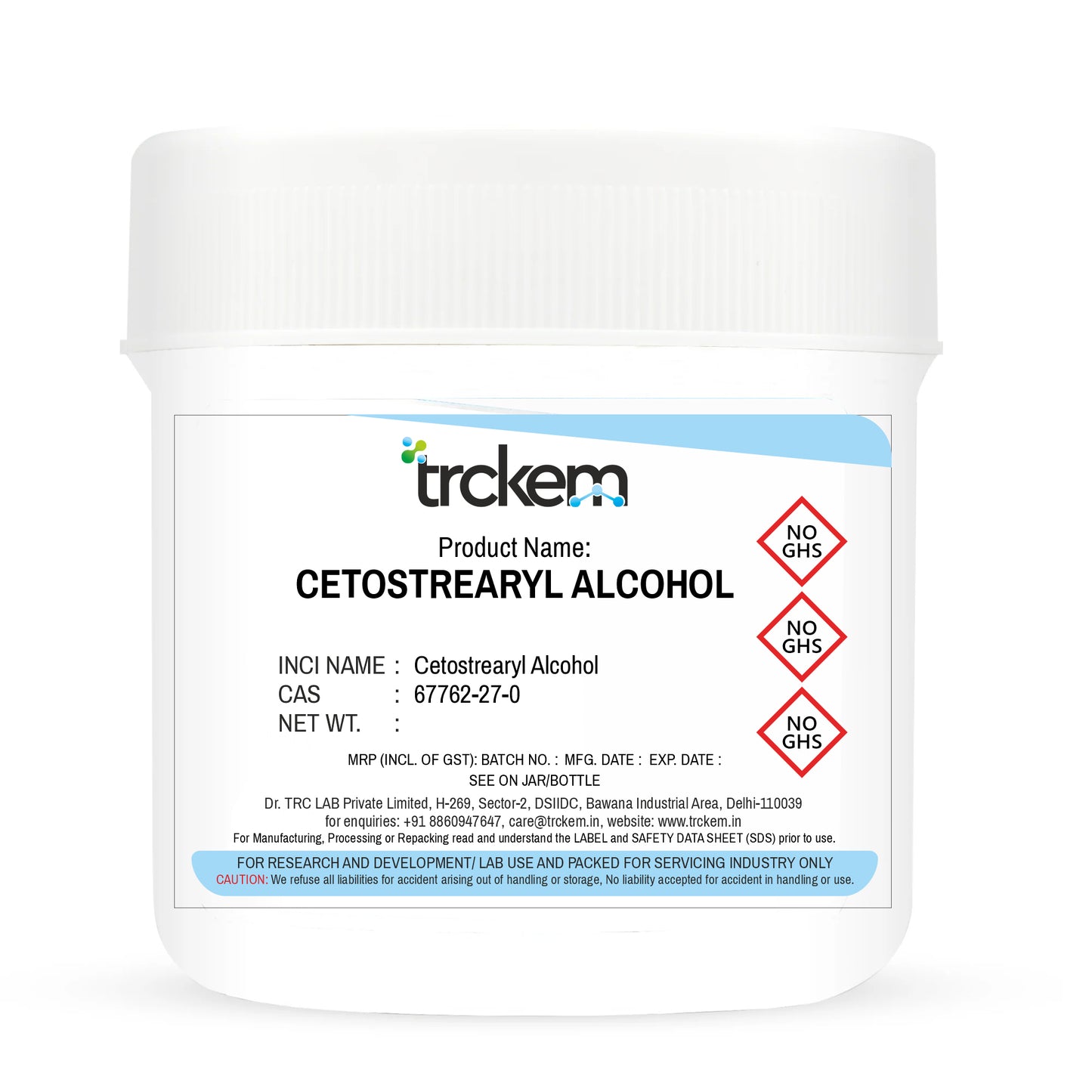
Cetostrearyl Alcohol
For Bulk Quantity:📞 8822636416
Couldn't load pickup availability
Cetostearyl Alcohol is a fatty alcohol used in cosmetics as an emollient, emulsifier, and thickener, providing a smooth, creamy texture and helping condition and soften skin and hair.
Product Document: Download Now 👇

General Description:
Cetostearyl Alcohol, also known as Cetearyl Alcohol, is a white, waxy solid or flake composed of a mixture of fatty alcohols, primarily cetyl and stearyl alcohol. It is derived from natural sources such as coconut or palm oil and is widely used as an emulsifier, thickener, and emollient in the cosmetic and personal care industry. Available for bulk and wholesale supply, Cetostearyl Alcohol is a key ingredient in formulations seeking a creamy texture, stability, and skin-conditioning benefits.
Uses in the Cosmetics Industry:
Cetostearyl Alcohol is highly valued in beauty and personal care formulations due to its multifunctional properties. Common applications include:
Its non-greasy finish and compatibility with both oil and water phases make it a preferred ingredient for formulators focusing on luxurious, high-performance products.
Side Effects & Hazards:
Cetostearyl Alcohol is generally considered safe and non-irritating for cosmetic use. It is well tolerated by most skin types, including sensitive skin. However, in rare cases, it may cause contact dermatitis or irritation, particularly in individuals with very reactive skin or compromised skin barriers. It is not considered toxic, carcinogenic, or environmentally hazardous. During handling and manufacturing, standard safety procedures—such as the use of gloves, goggles, and dust control—are advised, especially when working with the powdered form. Proper storage in a cool, dry environment is essential to preserve its quality and prevent degradation.
CAS Number: 67762-27-0
INCI Name: Cetearyl Alcohol
Composition: Mixture of fatty alcohols, primarily cetyl alcohol (C16) and stearyl alcohol (C18)
PurityGrade:Cosmetic/Pharmaceutical/Industrial Grade
Appearance: White, waxy solid in flake or pellet form
Solubility: Insoluble in water; soluble in alcohol and oils
Preservation: Generally self-preserving; does not require added preservatives but may be combined with preserved systems
Storage: Store in a cool, dry place; protect from heat and direct sunlight
Raw Material Sources: Derived from natural fats and oils (e.g., coconut oil, palm oil) or petrochemical sources
Manufacture: Produced by hydrogenation of fatty acids or fatty acid methyl esters
Animal Testing: May vary by supplier; check specific manufacturer policies
GMO: Typically non-GMO, especially if derived from natural sources
Vegan: Generally considered vegan if sourced from plant-based fats (verify with supplier)
Proposition: Generally compliant with California Proposition 65; not known to contain listed harmful substances
Warning: Low hazard; may cause mild irritation to eyes or skin in raw form; avoid inhaling fine particles
THE STORY OF CETOSTEARYL ALCOHOL

Cetostearyl Alcohol: The Cream-Building Fatty Alcohol for Texture & Stability
Cetostearyl Alcohol (a blend of Cetyl and Stearyl Alcohol) is a multifunctional fatty alcohol used as an emulsifier stabilizer, viscosity builder, opacifier, and sensory enhancer in skincare, haircare, and dermatological creams. It creates soft, creamy textures while improving spreadability and skin feel — without acting like a drying “true alcohol.

Naturally Sourced Fatty Alcohol Blend Refined for Cosmetic Use
Cetostearyl Alcohol is produced by hydrogenating natural fatty acids from coconut oil, palm oil, or vegetable sources, then separating into a 30/70 or 50/50 cetyl/stearyl blend. TRCkem supplies both standard cosmetic grade and pharma-grade USP/NF compliant material for regulated skin & hair formulas.

Thicken. Stabilize. Soften.
Key functions in personal-care formulations:
✅ Builds viscosity & cream body in emulsions
✅ Stabilizes oil-in-water & water-in-oil systems
✅ Improves slip, spreadability & cushion on skin
✅ Boosts conditioning effect in haircare when paired with cationic quats (e.g., BTMS, Behentrimonium Chloride)
✅ Reduces soaping effect in lotions & butters
Used in: body lotions, face creams, hair conditioners, serums, ointments, sunscreen emulsions, shaving creams, deodorant sticks.

Globally Approved, Stable & Easy to Formulate
• Typical use level: 2–10% depending on viscosity required
• Added to oil phase, melt at 60–75 °C for proper emulsification
• Compatible with most emulsifiers, oils, esters, quats, silicones & waxes
• Not a drying alcohol — safe for sensitive skin, baby care, and natural beauty formulations
• Approved worldwide (EU, US, Japan, India, ASEAN) — ECOCERT & COSMOS acceptable when veg-derived
• Store cool and dry to prevent clumping
Formulator’s Queries, We Answered
1. What is Cetostearyl Alcohol?
Cetostearyl Alcohol, also known as Cetearyl Alcohol, is a mixture of fatty alcohols, primarily consisting of cetyl and stearyl alcohols. It is widely used in the personal care industry as an emollient, emulsifier, thickener, and stabilizer in various formulations such as creams, lotions, hair conditioners, and cleansers.
2. What is the CAS Number and INCI Name for Cetostearyl Alcohol?
CAS Number: 67762-27-0
INCI Name: Cetearyl Alcohol
3. What are the main functions of Cetostearyl Alcohol in personal care products?
Cetostearyl Alcohol functions mainly as:
Emollient: It helps to soften and smooth the skin and hair.
Emulsifier and Co-emulsifier: It helps to mix oil and water, providing stability to emulsions.
Thickening Agent: It enhances the texture and viscosity of formulations.
Stabilizer: It improves the shelf life and consistency of products.
4. Is Cetostearyl Alcohol safe for skin and hair care products?
Yes, Cetostearyl Alcohol is considered safe for use in personal care products. It is non-irritating and non-sensitizing for the vast majority of consumers. It is also approved by regulatory authorities like the FDA and is included in the CIR (Cosmetic Ingredient Review) Expert Panel’s safe list.
5. Is Cetostearyl Alcohol suitable for sensitive skin?
Cetostearyl Alcohol is generally suitable for sensitive skin and is often used in dermatologically tested and hypoallergenic formulations. However, as with all ingredients, patch testing is recommended for very sensitive individuals.
6. Does Cetostearyl Alcohol have moisturizing properties?
Yes, Cetostearyl Alcohol acts as an effective moisturizer by creating a barrier that reduces water loss from the skin’s surface, helping maintain hydration.
8. Is Cetostearyl Alcohol derived from natural sources?
Yes, Cetostearyl Alcohol is often derived from natural plant sources such as coconut oil or palm oil. However, synthetic versions are also available depending on the supplier and formulation requirements.
9. Can Cetostearyl Alcohol be used in vegan or cruelty-free formulations?
Yes, plant-derived Cetostearyl Alcohol is compatible with vegan and cruelty-free formulations. It’s important to verify the source with your supplier if you are targeting vegan certification.